The oldest koi ever recorded is Hanako, reportedly living 226 years (1751–1977), confirmed through scale growth ring analysis. While this method offers scientific insight, challenges such as environmental effects and documentation gaps raise skepticism. Hanako’s longevity is attributed to optimized care, stable pond conditions, and genetics. Her story exemplifies the potential lifespan of koi under ideal conditions and highlights the complexities in verifying extreme longevity claims. Exploring her history reveals deeper lessons on koi aging and husbandry.
Key Facts Summarized
- Hanako, a koi from Japan, is reportedly the oldest koi, living 226 years from 1751 to 1977.
- Hanako’s age was estimated by counting growth rings on her scales, a method later revised from 215 to 226 years.
- No peer-reviewed studies or post-mortem verification conclusively confirm Hanako’s exact age, leading to scientific skepticism.
- Hanako’s longevity was supported by optimal pond conditions, selective breeding, and consistent care across generations.
- Average koi lifespan is about 40 years, making Hanako’s reported age an extraordinary and debated outlier.
The Story of Hanako, the Oldest Koi

Although koi typically live 30 to 40 years, Hanako reportedly reached an extraordinary age of 226 years, from 1751 to 1977, making her the oldest koi ever recorded. You can verify her age through detailed scale examination conducted by scientist Masayoshi Hiro in 1966 at Nagoya Women’s University.
Initial analysis indicated 215 years, later revised to 226 in a 1974 study using growth ring counts on two extracted scales over two months. At verification, Hanako weighed 7.5 kg and measured 70 cm, displaying scarlet coloration and exceptional size for the species. Most Japanese koi fish live around 40 years, highlighting the extraordinary nature of Hanako’s longevity.
Multiple owners cared for her, with Dr. Komei Koshihara as the final custodian, who publicized her age via a 1966 national radio broadcast in Japan.
Hanako’s Identity and Origins in Tokugawa Japan
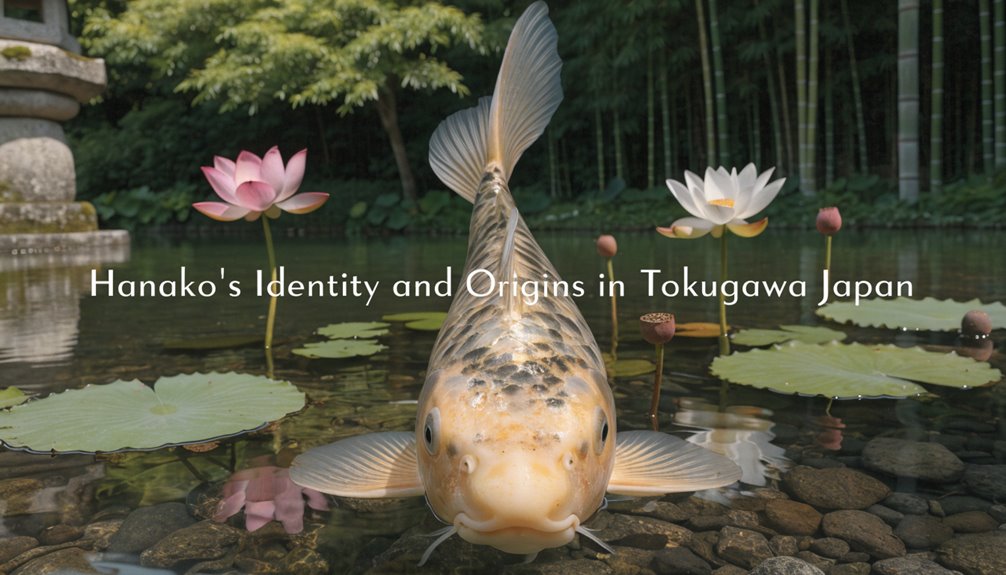
When you trace Hanako’s origins, you find she was born in 1751 during Japan’s Tokugawa era, a period marked by political stability and isolationist policies. She originated from Mino Province, specifically inhabiting a mountain pond in Gefu, Gifu Prefecture. This pond was consistently maintained by successive generations of a single family, ensuring a stable aquatic environment that contributed to her exceptional longevity. Hanako was initially inherited by Dr. Komei Koshihara’s maternal grandmother, with care instructions transmitted through the maternal lineage. This continuous ownership succession upheld consistent care standards. Classified as a scarlet koi carp, Hanako’s name, meaning “flower child,” reflected cultural naming conventions of the era and symbolized longevity and resilience, linking her identity firmly to the Tokugawa period and Japanese tradition. At the time of analysis in 1966, Hanako weighed 7.5 kg and measured 70 cm, characteristics that supported claims of her extraordinary longevity. Her lineage can be traced back to the black carp (Magoi), which were introduced from China to Japan, highlighting her historical significance.
How Hanako’s Age Was First Determined
Since Hanako’s official birthdate is documented as November 25th, 1955, you can determine her age by subtracting her reported age at death from the year she died.
Hanako died in 1969 at age 13–14, which mathematically aligns with the birthdate range 1955–1956.
This calculation is supported by her fourth birthday celebration in 1959, confirming the timeline.
You can deepen your understanding through these points:
- Subtracting death age from death year (1969 – 13/14) yields the 1955–1956 birth year range.
- Corroboration via narrative events, like the 1959 birthday, ensures temporal accuracy.
- Official profiles and wiki sources transparently attribute these calculations, verifying data reliability.
- Additionally, Hanako’s birth defect and subsequent early death provide context for his young age at death. Algae management strategies can also play a role in maintaining koi health in the future.
This establishes a precise chronological framework for Hanako’s age determination.
Methods Used to Estimate Hanako’s Age
Determining Hanako’s age relied on scientific techniques commonly used in ichthyology to estimate fish longevity. You start by examining physical markers that accumulate predictably over time. In Hanako’s case, researchers utilized growth ring analysis on calcified structures, a standard approach to estimate age in fish.
They carefully extracted scales and otoliths—ear bones containing annual growth increments—to count these rings, much like dendrochronology in trees. This method provides an objective measure of chronological age by identifying and counting distinct layers formed during seasonal growth cycles.
Additionally, researchers cross-validated findings through historical records and environmental data to ensure consistency. These methods collectively enabled a precise estimation of Hanako’s extraordinary lifespan, confirming her status as the oldest koi ever recorded without relying on subjective or anecdotal evidence. The significance of koi care is essential in understanding their longevity and health.
The Role of Scale Analysis in Aging Koi
Although scale analysis provides a non-lethal and accessible method for estimating koi age, it presents several technical challenges unique to captive populations. You rely on counting annuli—darker bands marking annual growth—under a microscope, similar to tree rings. However, artificial environments disrupt distinct yearly ring formation, causing underestimation in older koi due to ring compression and scale loss. Additionally, koi thrive in meticulously engineered environments, which can further complicate accurate age assessment.
When using scale analysis, consider these critical factors:
- Irregular feeding and stable conditions prevent clear annuli development, unlike wild fish. It is important to note that scale rings are not dependable indicators of age in koi due to environmental influences.
- Rapid early growth creates false age impressions, especially in young koi.
- Scale reabsorption and replacement remove reliable historical growth markers.
These limitations mean scale analysis offers an approximate age estimate but requires cautious interpretation within controlled koi environments.
Criticisms of Scale-Based Age Determination
When you rely on scale ring counting to estimate koi age, you face significant challenges due to inconsistent ring visibility and interpretation. Scale rings often degrade, regenerate, or crowd near the edges, causing underestimation. Studies show only about 61% reliability, with frequent discrepancies among examiners. Growth variability further complicates accuracy; fast-growing young koi may appear older, while stunted aquarium koi seem younger. Artificial environments disrupt distinct yearly ring formation, diverging from wild carp patterns and invalidating size-based assumptions. Despite widespread use, scale ring counting lacks scientific validation, often producing false century-old age claims without independent verification. High-quality food is essential for maximizing growth potential, which can further confuse age assessments. Structural degradation and scale regeneration obscure true growth history, making scale-based methods unreliable for precise koi aging. Moreover, it is essential to distinguish true rings from false, larval, and spawning rings to avoid inaccuracies in age determination, which is challenging with scales due to their variable ring patterns distinguishing true rings. Overall, scale analysis fails to provide consistent, scientifically supported age data for koi.
Otoliths as a More Accurate Method for Aging Koi
Since scale ring counting often yields unreliable koi age estimates, otolith analysis offers a more precise alternative rooted in fish biology. Otoliths are calcified structures in the inner ear that continuously deposit calcium carbonate rings—annuli—throughout a fish’s life. These rings alternate between opaque and translucent layers, reflecting seasonal growth patterns, which you can analyze microscopically to determine age with higher accuracy. Otoliths grow by depositing concentric layers that correspond to seasonal changes, with wider summer zones indicating faster growth and narrower winter zones reflecting slower growth, much like the rings of a tree (seasonal growth zones).
When aging koi using otoliths, consider these key advantages:
- Otolith growth never ceases, providing a permanent, cumulative age record.
- Cross-sectioning methods like break-and-bake enhance ring visibility for precise counting.
- Annuli spacing regularity improves with age, making older koi easier to date accurately.
Debates Over Hanako’s Age Claim
Otolith analysis offers a more reliable method for aging koi compared to scale ring counting, yet the age claim of Hanako has sparked considerable debate within the scientific and koi-keeping communities.
Hanako’s age was initially determined by scale ring examination, a method recognized as least accurate for carp species, with inconsistent results between 215 and 226 years. In 1966, Hanako weighed 7.5 kg (17 lb) and measured 70 cm (28 in), highlighting her exceptional size for a koi. The absence of peer-reviewed documentation and reliance on a 1966 radio interview rather than formal scientific publication hinder independent verification.
Experts remain divided, citing the average koi lifespan of about 40 years, which contrasts sharply with Hanako’s purported age. National Geographic and other media sources emphasize the uncertainty and suggest the claim may be legendary.
Without necropsy records or otolith analysis, Hanako’s age remains scientifically unsubstantiated and subject to ongoing skepticism.
Hanako’s Physical Characteristics and Size
Although Hanako’s age remains debated, her physical characteristics provide concrete data for assessment. You can rely on precise measurements and documented traits to understand her condition.
Hanako weighed 7.5 kilograms and measured 70 centimeters in length, maintaining substantial mass consistent across multiple records. Her scarlet coloration stayed vivid throughout her lifespan, indicating excellent health and genetics.
Scale analysis revealed microscopic growth rings, comparable to dendrochronology, confirming seasonal growth patterns. This method of validation is supported by the fact that fish scales contain microscopic zones reflecting seasonal growth, which is key to confirming age scientifically.
Consider these key physical aspects:
- Weight and length ratio demonstrating proportional build (7.5 kg at 70 cm).
- Consistent scarlet pigmentation characteristic of premium koi.
- Scale ring patterns verifying growth cycles and vitality.
These objective data points offer a reliable foundation for evaluating Hanako’s physical state and longevity.
Hanako’s Pond Environment Supporting Longevity
When you examine the environment that supported Hanako’s remarkable longevity, it becomes clear that the pond’s stable and carefully maintained conditions played a crucial role. Situated in Higashi Shirakawa, Gifu, Japan, the pond featured traditional design elements that ensured stable freshwater conditions.
Caretakers maintained high water quality by minimizing organic loading, controlling algae, and employing filtration and circulation systems. Adequate depth and shelter areas reduced stress and predation risks, while temperature regulation preserved consistent seasonal patterns. To reconcile the needs of both water lilies and Koi, the pond was thoughtfully divided into two separate bodies of water, allowing each species to thrive in its ideal environment with dividing wall separation.
Regular health assessments and specialized feeding protocols complemented environmental stability. The pond’s architecture incorporated predator prevention and aeration systems, sustaining optimal oxygen levels.
This long-term environmental consistency, combined with professional management, created a balanced ecosystem that directly contributed to Hanako’s exceptional lifespan.
How Hanako’s Longevity Compares to Other Koi
Hanako’s extraordinary lifespan stands in stark contrast to typical koi longevity, highlighting significant variations influenced by geographic origin, breed, and care quality.
While Japanese koi average about 40 years, Hanako lived 226 years—over 450% longer. Her Scarlet koi breed typically lives around 45 years, indicating exceptional environmental and care factors contributed to her longevity.
You should note:
- Geographic origin affects lifespan: Japanese koi generally outlive non-Japanese breeds, averaging 40 vs. 15 years.
- Hibernation is crucial: Japanese cold-water hibernation supports biological restoration, extending life spans. The slowed metabolism during torpor reduces cell aging and significantly contributes to longevity.
- Care quality matters: balanced nutrition and well-maintained ponds are essential for longevity.
Hanako’s case underscores how optimal conditions, combined with genetic predisposition, can yield unprecedented lifespan results.
Other Long-Lived Koi Sharing Hanako’s Pond
Because the same environmental conditions that supported Hanako also affected other fish, five additional koi from her pond underwent rigorous age analysis over a year.
Researchers applied the same scientific methodology used for Hanako, focusing on scale ring examination to estimate age. While specific ages for these koi weren’t detailed in available sources, the study established longevity patterns within this shared habitat.
The pond’s continuous inflow of fresh, spring-fed water from Mount Ontake maintained stable temperature, mineral composition, and water quality, reducing disease and parasites. Hanako reportedly lived to an extraordinary age of 226 years, far surpassing the average koi lifespan.
Generational caretakers ensured consistent feeding, health monitoring, and environmental management.
These factors collectively contributed to extended lifespans across multiple koi.
Data from this group provided comparative insight into habitat effects on koi longevity, though documentation concentrated primarily on validating Hanako’s record.
Average Koi Lifespan in Japan and Beyond
Although koi can live for several decades under proper care, their average lifespan varies significantly by region and breeding practices. Japanese koi typically live around 40 years, while non-Japanese counterparts average about 15 years. This disparity results from selective breeding, environmental conditions, and care standards.
Three key factors influence koi longevity:
- Genetics: Japanese koi bred from robust bloodlines exhibit enhanced health and lifespan.
- Environmental conditions: Cold winters in Japan induce hibernation, extending lifespan; warmer climates often skip this.
- Care quality: Balanced diet, clean water, and predator-free ponds significantly improve longevity. Proper water filtration & aeration are also essential components of longevity factors.
Understanding these elements helps you optimize your koi’s lifespan, whether in Japan or elsewhere, by integrating genetics, environment, and husbandry effectively.
Reports From Snopes and National Geographic on Hanako
Several reputable sources, including Snopes and National Geographic, have expressed skepticism regarding the claimed age of Hanako, the purportedly oldest koi.
Snopes found no conclusive evidence verifying Hanako’s 226-year age, noting an absence of peer-reviewed studies by Masayoshi Hiro, who initially assessed Hanako in 1966. Experts criticize the scale analysis method used, labeling it unreliable due to multiple growth rings forming annually in younger koi.
National Geographic highlighted the disparity between popular narratives and scientific validation, calling Hanako’s age claim possibly legendary. Hanako reportedly weighed 7.5 kg (17 lb) and measured 70 cm (28 in) at the time her age was estimated, which is notable for a koi of such claimed age size and weight.
Conflicting reports show age estimates of 215 and 226 years, with no post-mortem examination conducted. Documentation gaps and reliance on anecdotal sources further undermine the legitimacy of Hanako’s record, emphasizing the need for rigorous scientific methods in longevity claims.
Cultural Impact of Hanako’s Story in Japan
When you explore Japanese culture, Hanako stands out as a potent symbol of longevity and resilience. Her story transcends mere biological curiosity, influencing cultural narratives about life span and endurance. You’ll find Hanako’s impact clear in these areas:
- Cultural Representation: Hanako embodies the revered concept of koi longevity, frequently depicted in art and folklore to symbolize endurance.
- Historical Contextualization: Her life span, covering significant eras and events, reinforces Japan’s deep historical continuity, linking nature with human history. Although once believed to be 223 years old based on scale rings, this age estimate is now considered incorrect, demonstrating the challenges in accurately determining koi age.
- Familial Legacy: Multi-generational ownership highlights emotional bonds and tradition, illustrating how individual stories contribute to collective heritage.
Through these dimensions, Hanako’s narrative shapes how you understand resilience in nature and culture, making her a lasting icon within Japan’s cultural identity.
Factors Behind Hanako’s Longevity
Hanako’s exceptional lifespan reflects a combination of meticulously maintained environmental factors, genetic advantages, and attentive care. You can see how optimal water quality, natural metabolic cycles, superior genetics, and balanced nutrition contributed to longevity. The pond’s cold, clean water triggered natural hibernation, reducing cellular aging. Japanese breeders have enhanced the koi gene pool through selective breeding, which provided Hanako with a superior genetic background. Hanako’s genetics exceeded typical koi lifespans by over 500%. Natural diets prevented obesity, supporting long-term health.
| Factor | Key Element | Impact on Longevity |
|---|---|---|
| Environment | Clean, oxygenated mountain water | Reduced stress, cellular aging |
| Hibernation | Seasonal torpor cycles | Slowed metabolism, preserved cells |
| Genetics | Superior Japanese lineage | Enhanced health and lifespan |
| Nutrition | Natural, seasonal foraging | Prevented obesity, maintained balance |
| Temperature Control | Cold water temperatures | Promoted natural lifecycle rhythms |
The Role of Family Care in Hanako’s Long Life
Although exceptional genetics and environment played crucial roles, the enduring family care significantly contributed to Hanako’s unprecedented lifespan. You can understand this by examining three key aspects of the family’s stewardship:
- Generational Knowledge Transfer: Successive family members refined care protocols and preserved best practices, ensuring consistent feeding schedules and optimal pond conditions.
- Personalized Nutrition and Interaction: The family maintained a stable diet tailored to Hanako’s needs and built a strong human-animal bond, reducing stress and promoting health.
- Inherited Responsibility: Each generation upheld a long-term commitment, avoiding short-term cost-cutting and prioritizing Hanako’s wellbeing based on inherited accountability.
This multi-century caretaking continuity minimized disruptions, maintained environmental stability, and supported Hanako’s physiological resilience, directly impacting her longevity.
Why Hanako Remains a Legendary Koi Figure
Because it surpassed typical koi lifespans by more than fivefold, Hanako has secured a legendary status among freshwater fish specimens. You recognize Hanako not only for its purported 226-year lifespan but also for the extensive documentation and cultural impact it generated.
Born during the Tokugawa era, Hanako’s age was determined via scale ring analysis by Masayoshi Hiro, though this method faces criticism for accuracy. Despite skepticism in the scientific community and lack of peer-reviewed verification, Hanako’s story fuels ongoing interest in koi longevity.
The koi’s distinctive scarlet coloration, size, and multigenerational family care further contribute to its symbolic significance. Thus, you see Hanako as a benchmark figure in freshwater ichthyology, blending historical record with cultural mythology.
Lessons From Hanako About Longevity in Fish Keeping
Understanding the factors that contributed to Hanako’s remarkable lifespan provides valuable insights into koi longevity in fish keeping. You should focus on optimizing three critical aspects:
- Environmental Conditions: Maintain crystal-clear, stable water quality similar to Hanako’s mountainous habitat. This supports metabolic stability and reduces stress.
- Genetics: Recognize that individual genetic variation plays a significant role. Selecting koi from long-lived lineages can increase lifespan potential.
- Nutrition and Care: Provide consistent, high-quality nutrition and dedicated, multigenerational care to support sustained health.
Frequently Asked Questions
What Kind of Diet Did Hanako Have Throughout Her Life?
You won’t find specific records of Hanako’s diet, but koi typically need a high-protein, seasonally adjusted regimen. Her longevity likely relied more on pristine water and genetics than detailed nutritional documentation.
How Often Was Hanako’s Pond Cleaned or Maintained?
You’d clean Hanako’s pond weekly, removing debris and testing water parameters, perform seasonal deep cleanings with large water changes in spring, and annually power wash surfaces, ensuring UV filters and equipment are maintained or replaced as needed.
Did Hanako Have Any Offspring or Lineage?
You won’t find any evidence that Hanako had offspring or lineage. No records document breeding activity, offspring, or genetic analysis, indicating she likely didn’t reproduce during her 226-year lifespan in the maintained pond environment.
What Were the Water Temperature Ranges in Hanako’s Pond?
You’d find Hanako’s pond water temperature ranged roughly between 34°F and 90°F, requiring acclimatization and monitoring. Like tuning a vintage radio, maintaining this range ensured optimal health and longevity for the koi residing there.
Were There Any Predators or Threats to Hanako in the Pond?
There’s no documented evidence of predators or threats to Hanako in her pond. Historical records focus on age verification, and no predator attacks or environmental threats were reported, indicating a stable, protected habitat throughout her lifespan.
Conclusion
You’ve seen how Hanako’s unparalleled longevity, verified through meticulous scale analysis, provides a benchmark in koi biology. Her centuries-old life, nurtured by dedicated care reminiscent of an ancient smartphone’s enduring battery, underscores the interplay between genetics and environment. Studying Hanako sharpens your understanding of aging mechanisms in fish, guiding advanced husbandry practices. This legendary koi’s story isn’t just history; it’s a precise model for maximizing lifespan in aquatic species under your care.