You need high-quality, pure evaporated sea salt without additives for the best koi pond health and recovery. Dosage is crucial—apply about 1 pound per 100 gallons for maintenance or up to 5 pounds per 100 gallons during disease treatment, ensuring proper dissolution and even distribution. Keep salt levels safe for plants by monitoring concentration regularly. Using pond salt correctly supports your koi’s slime coat, electrolyte balance, and gill function to reduce stress. Explore key tips to optimize your pond salt use effectively.
Key Facts Summarized
- Use pure evaporated sea salt without additives to strengthen koi slime coats and support disease resistance.
- Maintain pond salinity around 0.1% (1 pound per 100 gallons) for optimal koi health and recovery.
- Distribute salt evenly around the pond edge, avoiding direct contact with aquatic plants to prevent damage.
- Apply higher salt doses (5 pounds per 100 gallons) for disease treatment while monitoring water quality and oxygen levels.
- Choose trusted products like Koi Life Pond Salt and complement with water testing and aeration for best results.
How to Calculate and Apply the Right Pond Salt Dosage
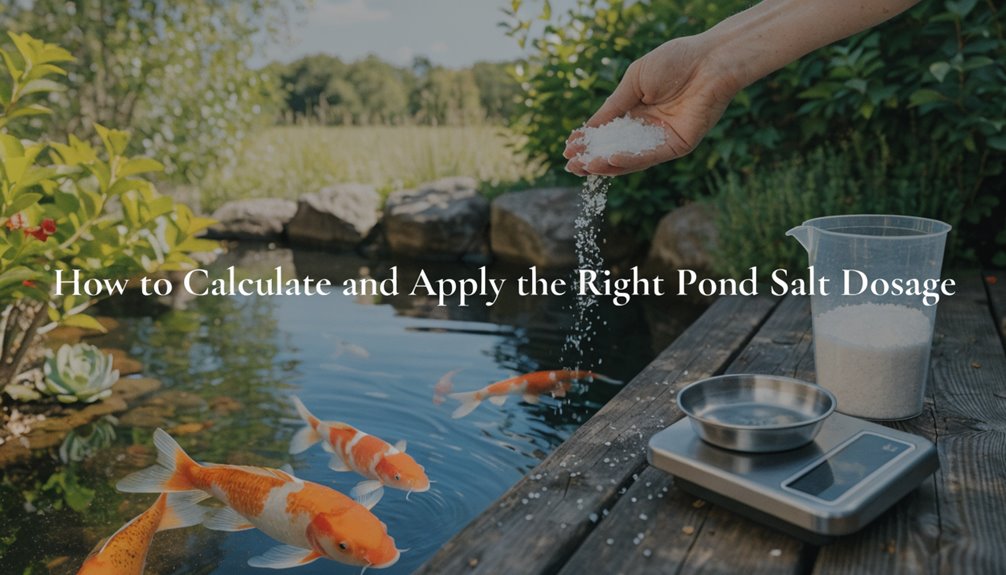
When calculating the correct pond salt dosage, start by determining your pond’s total water volume in gallons, as this measurement directly influences the amount of salt needed.
For general treatment, apply 1 pound of salt per 100 gallons to achieve approximately 0.1% salinity, which aids in disease prevention and stress reduction. Use a precise scale to measure the salt accurately.
Dissolve the salt fully in a bucket of water before dispersing it evenly around the pond’s edge to avoid harmful localized concentrations.
After water exchanges, especially when replacing 50% or more, recalculate salt amounts to maintain consistent salinity. Additionally, ensure that you have calculated your pond’s accurate volume measurement to prevent potential risks to koi health.
Benefits of Pure Pond Salt for Koi Health
Accurately calculating and applying pond salt sets the foundation for maintaining a healthy aquatic environment, but the type of salt you use significantly impacts koi health. Pure pond salt, derived from evaporated sea salt without iodine, chloride, or additives, ensures safe and effective treatment.
By choosing high-quality pure salt, you directly support your koi’s wellbeing through:
- Strengthening the slime coat, enhancing defense against parasites and diseases
- Maintaining an optimal salinity around 0.1% (1.25 pounds per 100 gallons) for recovery
- Supporting electrolyte balance, which improves gill function and oxygen uptake
- Avoiding harmful additives and anti-caking agents that could stress or damage koi
Using pure pond salt is essential for precise, safe koi care, improving health outcomes during illness or environmental stress. Additionally, regular monitoring of water quality is crucial to maximize the efficacy of salt treatments.
Using Pond Salt Safely in Ponds With Aquatic Plants
Although pond salt benefits koi health, you need to carefully manage its concentration to protect aquatic plants. Use about 1¼ cups of pond salt per 100 gallons to minimize harm while supporting fish health.
Keep salt levels below 0.05%, as higher concentrations can stress or damage plants. Distribute salt evenly around the pond’s edge, avoiding direct contact with plant leaves or roots to prevent burns and root damage.
While koi tolerate up to 2½ cups per 100 gallons, sensitive plants may not. Regularly test water salt concentration and add salt gradually to maintain safe levels for both fish and vegetation. This precise approach ensures pond salt supports koi without compromising aquatic plant health, as high-quality koi food can also enhance overall fish well-being.
Using Pond Salt to Treat Koi Diseases and Reduce Stress
Since koi are prone to diseases like Ich, fin rot, and fungal infections, using pond salt effectively can help you treat these conditions by creating an environment that controls parasites and supports healing.
Applying 5 pounds of pond salt per 100 gallons raises salinity to 0.05%, which reduces stress and enhances the slime coat, a critical defense barrier.
For more targeted treatment, salt baths in an isolation tank for 5–10 minutes can eliminate external parasites and ulcers.
To maximize benefits, you should:
- Maintain proper salt levels to avoid nitrite poisoning
- Monitor water quality closely during treatment
- Use salt regularly during outbreaks or quarantine
- Support koi recovery and disease resistance
- Ensure your pond has adequate oxygen levels to further promote healing and well-being.
This method ensures a precise, controlled approach to koi health management.
Best Koi Pond Salt Products and Essential Fish Care Supplies
When maintaining koi pond health, selecting high-quality pond salt and essential fish care supplies plays a crucial role in disease prevention and recovery support. Choose pure evaporated sea salt without additives to ensure safety for fish and aquatic plants.
Koi Life Pond Salt is a top recommendation, available in 5, 10, and 20 lb sizes, allowing precise dosing—typically 5 pounds per 100 gallons—to combat diseases like Ich and fin rot effectively.
Complement salt treatments with essential supplies such as water testing kits, aerators, and quarantine tanks to monitor and maintain optimal conditions. Additionally, incorporate probiotic pond foods and pond shock treatments to enhance pond stability and support koi recovery.
Monitoring fish health is crucial year-round, ensuring any issues are addressed promptly.
Using these products and tools systematically helps you maintain a healthy, resilient koi pond ecosystem.
Frequently Asked Questions
Do Koi Recognize Their Owners?
Yes, your koi recognize you by associating your presence with feeding and care routines. They distinguish your voice, appearance, and behavior, forming memories that enable them to respond positively and approach you consistently over time.
Should You Add Salt to a Koi Pond?
You should add salt to a koi pond only during illness or stress, using recommended dosages around 2½ cups per 100 gallons. Avoid routine use to prevent harm to plants and pond ecology.
How to Get Crystal Clear Water in Koi Pond?
You’ll get crystal clear water by performing regular 50% water changes, maintaining pH near 7.2, using effective filtration, adding pond salt to reduce algae, applying beneficial bacteria, and avoiding overfeeding to prevent organic buildup.
How Much Salt to Treat Sick Koi?
You’ll need about 1.5 pounds of salt per 100 gallons for mild koi treatment, reaching 0.15% salinity. For severe cases, increase to 5 pounds per 100 gallons, maintaining 0.5% salinity up to two weeks.
Conclusion
Using the right pond salt dosage is like tuning a delicate instrument—precision ensures your koi stay healthy and stress-free. Pure pond salt supports recovery and disease prevention without harming aquatic plants when applied correctly. By following safe guidelines and choosing quality salt products, you’ll create an optimal environment for your koi’s well-being. Remember, consistent care and accurate application keep your pond thriving, making salt an essential tool in your fish health arsenal.