You’ll want to recognize koi diseases by key signs like lethargy, fin damage, mucus buildup, or erratic swimming. Manage parasitic, bacterial, fungal, and viral infections with targeted treatments and maintain strict quarantine for new fish. Prioritize water quality through regular testing, filtration, and stable parameters to reduce stress and disease risk. Avoid common treatment errors like mixing salt improperly. Ensuring these practices helps safeguard your koi’s health—exploring detailed strategies can enhance your pond’s resilience against illness.
Key Facts Summarized
- Koi diseases include parasitic, protozoan, bacterial, fungal, and viral types with distinct signs and symptoms for accurate recognition.
- Effective disease detection relies on microscopic examination, water quality testing, and observing behavioral and physical abnormalities in koi.
- Treatment involves temperature-appropriate medications, antibiotics, antifungals, manual parasite removal, and strict quarantine protocols.
- Maintaining optimal water quality, biosecurity, and stress reduction significantly prevents disease outbreaks and supports koi immunity.
- Quarantine new koi for at least four weeks using cycled filtration, proper salt supplementation, and regular water changes to avoid pathogen introduction.
Major Koi Disease Types to Know
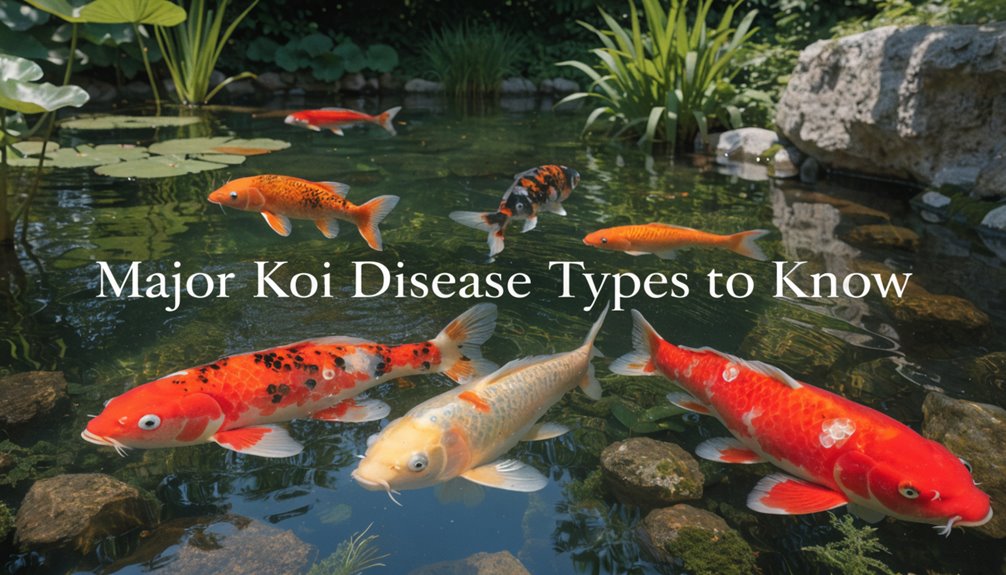
Although koi are resilient fish, they remain vulnerable to several major disease types that can quickly compromise their health.
Parasitic diseases like Ichthyophthirius multifiliis cause white spots on skin and gills, while crustacean parasites such as Argulus (fish lice) and Lernaea (anchor worms) physically damage tissue.
Protozoan parasites, including Trichodina and Chilodonella, impair respiration and cause visible gray patches. Understanding symptoms can lead to early detection and prompt treatment.
Bacterial infections present as dropsy, fin and mouth rot, ulcers, or columnaris, affecting internal organs, fins, and gills.
Fungal infections, primarily secondary to injuries or poor water quality, manifest as cotton-like patches and threaten gill function.
Viral diseases such as Koi Herpes Virus and Carp Edema Virus cause high mortality with no treatments available, requiring strict stress management.
Environmental stressors and poor water conditions exacerbate susceptibility to these diseases.
How to Spot When Your Koi Are Sick
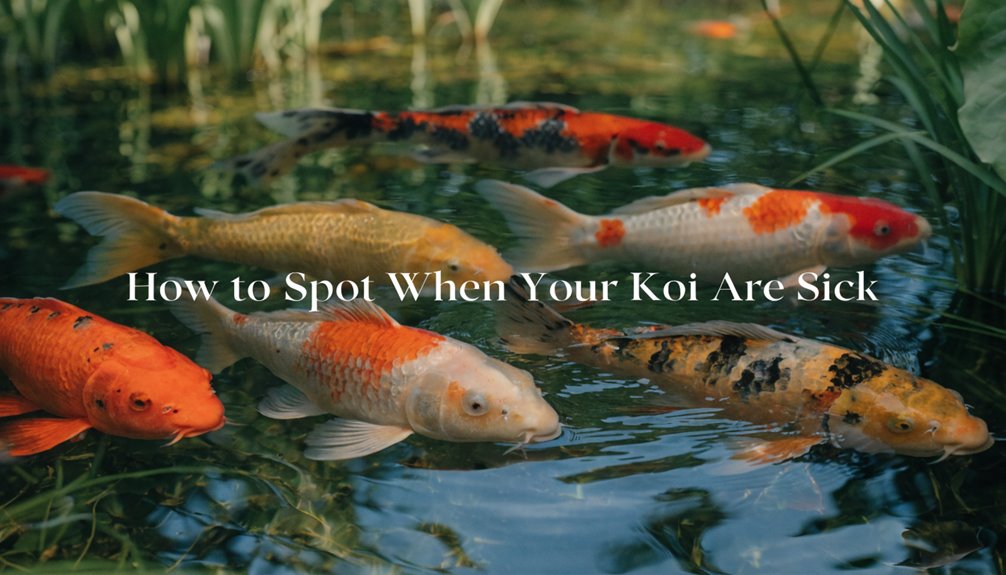
When monitoring your koi’s health, early detection of illness hinges on recognizing subtle behavioral and physical changes. Watch for lethargy, isolation, rubbing against surfaces, gasping at the water surface, or refusal to eat. If water quality is compromised, it can exacerbate these behaviors and lead to further health issues.
Note swimming abnormalities such as erratic movement, floating sideways, clamped fins, twitching, or hanging mid-water. These early behavioral changes serve as important warning signs before more obvious symptoms appear.
Inspect physical signs including clamped or ragged fins, redness, excess mucus, ulcers, cottony growths, or pinecone-like scales. Changes in physical appearance may also indicate the need for water quality management.
Examine eyes for cloudiness or bulging, and gills for paleness, irregular movement, white spots, or redness with visible veins.
Assess feeding behavior and social interaction regularly.
Check water parameters—pH, ammonia, nitrite—to rule out environmental stressors.
Skin and gill scrapings under a microscope help identify parasites.
Isolate any affected koi promptly to prevent disease spread.
Recognize and Treat Parasitic Diseases in Koi
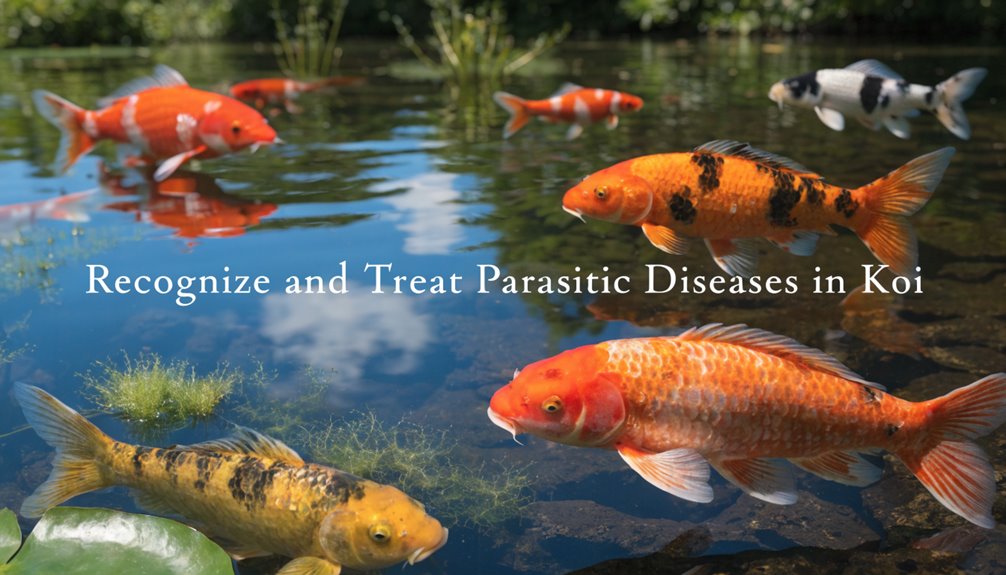
Recognizing parasitic diseases in koi requires careful observation of specific symptoms like loss of appetite, clamped fins, and unusual rubbing against surfaces. Parasites such as Costia, flukes, and anchor worms cause distinctive signs including grayish-blue mucus, flashing, red patches, and breathing difficulties. Early detection is critical to prevent severe damage and mortality. It is important to check for parasites by taking gill samples or mucus scrapes for microscopic inspection. Additionally, ensuring good water quality helps minimize the risk of parasitic infections.
You should treat the entire pond using temperature-appropriate medications and quarantine new fish to avoid outbreaks.
Key points to monitor and treat:
- Costia: causes labored breathing and clamped fins; treat early to avoid gasping.
- Flukes: attach with hooks causing irritation; use Praziquantel for treatment.
- Anchor Worms: visible crustaceans causing inflammation; remove manually and apply antibiotics.
Prompt, precise action controls spread and protects your koi’s health effectively.
Recognize and Treat Bacterial Diseases in Koi
Because bacterial diseases can rapidly compromise koi health, you must identify key symptoms early to intervene effectively. Look for reddening of fins and tail edges, ulcers, grayish patches with frayed edges, fin or mouth rot, and swelling with protruding scales (dropsy).
Affected fish often show lethargy, reduced activity, and red streaking indicating septicemia. Treat external infections with antibiotic dips like Tricide Neo, applying ointments carefully to dried lesions 2-3 times weekly. Additionally, maintaining a healthy koi population is vital to minimize stress and disease. Diagnostic techniques such as swabbing open lesions and laboratory analysis are essential for accurate treatment decisions and avoiding unnecessary antibiotic use.
Raising water temperature to 78-82°F supports immune response. For severe infections, inject Baytril under sedation or use KoiCure immersion targeting gram-negative bacteria.
Maintain water quality rigorously to prevent outbreaks, isolate infected fish, and support immunity with quality nutrition. Incorrect antibiotic use risks treatment failure, so follow protocols precisely.
Identify and Manage Fungal Diseases in Koi
After addressing bacterial infections, you should turn your attention to fungal diseases, which pose a significant threat to koi health. Fungal infections appear as white, cotton-like growths on skin, fins, or gills, often surrounded by reddened, inflamed tissue. These infections are typically secondary infections that develop on damaged tissue or in fish with weakened immune systems. Maintaining optimal water quality is crucial, as poor conditions can exacerbate fungal growth.
Saprolegnia is the most common pathogen, with others like Achlya also involved. These fungi invade through wounds, especially in poor water conditions or stressed fish.
To identify and manage fungal diseases effectively:
- Isolate affected koi immediately to prevent spore spread.
- Remove fungal growth manually and apply antifungal treatments as directed.
- Maintain optimal water quality and reduce stress factors continuously.
Prompt intervention and strict environmental control will minimize fungal damage and support koi recovery.
Handling Viral Diseases in Koi
Sure! Here’s the revised content following your directions:
—
Although viral diseases can be challenging to diagnose early, understanding their specific pathogens and transmission modes is crucial for effective control in koi populations. Viral agents like Koi Herpesvirus (KHV), Carp pox, and Spring Viremia of Carp (SVC) have distinct clinical signs and transmission routes that you must recognize to manage outbreaks effectively. KHV spreads quickly at water temperatures of 72–81°F, making temperature control a vital management strategy. Implementing a UV sterilizer can further enhance disease prevention by reducing the presence of harmful microorganisms in the water.
| Virus | Clinical Signs | Transmission |
|---|---|---|
| KHV | Lethargy, mottled gills, high mortality | Water, mucus, equipment, latency |
| Carp pox | Waxy skin plaques, low mortality | Direct contact |
| SVC | Hemorrhages, swollen abdomen | Waterborne, farm-to-farm spread |
| Carp Edema Virus | Lethargy, edema, skin necrosis | Waterborne |
| Viral Hemorrhagic Septicemia | Hemorrhagic signs, high mortality | Waterborne, direct contact |
Quarantine and temperature manipulation help detect latent carriers and limit spread.
—
Let me know if you need any further adjustments!
Proven Prevention Strategies to Avoid Koi Disease Outbreaks
When you prioritize water quality management, stress reduction, and strict biosecurity, you lay a solid foundation to prevent koi disease outbreaks. Maintaining pristine water conditions through regular testing, filtration, and aeration strengthens koi immune systems and reduces pathogen presence. Effective filtration systems continuously remove debris and harmful substances, further supporting a healthy pond environment.
Minimizing stress by providing adequate space, stable parameters, and environmental enrichment further lowers disease susceptibility. Implementing rigorous biosecurity by sourcing koi from trusted dealers with quarantine protocols cuts contamination risks significantly.
Key prevention strategies include:
- Regular water testing, beneficial bacteria addition, and oxygenation to maintain optimal pond environments
- Ensuring proper stocking density, salt supplementation, and environmental enrichment to reduce stress
- Quarantining new fish for at least four weeks and restricting pond access to minimize pathogen introduction
Adhering to these protocols can reduce disease occurrence by up to 80%, safeguarding your koi population effectively.
Quarantine and Care Tips for Sick Koi
Maintaining strict quarantine procedures plays a vital role in managing koi health beyond initial prevention. Use a 100-300 gallon tank with a cycled filtration system, aeration, and a net cover to prevent escapes and protect from predators. Quarantining new koi is essential to prevent the introduction of parasites and diseases into the main pond. Maintain water temperature between 74-76°F to optimize immune response and detect KHV within two weeks. Add non-iodized salt at 0.3% salinity to support immunity and test ammonia, pH, nitrite, and nitrate daily.
Perform 25% water changes every 2-3 days if filtration is absent, maintaining salt levels. Quarantine koi for 14-21 days, observing for clamped fins, sluggishness, or appetite loss. After 3-5 days, apply treatments like Koi Prazi or Aqua Prazi as needed. Feed lightly once daily after acclimation, removing uneaten food promptly to prevent water quality issues.
Managing Water Quality to Support Koi Health
Because water quality directly impacts koi health and pond stability, you must regularly test key parameters such as pH, temperature, dissolved oxygen, ammonia, nitrite, nitrate, and phosphate.
Maintaining a pH between 7.4 and 8.0 is critical; avoid rapid fluctuations exceeding 0.2 per hour to prevent stress.
Ensure alkalinity stays within 100-180 ppm to stabilize pH and support biofiltration.
Aeration systems must run at full capacity in summer to maintain dissolved oxygen, as warm water retains less oxygen. Waterfalls and fountains also promote water movement and oxygen exchange, enhancing overall aeration effectiveness.
Regular partial water changes—10-15% weekly, increasing to 25% in summer—dilute pollutants and prevent toxic buildup.
- Monitor pH stability and alkalinity levels to support biofilter efficiency
- Use aeration and aquatic plants to sustain dissolved oxygen
- Perform consistent water exchanges to control nutrient buildup and temperature
Common Mistakes to Avoid in Koi Disease Treatment
Although treating koi diseases can be complex, avoiding common errors significantly improves outcomes and fish survival. Never mix Proform-C or Terminate with salt treatments; always complete or remove salt before using these medications to prevent harmful interactions.
Avoid adding chlorinated tap water directly into ponds—test, distill, or dechlorinate first to protect koi. Maintaining water quality by regularly monitoring parameters like ammonia and pH is essential to prevent disease.
Apply salt at precise concentrations: 0.5% for mild bacterial symptoms and 0.6% for severe infections or parasites; overuse causes osmotic stress.
Isolate infected fish promptly to curb pathogen spread through water or contact, especially with ich, fungal infections, and dropsy.
Finally, don’t discontinue treatment prematurely; maintain medication schedules for 2-3 weeks or until symptoms fully resolve to prevent disease relapse and resistance.
Adhering to these protocols ensures effective, safe koi disease management.
Resources for Ongoing Koi Disease Management
When managing koi health over time, you need reliable resources that support early detection, accurate diagnosis, and effective intervention. Utilize systematic health checklists and regular water parameter testing to identify issues promptly. Warmer waters increase koi activity, stressing immune systems and making early detection even more crucial.
Quarantine and isolation protocols are essential to prevent disease spread and provide recovery environments. Maintaining water quality through filtration, aeration, and debris removal is critical for koi immune function.
Nutritional support enhances disease resistance, while long-term monitoring and record-keeping guide treatment decisions and risk management.
Key ongoing management resources include:
- Early detection systems with symptom documentation and expert consultation
- Quarantine procedures to isolate new or affected koi
- Water quality maintenance ensuring stable, optimal pond conditions
Frequently Asked Questions
What Is the Average Lifespan of a Healthy Koi Fish?
You can expect a healthy koi fish to live around 25 to 35 years with proper care. Lifespan depends on genetics, water quality, nutrition, and pond conditions, so maintaining these factors is crucial for longevity.
How Do Koi Fish Reproduce and Care for Their Eggs?
Like clockwork, koi spawn when water warms to 65-75°F. You’ll see males chase females, fertilizing eggs that stick to substrates. Remove parents post-spawning to prevent egg predation and maintain ideal tank conditions for fry survival.
What Are the Best Plants to Include in a Koi Pond?
You should include submerged plants like hornwort and fanwort, marginal plants such as sweet flag and pickerel rush, and floating plants like water lilies and water hyacinth to improve water quality, provide oxygen, shade, and protect koi eggs effectively.
How Can I Safely Transport Koi Fish to a New Pond?
Want to avoid stressing your koi during transport? Stop feeding 24–48 hours prior, use oxygen-filled double bags with origin pond water, secure bags tightly, transport in insulated containers, and acclimate fish slowly before release for safe relocation.
What Types of Food Provide Optimal Nutrition for Koi Growth?
You should feed koi high-protein diets (35-40%) with fish-based proteins, wheat germ carbohydrates, and essential fats. Include spirulina and astaxanthin for color enhancement, plus vitamins, minerals, and probiotics to optimize growth and health.
Conclusion
Caring for your koi is like tending a delicate garden—vigilance and precision keep illness at bay. By spotting symptoms early, managing water quality, and promptly treating diseases, you create a fortress against common koi ailments. Remember, quarantine and careful care act as your koi’s shield, while avoiding treatment mistakes ensures their swift recovery. With these tools, you’ll navigate koi health confidently, transforming challenges into thriving aquatic beauty.