You need a koi pond filter that combines mechanical and biological filtration for comprehensive debris removal and toxin breakdown, ensuring crystal clear water. Select a filter rated for 1.5 to 2 times your pond’s volume to optimize flow and efficiency. Upgrade media to K1 for enhanced bacterial growth and consider adding a pre-filter sieve screen. Automated drum filters with back-flush features reduce maintenance, while boosted aeration supports beneficial bacteria. Proper selection and upkeep keep your pond healthy and clear. Discover how to fine-tune your system for peak performance.
Key Facts Summarized
- Choose filters rated for 1.5 to 2 times your pond’s volume to ensure optimal water turnover and clarity.
- Combine mechanical and biological filtration to trap debris and promote beneficial bacteria growth for toxin breakdown.
- Incorporate UV clarifiers to eliminate algae-causing microorganisms and prevent green water.
- Enhance filtration with pond skimmers and natural bog filters to remove surface debris and stabilize water quality.
- Maintain filters regularly by cleaning screens, rinsing media, and boosting aeration to sustain bacteria efficiency and clear water.
How Koi Pond Filters Keep Water Crystal Clear
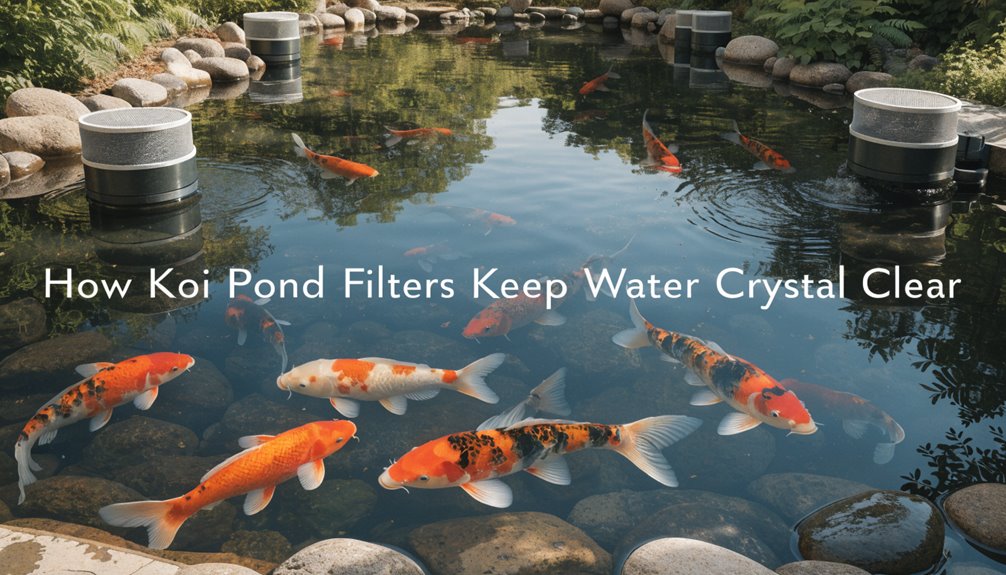
Although maintaining crystal-clear water in your koi pond can be challenging, using an appropriately sized filter system makes it achievable. Your filter removes debris and particulate matter through mechanical filtration, preventing water cloudiness.
Inside the filter, biological media support colonies of beneficial bacteria that break down harmful ammonia and nitrites. This process is essential for maintaining water clarity and fish health.
Additionally, UV clarifiers integrated within the filter destroy algae-causing microorganisms, further enhancing water transparency.
Ensuring proper filter sizing and flow rate optimizes waste removal and filtration efficiency. By effectively controlling suspended solids and toxic compounds, your koi pond remains pristine.
Moreover, overpopulation can lead to a wasteful pond environment, making proper filtration even more crucial for your pond’s health. This technical approach to filtration is critical, so selecting and maintaining the right filter system directly impacts the clarity and overall quality of your pond water.
Why Combine Mechanical and Biological Filtration?

Why should you combine mechanical and biological filtration in your koi pond system? Mechanical filtration physically traps debris, preventing particles from decomposing and clouding the water. This keeps the pond clear and protects the biological media from clogging, which sustains beneficial bacteria efficiency.
Biological filtration then converts harmful toxins like ammonia into less toxic forms, maintaining stable water parameters. Together, these systems provide comprehensive waste removal by continuously eliminating solids and breaking down toxins.
This synergy not only enhances water clarity but also reduces algae growth and fosters a healthier environment for your koi. By integrating both filtration types, you ensure optimal water quality and promote vibrant, thriving koi with minimal maintenance challenges. Additionally, regular monitoring of water quality and temperature is essential to support the efficiency of your filtration systems.
Choose the Right Filter Size for Your Koi Pond
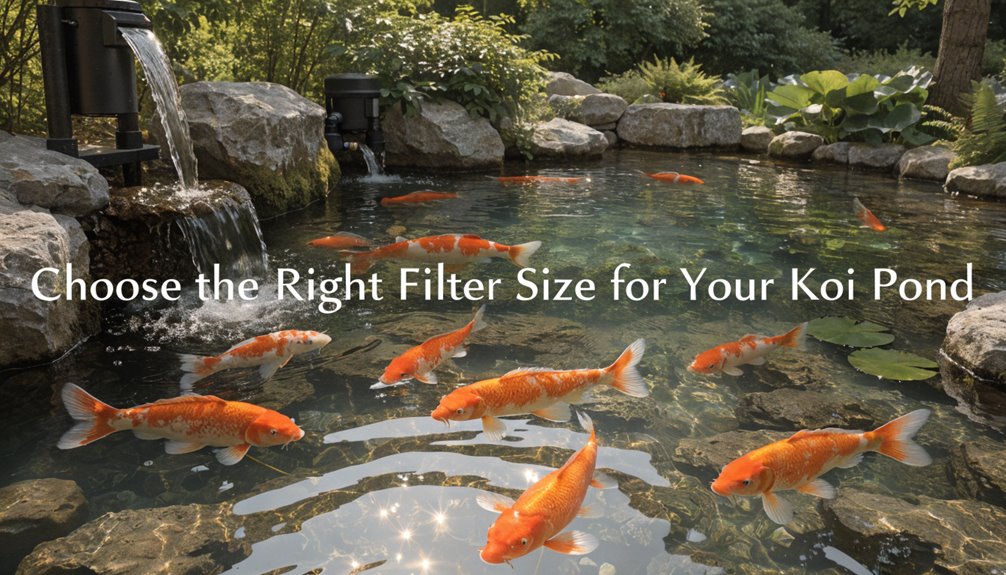
When selecting a filter for your koi pond, you need to choose one rated for at least 1.5 to 2 times the total volume of your pond to ensure effective filtration.
For example, a 1,000-gallon pond requires a filter with a flow rate between 1,500 and 2,000 gallons per hour (GPH).
This accounts for fish waste and organic debris, which demand higher filtration capacity, especially with larger koi populations.
Your filter should integrate both mechanical and biological components to efficiently remove particulate matter and process ammonia.
Properly sizing the filter maintains crystal-clear water, promotes koi health, and reduces maintenance frequency.
Undersized filters strain under waste loads, risking water quality and fish wellbeing.
Therefore, matching your filter’s capacity to your pond’s volume and bioload is essential for optimal performance. Additionally, using high-quality koi food can further enhance water quality by minimizing waste production from your fish.
Add a Pre-Filter Sieve Screen to Your Koi Pond Filter
Since large debris can quickly clog your koi pond filter and reduce its efficiency, adding a pre-filter sieve screen is a smart enhancement. Installing a sieve screen, such as the AquaSieve2, at your pond’s inlet traps leaves, twigs, and other large particles before they enter the main filter.
This early debris removal minimizes clogging and lowers maintenance frequency. By preventing excessive debris buildup, the sieve screen protects your biological media, preserving beneficial bacteria function and extending media lifespan.
Regular rinsing of the sieve screen maintains optimal flow rates, avoiding filter overload. Overall, incorporating a pre-filter sieve screen significantly improves filtration efficiency, resulting in clearer water and healthier koi.
This straightforward upgrade is essential for sustaining peak filter performance and maintaining crystal-clear pond conditions.
Upgrade Your Koi Pond Filter Media With K1 for Better Bacteria Growth
Although traditional filter media serve their purpose, upgrading to K1 media can dramatically enhance your koi pond’s biological filtration.
K1 media increases beneficial bacteria surface area by up to 50%, significantly improving ammonia and nitrite processing. Its open fiber structure promotes better oxygen penetration, fostering healthier bacteria colonies essential for waste breakdown.
By integrating K1 media, you’ll notice:
- Superior biological filtration that maintains clearer water and healthier pond conditions
- Durable, reusable media that reduces long-term replacement costs after simple rinsing
- Enhanced breakdown of organic waste, ensuring safer water chemistry for your koi
Switching to K1 media is a precise and efficient way to boost your pond filter’s performance and maintain a balanced aquatic environment. Additionally, maintaining optimal pH levels is crucial to prevent stress and infections in your koi.
Use UV Clarifiers to Control Algae and Pathogens in Your Pond
Because algae and pathogens can quickly compromise your koi pond’s water quality, using a UV clarifier provides an effective solution by exposing water to ultraviolet light that neutralizes these harmful organisms.
UV clarifiers kill algae, bacteria, and pathogens, preventing green water and reducing disease risks. To maximize effectiveness, install the UV clarifier after mechanical filters to ensure the water is clear of debris before UV exposure. Additionally, maintaining appropriate fish stocking levels helps prevent excess nutrient buildup, further enhancing the UV clarifier’s efficiency.
Choose the appropriate wattage—an 80W unit treats ponds up to 10,000 gallons. Regularly replace UV bulbs, typically seasonally or annually, to maintain optimal performance.
Proper sizing and maintenance of your UV clarifier are critical for controlling algae blooms and keeping your koi pond’s water crystal clear and healthy.
Install Pond Skimmers to Remove Surface Debris Efficiently
When you install a pond skimmer like the Savio Compact Skimmerfilter at the pond’s edge, you efficiently capture floating debris such as leaves and insects before they sink or clog your filtration system. Proper placement maximizes surface coverage, preventing debris buildup and reducing maintenance.
Skimmers continuously draw debris into a basket or net, which you can easily clean to maintain water quality and protect pumps from clogging, extending equipment lifespan.
To optimize your pond skimmer’s performance:
- Position it strategically for maximum surface debris capture
- Regularly empty and clean the skimmer basket
- Inspect and clear the surrounding area to avoid blockages
This precise approach ensures crystal clear water and enhances your koi pond’s filtration efficiency.
Add Natural Bog Filters to Enhance Koi Pond Filtration
After efficiently removing surface debris with a pond skimmer, adding a natural bog filter can further enhance your koi pond’s filtration system. This filter uses water plants and gravel to biologically remove nutrients and organic waste, reducing nitrate levels by up to 50%. It supports beneficial bacteria activity, providing continuous biological filtration that stabilizes water quality without relying on chemicals.
Incorporating a bog filter complements mechanical and other biological filters, creating a balanced ecosystem while also adding a natural aesthetic feature. Properly designed and maintained, bog filters lower overall filtration costs by minimizing dependence on mechanical and chemical treatments.
Add Filter Brushes to Simplify Cleaning and Reduce Sludge
If you want to reduce maintenance time and improve filtration efficiency, adding filter brushes to the first bay of your multi-bay pond filter is essential. These brushes trap debris before it reaches the main media, simplifying cleaning and preventing sludge buildup. They also increase surface area for beneficial bacteria, boosting biological filtration.
When you incorporate filter brushes, you’ll benefit from:
- Efficient capture of fine particles and organic matter, promoting clearer water
- Easier routine maintenance by quickly removing accumulated debris
- Extended lifespan of other filter media due to reduced clogging and buildup
Remember to clean or replace filter brushes regularly to maintain optimal debris removal and support a healthy environment for your koi pond.
This straightforward upgrade significantly enhances your pond’s filtration system.
Automate Maintenance With Drum Filters and Back-Flush Systems
Although manual cleaning remains common, automating maintenance with drum filters and back-flush systems drastically reduces your workload by continuously removing debris without intervention. Drum filters trap solids on a rotating drum, while back-flush systems use pressurized water to reverse flow and dislodge debris, triggered by sensors or timers. This automation can reduce manual cleaning by up to 80%, maintaining consistent water clarity and minimizing pond downtime.
| Feature | Function | Benefit |
|---|---|---|
| Drum Filter | Continuous debris removal | Reduces manual cleaning |
| Back-Flush System | Reverse flow cleaning | Simplifies maintenance |
| Timers/Sensors | Automated cycle control | Ensures timely cleaning |
You’ll save significant time and labor by integrating these technologies into your koi pond filtration system.
Boost Aeration Inside Your Koi Pond Filter to Enhance Bacteria
When you boost aeration inside your koi pond filter, you supply more oxygen to beneficial bacteria, significantly enhancing their ability to break down waste. This increased oxygen flow optimizes biological filtration, improving ammonia and nitrite conversion while preventing anaerobic zones that cause foul odors and sludge buildup.
To effectively boost aeration, consider the following:
- Use air stones or dedicated aeration pumps inside the filter chamber to elevate dissolved oxygen levels.
- Ensure even oxygen distribution throughout the filter media to maintain healthy bacteria colonies.
- Install supplementary aeration devices to increase oxygen flow, promoting clearer water and healthier koi.
Choose the Best Koi Pond Filtration Systems for Clear Water
Enhancing aeration inside your koi pond filter sets a strong foundation for biological filtration, but choosing the right filtration system takes your water clarity to the next level. You need a filter with a flow rate at least 1.5 to 2 times your pond’s volume to effectively process waste and debris.
Combining mechanical filtration to trap solids with biological filtration that supports beneficial bacteria ensures ammonia is broken down efficiently. Pressure filters paired with UV clarifiers are ideal, as they remove debris and control algae, maintaining crystal-clear water.
Proper sizing and installation are essential—filters rated for up to twice your pond’s volume work best. Prioritize these factors to optimize water quality and koi health, laying the groundwork for a clear, thriving pond environment.
Maintain and Troubleshoot Your Koi Pond Filter for Long-Term Clarity
Since koi pond filters work continuously to maintain water clarity, regular maintenance is crucial to prevent performance decline. You should routinely clean and inspect filter media and screens to avoid clogging and ensure proper flow.
Replace UV bulbs seasonally or when water clarity fades, as they control algae effectively. Monitoring water parameters like ammonia, nitrite, and pH helps you detect filtration issues early.
To maintain and troubleshoot your koi pond filter for long-term clarity, focus on these key tasks:
- Backflush pressure filters and rinse biological media to sustain filtration efficiency.
- Verify that your filter’s flow rate matches your pond volume (1-2 times per hour) for optimal biological activity.
- Regularly check and replace worn components to prevent unexpected failures and maintain water quality.
Frequently Asked Questions
How to Get Crystal Clear Water in Koi Pond?
Imagine sparkling water reflecting sunlight; you achieve this by sizing filters properly, cleaning mechanical and biological media regularly, adding UV clarifiers to kill algae, and using surface skimmers to remove debris before it clogs your system.
How to Get Super Clear Pond Water?
You’ll get super clear pond water by regularly cleaning mechanical filters, maintaining proper flow rates, replacing media timely, installing a UV clarifier, and incorporating natural filtration like plants to control nutrients and prevent algae blooms.
How to Keep Koi Fish Pond Water Clear?
You’ve got to clean filters regularly and replace media promptly. Use UV clarifiers like Aqua UV Classic 80W, maintain biological filtration with K1 media, aerate efficiently, and test water often to keep koi pond water crystal clear.
How Do I Make My Fish Pond Water From Green to Crystal Clear?
You’ll clear green pond water by cleaning mechanical filters, using biological media to break down toxins, installing UV sterilizers to eliminate algae, ensuring proper aeration, and controlling feeding to prevent nutrient buildup fueling algae growth.
Conclusion
Maintaining crystal clear koi pond water relies heavily on effective filtration—combining mechanical and biological methods is key. Did you know that a properly sized filter can reduce harmful ammonia by up to 90%? By integrating advanced media like K1 and automating maintenance with drum filters, you’ll optimize bacteria growth and system efficiency. Prioritize aeration and regular upkeep to ensure long-term clarity and a healthy environment for your koi.