To treat koi ulcers early, promptly identify red or raw patches, small sores, or behavioral changes like rubbing. Carefully clean ulcers once or twice daily with hydrogen peroxide and gentle scrubbing, then apply iodine antiseptic and a protective sealant on dry skin. Maintain optimal water quality and minimize stress to boost healing. Monitor progress closely, adjusting care based on severity to prevent worsening. If ulcers persist or worsen, professional guidance becomes necessary. The following details will help optimize your koi’s recovery.
Key Facts Summarized
- Regularly inspect koi for early ulcer signs like red patches, sores, or behavioral changes to catch issues before severity increases.
- Gently clean ulcers with hydrogen peroxide and a soft brush once or twice daily to disinfect and remove necrotic tissue without stressing the fish.
- Apply iodine antiseptic after cleaning to prevent secondary infections and use antibiotic paste with denture adhesive to seal and protect the wound.
- Maintain optimal water quality by monitoring ammonia, nitrite, pH, and oxygen levels to support immune function and prevent ulcer progression.
- Quarantine infected koi to limit ulcer spread and use beneficial bacteria treatments to outcompete harmful pathogens and promote healing.
What Are Koi Ulcers and Why Treat Early

Although koi ulcers may seem like minor skin issues at first, they’re open sores primarily caused by bacterial infections such as Aeromonas and Pseudomonas. You need to treat these ulcers early because, if left untreated, they can progress to systemic infections, organ failure, and death.
Ulcers typically arise following physical injuries, parasitic damage, or poor water quality that compromises your koi’s immune system. By recognizing and addressing ulcers promptly, you prevent secondary infections like fungal invasions and reduce serious health risks.
Immediate intervention involves proper wound care and improving water quality, which significantly boosts recovery chances. Additionally, poor water quality is a major contributing factor to ulcer development, making it essential to monitor and maintain optimal conditions. Acting quickly helps you avoid complications, ensuring your koi’s health remains stable and increasing their likelihood of full healing without lasting damage.
How Minor Injuries Lead to Koi Ulcers
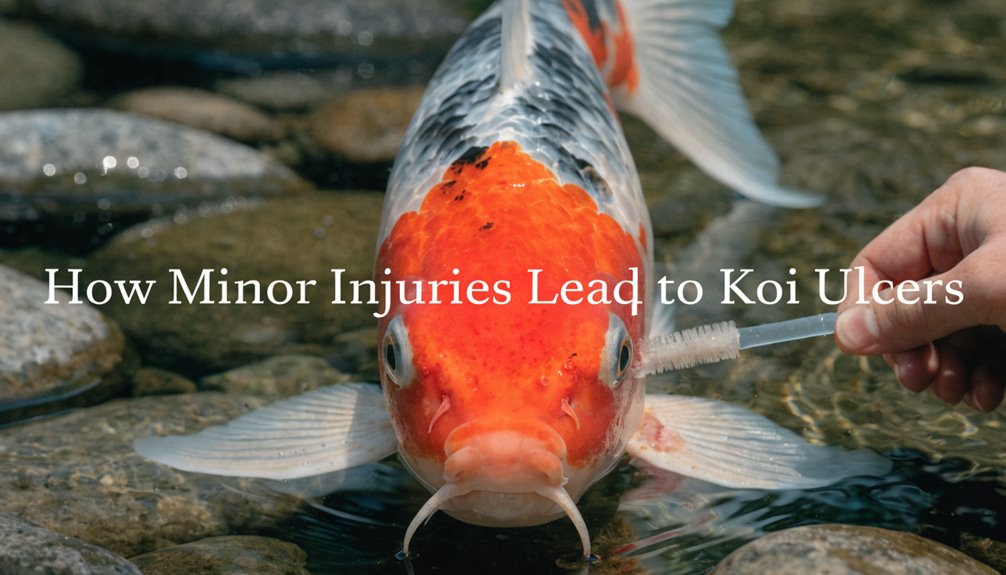
When koi sustain minor injuries such as scrapes, cuts, or abrasions, these breaches in the skin provide direct entry points for harmful bacteria like Aeromonas and Pseudomonas.
Physical damage from spawning or handling exacerbates this, breaking the skin’s protective barrier and increasing bacterial invasion risk.
Parasites can worsen the situation by causing skin irritation or micro-wounds, facilitating bacterial entry.
If your koi’s immune system is weakened by poor water quality or stress, healing slows, and bacteria proliferate more easily.
Without prompt treatment, these small injuries rapidly progress as bacteria invade deeper tissues, causing necrosis and ulcer formation.
Understanding this progression emphasizes the importance of immediate care and maintaining optimal environmental conditions to prevent minor injuries from becoming serious, debilitating ulcers. Additionally, failing to manage koi population control can lead to an overcrowded pond, worsening water quality and increasing stress on the fish.
Early Signs of Koi Ulcers to Watch For
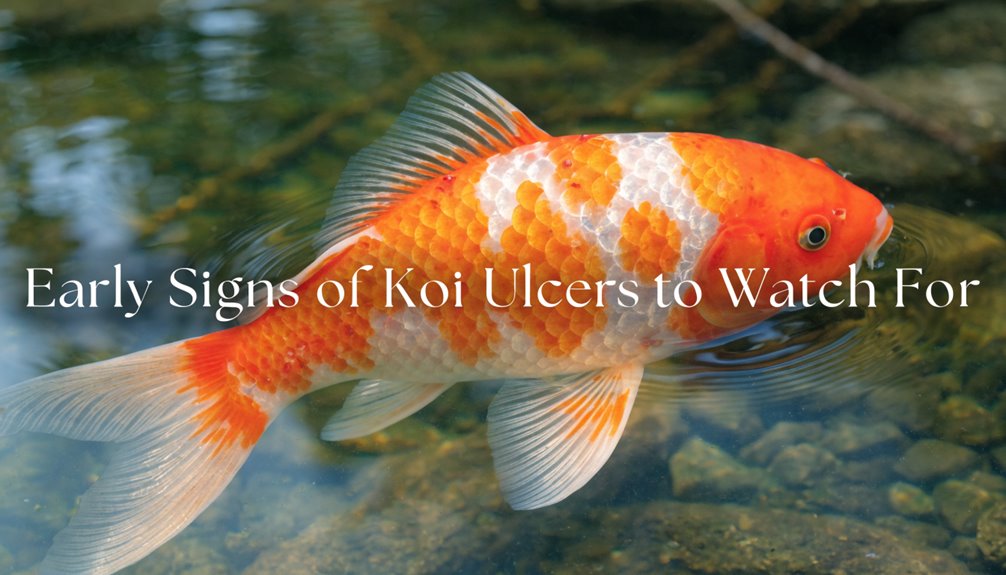
Identifying koi ulcers early can significantly improve treatment outcomes by preventing progression to severe tissue damage. You should watch for red or raw patches on the skin or fins, which may be slightly swollen. Open sores or small pinpoint wounds often mark the initial stage of ulcer development.
Behavioral changes like rubbing against objects or increased flashing also indicate underlying skin damage. A noticeable loss of the fish’s natural slime coat in the affected area is a common early sign of ulcer formation.
Slight discoloration or white edges around wounds can suggest the onset of tissue necrosis. By recognizing these precise clinical signs promptly, you can intervene before ulcers deepen, reducing the risk of secondary infections and improving recovery chances. Additionally, maintaining optimal water quality is crucial in preventing stress that can exacerbate ulcer development.
How to Inspect Your Koi for Ulcer Symptoms
Because koi ulcers can develop rapidly, you should conduct regular, thorough inspections to detect early symptoms before they worsen. Begin by visually scanning your koi for open sores, red patches, or necrotic tissue on skin and fins.
Use a magnifying glass to identify small wounds or parasites, especially near fins and body edges, which often initiate ulcers. Check for injuries caused by handling, spawning, or sharp objects in the pond, as these breaches facilitate bacterial entry.
Observe behavioral changes such as lethargy, loss of appetite, or abnormal swimming, which may signal underlying ulcer issues. Conduct inspections frequently to enable prompt intervention and prevent escalation of ulcers, ensuring your koi remain healthy and resilient. Additionally, monitor ammonia levels closely, as elevated levels can contribute to stress and increase the risk of ulcer formation.
How Poor Water Quality Increases Ulcer Risk
Although koi ulcers can arise from various causes, poor water quality significantly elevates the risk by compromising your koi’s immune defenses and damaging their protective skin barriers.
Elevated ammonia and nitrite levels directly weaken their immune system, increasing susceptibility to ulcer-causing bacteria. Additionally, fluctuations in pH and low dissolved oxygen levels damage skin integrity, facilitating bacterial entry.
Finally, toxin accumulation from inadequate filtration impairs the slime coat, creating open wounds vulnerable to infection.
To summarize, poor water quality increases ulcer risk by:
- Suppressing immune function through toxic ammonia and nitrite exposure.
- Damaging skin and slime coat via pH imbalance and oxygen depletion.
- Allowing bacterial colonization due to toxin build-up and compromised barriers.
Maintaining optimal water parameters is crucial to prevent ulcers from developing or worsening. Regularly recalculating pond volume ensures accurate treatment dosages and optimal water quality.
How Stress Weakens Koi’s Defenses Against Ulcers
When koi experience stress, their production of protective mucus and slime coat decreases, weakening the primary barriers against bacterial infections like ulcers. Stressors such as poor water quality, overcrowding, or handling trigger hormonal changes that impair immune function and reduce antibody production.
This compromised immune response limits your koi’s ability to fend off bacterial invasion through skin injuries. Additionally, physical damage during spawning elevates stress, further diminishing the fish’s natural healing capacity.
Chronic stress prolongs immune suppression, increasing vulnerability to secondary infections that cause ulcers. To maintain koi health and prevent ulcers, you must minimize stress by optimizing environmental conditions and handling practices.
How Parasites Trigger Koi Ulcers
Stress weakens koi’s immune defenses, creating an environment where parasites can more easily establish themselves. Parasites like anchor worms, flukes, and lice inflict micro-wounds on the skin, compromising the protective mucus layer that normally guards against bacterial invasion.
This damage sets the stage for ulcer development. You can understand their role in ulcer formation by focusing on three key mechanisms:
- Parasites create physical breaches in the skin, allowing bacteria to penetrate and infect underlying tissues.
- They cause irritation that prompts koi to scratch or rub, worsening wounds and increasing bacterial colonization.
- Some parasites inject toxins or trigger inflammation, which further damages tissue and facilitates bacterial growth.
Controlling these parasites promptly is crucial to prevent ulcers from taking hold.
How Physical Injuries Open the Door to Infection
Because physical injuries compromise the integrity of koi skin, they provide direct entry points for harmful bacteria. When your koi sustain scrapes or cuts from pond equipment, rocks, or rough handling, these open wounds allow pathogens like Aeromonas and Pseudomonas to invade.
Spawning activities can cause scale loss or abrasions, further exposing the underlying tissue. Additionally, parasite damage to the mucous layer weakens this first line of defense, making the skin more susceptible to infection through even minor breaches.
Micro-tears caused by sharp objects can rapidly develop into ulcerations if bacteria colonize the area unchecked. These injuries disrupt the koi’s natural barriers, lowering resistance and facilitating opportunistic bacterial growth.
Understanding how physical trauma creates these vulnerabilities is essential for preventing ulcer formation and managing koi health effectively.
How to Safely Clean Minor Koi Ulcer Wounds
Physical injuries on koi create openings that bacteria quickly exploit, making prompt and careful wound care vital to prevent ulcers from worsening.
To safely clean minor koi ulcer wounds, follow these steps:
- Gently dab the ulcer with a cotton swab soaked in hydrogen peroxide to disinfect and remove loose tissue. Then use a soft brush or Q-tip to carefully scrub around the wound without excessive force.
- Thoroughly but gently dry the wound area after cleaning to prepare it for medication and prevent dilution of topical treatments.
- Limit wound cleaning to once or twice daily to minimize stress and avoid further tissue damage.
Using Hydrogen Peroxide and Iodine to Prevent Infection
When you notice a koi ulcer, promptly applying hydrogen peroxide followed by iodine can significantly reduce bacterial and fungal infections.
Use a cotton swab to carefully apply hydrogen peroxide to the ulcer, which disinfects by killing bacteria and removing necrotic tissue.
Afterward, apply iodine as an antiseptic to prevent secondary infections.
Be precise in targeting only the affected area to avoid damaging healthy tissue.
Repeated treatment with these agents during the initial phase is crucial for controlling infection and accelerating healing.
Avoid excessive use, as overapplication can harm surrounding skin.
This protocol supports effective infection management and improves recovery outcomes, reducing the risk that the ulcer will worsen or become systemic.
Always monitor the ulcer’s progress and maintain a controlled, hygienic environment for your koi.
How to Apply Antibiotic Paste and Liquid Bandages
After reducing infection risk with hydrogen peroxide and iodine, the next step involves applying an antibiotic paste combined with a denture adhesive directly into the ulcer. This creates a protective barrier that seals the wound and prevents bacterial entry.
Follow these steps precisely:
- Mix antibiotic (Tricide Neo or Neocide) with denture adhesive, then gently fill the ulcer, covering all dead tissue and sealing the wound.
- Ensure the wound area is dry before applying a liquid bandage or waterproof sealant, extending slightly beyond the ulcer margins for a secure adhesion.
- Monitor the seal; reapply antibiotic paste and liquid bandage if signs of infection appear or if the seal loosens during healing.
This method effectively protects the ulcer, promoting a sterile environment essential for recovery.
Using Beneficial Bacteria to Help Heal Ulcers
Although topical treatments protect the ulcer site, maintaining a balanced microbial environment in your pond is crucial for optimal healing.
Beneficial bacteria, such as Aqua Medzyme™, reduce pathogenic bacteria by outcompeting them, thereby lowering the risk of secondary infections. These bacteria break down organic waste, improving water quality and minimizing stress on your koi, which supports their immune response.
You can safely use beneficial bacteria alongside antibiotics and wound treatments without disrupting the healing process.
Regular application helps sustain a balanced microbial ecosystem, accelerating ulcer recovery.
Why Quarantine Tanks Prevent Ulcer Spread
To effectively prevent the spread of ulcers among your koi, you need to isolate affected fish in quarantine tanks. Quarantine tanks serve as controlled environments where you can manage infected koi separately, reducing cross-contamination risks. Here’s why they’re essential:
- Containment: Quarantine tanks isolate bacterial and parasitic infections, preventing transmission to healthy fish in the main pond.
- Targeted Treatment: You can administer specific medications and closely monitor ulcer progress without risking pond-wide contamination.
- Stress Reduction: Separating infected koi minimizes stress for healthy fish by limiting their exposure to pathogens and compromised water quality.
Monitoring Koi Behavior to Track Ulcer Recovery
When monitoring koi behavior to track ulcer recovery, you’ll want to observe daily changes during feeding times, focusing on activity levels and swimming patterns that reflect the fish’s overall health.
Look for increased appetite and reduced lethargy, which indicate positive recovery.
Regularly inspect the ulcer site for decreased redness, swelling, and the formation of healthy, white tissue signaling healing progress.
Watch for diminished signs of discomfort, such as flashing or rubbing against surfaces, which often point to ongoing irritation.
Maintain a consistent observation schedule to detect early signs of deterioration, including new ulcers or worsening symptoms.
Promptly addressing these changes will help you manage the condition effectively and prevent complications, ensuring your koi recover as swiftly as possible.
Maintaining Water Quality During Ulcer Healing
Since water quality directly impacts koi health, maintaining optimal conditions is essential for ulcer healing. High ammonia and nitrite levels weaken immune defenses and worsen ulcer formation, so keeping them low is critical.
To ensure a stable environment, focus on these key actions:
- Test water parameters regularly—including pH, KH, ammonia, nitrite, and dissolved oxygen—to detect and correct imbalances promptly.
- Perform consistent water changes of 10-20% twice weekly to dilute toxins and maintain cleanliness.
- Stabilize temperature and avoid sudden pH swings to reduce stress, supporting immune function and tissue repair.
Additionally, incorporating beneficial bacteria like Aqua Medzyme™ can suppress pathogenic microbes, promoting a balanced microbial environment that aids recovery.
Maintaining these parameters precisely helps create the best conditions for your koi’s ulcers to heal effectively.
When to Use Medicated Baths for Koi Ulcers
Although maintaining optimal water quality and performing topical treatments are fundamental, medicated baths become necessary when koi ulcers show early bacterial infection or fail to respond to initial care.
Use medicated baths, such as NitroCure™, for 4-5 consecutive days to effectively target bacteria on small, external ulcers or spreading lesions. They’re especially important when ulcers resist topical treatments or rapidly worsen.
Ensure water temperature and medication concentration align with manufacturer guidelines to prevent koi stress during treatment.
Combining medicated baths with continued water quality management and diligent wound care enhances healing outcomes.
By monitoring the ulcer’s response closely, you can apply medicated baths at the appropriate stage, minimizing infection severity and preventing complications.
This targeted approach supports effective bacterial control and promotes prompt ulcer resolution.
How to Adjust Ulcer Treatment as Healing Progresses
Medicated baths play a vital role in managing bacterial infections during the early stages of koi ulcers, but as healing progresses, you’ll need to modify the treatment approach to support tissue regeneration.
Monitor the ulcer closely for reduced redness, swelling, and healthy white tissue formation. Then, adjust your care as follows:
- Gradually reduce the frequency of topical treatments and scrubbing to avoid disrupting new tissue growth.
- Switch medication types and concentrations from aggressive antibacterials to maintenance or supportive care based on healing status.
- Maintain optimal water quality and environmental conditions to prevent secondary infections and promote continued healing.
Recognize full healing when the ulcer surface is smooth and scarred with no active inflammation, then cease treatment to avoid unnecessary stress to your koi.
Common Mistakes That Make Koi Ulcers Worse
When treating koi ulcers, making certain errors can significantly hinder recovery and even worsen the condition. Avoid using strong antibiotics or chemicals too early, as they damage healthy tissue. Excessive scrubbing or handling aggravates wounds and increases infection risks. Neglecting water quality lets bacteria proliferate, complicating healing. Incomplete disinfection leaves pathogens behind, causing secondary infections. Delaying treatment or ignoring root causes like parasites allows ulcers to worsen systemically.
| Mistake | Effect | Prevention |
|---|---|---|
| Premature antibiotics | Tissue damage, delayed healing | Use targeted, appropriate meds |
| Excessive ulcer handling | Trauma, infection risk | Minimize contact during care |
| Ignoring water quality | Bacterial growth | Maintain optimal water parameters |
How Long Does It Take for Koi Ulcers to Heal?
Healing time for koi ulcers varies widely based on the ulcer’s severity and treatment consistency. You’ll notice mild ulcers improve within about 3 days with proper care.
More significant ulcers, however, need longer periods of treatment to heal fully. Here’s a breakdown to guide your expectations:
- Mild ulcers: noticeable improvement in 3 days; full healing within 2 weeks.
- Moderate ulcers: 7 to 14 days of consistent treatment for significant recovery.
- Severe ulcers: may require 3 to 4 weeks or longer to heal completely.
Maintaining optimal water quality and intervening early are critical to reducing healing times. By managing these factors, you ensure your koi recovers efficiently without complications.
When to Call a Vet for Koi Ulcer Treatment
Although many koi ulcers respond well to at-home care, you should consult a veterinarian immediately if the ulcer rapidly enlarges, the fish shows lethargy or loss of appetite, or if abnormal swimming patterns develop. Rapid ulcer progression or systemic signs often indicate severe infection requiring professional intervention.
Contact a vet if ulcers fail to improve after 3-5 days of proper treatment, or if secondary fungal or bacterial infections emerge. You should also seek veterinary assistance when multiple koi develop ulcers simultaneously or when ulcers spread despite initial care.
Vets provide specialized treatments, including antibiotics and injections, crucial for internal or advanced infections. Lastly, if you’re uncertain about ulcer severity or appropriate protocols, always err on the side of caution and consult a veterinarian promptly.
Frequently Asked Questions
Can Koi Ulcers Heal on Their Own?
Koi ulcers rarely heal on their own because bacterial invasion and poor water quality hinder recovery. You need to treat them promptly with appropriate medications and maintain optimal water conditions to prevent worsening and secondary infections.
Why Add Baking Soda to Koi Pond?
You add baking soda to your koi pond to stabilize pH and increase alkalinity, preventing harmful fluctuations that stress fish. This buffering reduces ammonia spikes and maintains water chemistry, promoting healthier skin and lowering ulcer risks effectively.
Can Warm Water and Honey Heal an Ulcer?
Yes, warm water and honey can aid healing; studies show honey’s antibacterial properties reduce infection risk by up to 80%. You should use them carefully with proper temperature and alongside other treatments for effective koi ulcer recovery.
What Do Koi Ulcers Look Like?
You’ll see koi ulcers as open sores with reddened edges, often punched-out or shallow wounds. They may have cloudy, slimy surfaces with necrotic tissue, varying in size, and sometimes develop white or grayish centers over time.
Conclusion
Think of treating koi ulcers like tending a delicate garden: catching the first wilted leaf prevents the entire patch from withering. By recognizing early signs and maintaining optimal water quality, you stop minor injuries from blossoming into serious infections. Stay vigilant, adjust treatments as the wound heals, and avoid common pitfalls. Just as a gardener calls an expert for stubborn pests, don’t hesitate to consult a vet when ulcers resist your care.