You’ll want to choose healthy koi by checking for bright, evenly saturated colors with sharp boundaries and smooth, shiny skin free from mucus or algae. Inspect their body for symmetry, firmness, and absence of lumps or deformities. Observe confident, calm swimming and normal gill movement without rapid breaths. Ask the seller about health tests and quarantine protocols. Selecting the right size and temperament for your pond also matters. Understanding these key factors sets the foundation for successful koi care.
Key Facts Summarized
- Inspect koi for bright, evenly saturated colors, smooth skin, symmetrical fins, and absence of deformities or external growths.
- Observe koi behavior for confident swimming, steady gill movement, clear eyes, and responsive feeding without signs of stress.
- Verify koi origin and bloodline quality to ensure genetic robustness and lower disease susceptibility.
- Ask dealers for health certificates, quarantine practices, and disease testing like KHV before purchase.
- Choose koi size compatible with your pond capacity and select calm, mild-tempered fish for better care and harmony.
Why Choosing Healthy Koi Matters for Your Pond

When you choose healthy koi for your pond, you significantly reduce the risk of disease outbreaks like Koi Herpesvirus (KHV), which can quickly devastate a population of weak or infected fish.
Healthy koi display bright, vibrant colors and symmetrical fins, indicators of strong immune systems and robust genetics. By purchasing disease-free koi, you ensure long-term pond health, minimizing costly treatments and fish loss.
Well-conditioned koi demonstrate resilience to environmental stresses such as temperature fluctuations and water quality changes, improving survival rates.
Selecting koi without visible deformities or scars further prevents future health complications.
Prioritizing these characteristics promotes a thriving pond ecosystem, maintaining balance and stability that benefits all aquatic life within your system. Additionally, understanding seasonal needs for koi care enhances their overall well-being and longevity.
How to Spot Vibrant and Consistent Koi Colors
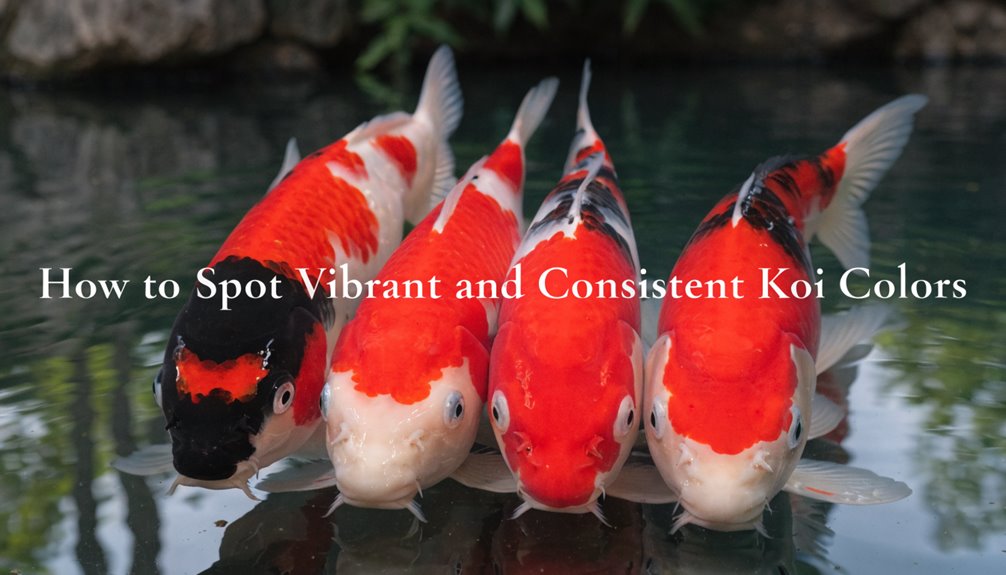
Although it can be challenging to assess koi color quality at a glance, focusing on brightness and consistency helps you identify healthy specimens. Look for bright, deep, and evenly saturated colors without fading or dullness. Confirm that each hue is consistent in shade and intensity across the entire body, with sharply defined boundaries. Observe koi under good lighting to ensure colors match breed standards. Avoid those with blotchy, patchy, or discolored areas, which may signal health problems. Proper water quality management is essential for vibrant colors and overall koi health.
| Color Quality | What to Look For |
|---|---|
| Brightness | Deep, vivid colors without dullness |
| Consistency | Uniform shade and intensity |
| Definition | Clear boundaries between hues |
| Discoloration | None; avoid blotchy or fading areas |
How to Check Koi Skin for Shine and Cleanliness
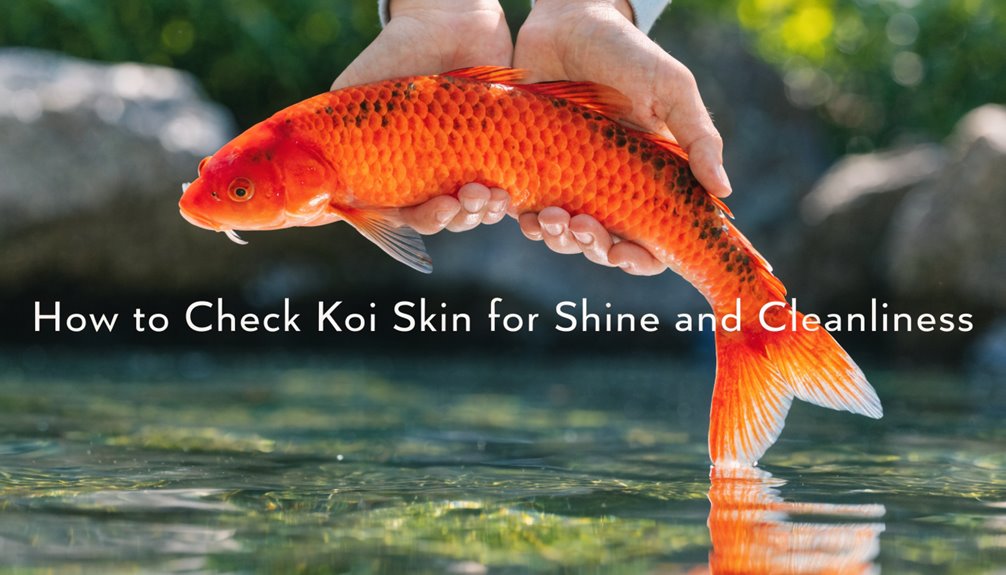
Assessing koi color quality provides valuable insight into their overall health, but examining their skin offers additional critical information. You should focus on the skin’s shine and cleanliness to gauge vitality accurately.
When checking koi skin, follow these steps:
- Confirm the skin is shiny, bright, and smooth, without dull or faded patches.
- Ensure the skin is clean, free from algae, mucus buildup, or infection signs.
- Verify consistent coloration across the entire body, indicating good nutrition.
- Look closely for any scars, lesions, or irregular blemishes that may indicate health problems.
Healthy koi skin feels firm and supple, not rough or leathery. This precise evaluation helps you select robust, well-maintained koi before purchase. Additionally, understanding water quality management is essential for maintaining the health of your koi after purchase.
How to Inspect Koi Body Shape and Symmetry
Because body shape and symmetry directly affect a koi’s swimming efficiency and overall health, you must scrutinize these features carefully. Check that the koi’s body is evenly shaped from head to tail, with no lumps, indentations, or deformities. The profile should be streamlined, with a broad head tapering smoothly to the tail. Ensure the koi’s body length and height are balanced and symmetrical. Also, verify that the eyes are well-aligned and symmetrical, indicating proper development. Maintaining optimal water quality is essential for the overall health and vitality of the koi.
| Feature | What to Look For | Significance |
|---|---|---|
| Body Shape | Even, no deformities or lumps | Efficient swimming, good health |
| Profile Symmetry | Broad head tapering to tail | Streamlined movement |
| Eye Alignment | Symmetrical, well-developed eyes | Proper growth, health indicator |
How to Examine Koi Fins for Damage or Fraying
Once you’ve confirmed the koi’s body shape and symmetry are balanced, shift your focus to the fins, which play a vital role in swimming and stability. Examine the fins carefully to identify any damage or irregularities that could indicate health issues.
When assessing koi fins, focus on these key points:
- Check for tears, fraying, or missing fin rays, which signal physical damage or poor health.
- Ensure fins are symmetrical, evenly shaped, and free from clumping or deformities.
- Confirm fins are firm with smooth edges, avoiding ragged or frayed appearances.
- Observe the fins’ position; healthy fins should be naturally extended, not drooping or held tightly close to the body.
Additionally, remember that overpopulation can lead to increased stress and health issues in koi, which may be reflected in their fin condition.
Avoid koi with torn, discolored, or lesion-covered fins to ensure you select a healthy specimen.
How to Check Koi Eyes for Brightness and Clarity
When you examine a koi’s eyes, focus on their brightness and clarity, as these are key indicators of its overall health. Bright, clear eyes should be free of cloudiness, spots, or discoloration. Check that pupils are symmetrical, sharply defined, and without swelling or protrusion. Healthy eyes appear shiny and reflective, like glass or polished stones. Avoid koi with dull, milky, or hazy eyes, which may indicate infection or health problems. Also, ensure eyes are proportionate to the head and not sunken or swollen.
| Feature | Healthy Koi Eyes |
|---|---|
| Brightness | Shiny and reflective |
| Clarity | Clear, no cloudiness or spots |
| Pupils | Symmetrical, sharply defined |
| Size and Position | Proportionate, not sunken or swollen |
| Color | Natural, no discoloration |
How to Spot Stress and Disease Signs in Koi
Although koi often display subtle signs of stress and disease, you can identify these early by closely observing their physical condition and behavior. Detecting issues promptly helps ensure healthy koi selection.
Focus on these four critical indicators:
- Examine fins for tears, fraying, or discoloration, which often signal stress or infection.
- Note swimming patterns; sluggish or erratic movements suggest illness or discomfort.
- Observe breathing rate and gill activity; rapid or labored breathing indicates stress or poor water quality.
- Inspect the body for lesions, white spots, or abnormal markings, pointing to parasites or infections.
Why You Should Avoid Koi With Lumps and Bumps
Noticing lumps and bumps on a koi’s body should raise immediate concerns about its health status. These irregularities often indicate infections, tumors, or underlying internal issues that compromise the fish’s well-being.
You should avoid koi with such deformities because they may result from past injuries or genetic defects, leading to chronic health problems. Additionally, lumps can weaken the immune system, making the fish more susceptible to disease and less resilient in your pond environment.
External growths may impair swimming ability and detract from the koi’s aesthetic value. Importantly, introducing koi with lumps risks spreading health problems to your existing population, potentially causing widespread issues.
Prioritize selecting koi with smooth, unblemished bodies to ensure stronger, healthier fish and protect your pond’s ecosystem.
Why Quarantine Is Vital for New Koi
Because koi can carry diseases that remain hidden without symptoms, quarantining new arrivals for at least 2-4 weeks is essential to protect your existing pond population. This isolation period helps prevent pathogens like KHV and harmful bacteria from spreading.
During quarantine, you’ll conduct regular health assessments and water quality tests to detect early illness signs. Use separate filtration and equipment to avoid cross-contamination.
Follow these key steps:
- Isolate new koi in a dedicated tank with independent filtration.
- Monitor behavior, appetite, and physical condition closely.
- Test water parameters frequently to maintain optimal health conditions.
- Only introduce koi to your main pond after confirming they’re disease-free.
Adhering to these protocols significantly reduces outbreak risks and safeguards your aquatic environment.
How to Spot Healthy Koi Behavior
When you observe your koi, pay close attention to their activity levels and swimming behavior, as these are key indicators of health. Healthy koi swim confidently with smooth, consistent movements and show no signs of lethargy or erratic darting. Look for clear, bright eyes and steady gill motion, which reflect good respiratory function. Additionally, koi that feed calmly and interact socially without aggression or stress demonstrate positive behavior patterns. Avoid koi that hide or isolate themselves, as this may indicate illness or discomfort.
| Behavior Aspect | Healthy Indicator | What to Avoid |
|---|---|---|
| Activity Level | Active, confident swimming | Lethargy or sluggishness |
| Eye & Gill Health | Clear eyes, smooth gill motion | Cloudy eyes, labored breathing |
| Social Interaction | Curious, non-aggressive | Hiding, isolating |
| Feeding Behavior | Calm, responsive feeding | Aggression or stress signs |
Japanese vs. Domestic vs. Imported Koi Quality
Although koi are bred worldwide, quality varies significantly between Japanese, domestic, and imported fish. Japanese koi hold the highest quality due to rigorous breeding standards and meticulous selection.
Domestic koi, especially those bred in the US, often lack the precise color and pattern consistency seen in Japanese koi, leading to lower value.
Imported koi from countries like Taiwan, Malaysia, and China vary widely; their quality depends on the breeder’s reputation and adherence to health protocols.
When choosing koi, consider these factors:
- Japanese koi exhibit superior bloodlines and consistent patterns.
- Domestic koi may offer affordability but often sacrifice precision.
- Imported koi quality fluctuates; verify country of origin and breeder reputation.
- Health protocols and quarantine practices impact imported koi reliability.
How Your Koi’s Bloodline Affects Their Health
The quality distinctions among Japanese, domestic, and imported koi often stem from their underlying bloodlines, which play a significant role in determining their health and resilience. High-quality bloodlines are selectively bred to enhance genetic robustness, resulting in koi with stronger immune systems and fewer health problems over time.
In contrast, poor or mixed bloodlines may harbor genetic weaknesses that increase susceptibility to deformities and diseases. Reputable breeders rigorously test and select for strong bloodlines, ensuring better longevity and growth potential.
Questions to Ask Your Koi Dealer About Fish Health
Since koi health directly impacts their longevity and your pond’s ecosystem, you should ask your dealer specific questions before making a purchase. This ensures you acquire fish free from disease and stress, which is crucial for a thriving environment.
Focus on these key inquiries:
- Have the koi been tested for diseases like KHV, and can you provide health certificates?
- Were the koi quarantined to prevent illness transmission to my pond?
- What health monitoring practices do you maintain, including water quality tests and fish inspections?
- Do you offer any health guarantees or warranties, and can you supply documentation on origin, vaccination, and treatments?
These questions help verify the koi’s health status scientifically and protect your investment by minimizing disease risks.
How to Choose Koi Size for Your Pond
Confirming your koi’s health is just the first step; selecting the right size for your pond plays an equally important role in maintaining a balanced aquatic environment. You need to consider your pond’s capacity, depth, and filtration system relative to the koi’s potential growth. Choose koi that are neither too small nor stunted to ensure healthy development.
| Pond Capacity (Gallons) | Minimum Depth (Feet) | Recommended Koi Size (Inches) |
|---|---|---|
| 1,000+ | 3-4 | Up to 12 (juvenile) |
| 2,000+ | 4-5 | 12-24 (sub-adult) |
| 3,000+ | 5+ | 24-36 (adult) |
This ensures adequate space for swimming, growth, and effective filtration.
How to Pick Koi Based on Personality and Temperament
When selecting koi, paying close attention to their personality and temperament can significantly enhance the harmony of your pond. Observing their behavior during feeding helps identify individuals that are calm and confident, which indicates a friendly nature.
You should also try hand-feeding koi to gauge their comfort with human interaction.
Certain varieties, like Chagoi, Ogon, and Karashi, are known for mild, sociable temperaments, ideal for community settings.
Avoid koi that display aggression or skittishness, as these traits often signal stress or health problems.
- Observe koi feeding behavior for calmness and confidence.
- Hand-feed gradually to assess human interaction comfort.
- Favor mild-tempered varieties like Chagoi and Ogon.
- Avoid aggressive or easily startled koi to maintain pond harmony.
How to Monitor Water Quality for Healthy Koi
Although koi are resilient fish, maintaining optimal water quality is essential to keep them healthy and stress-free. You should regularly test key water parameters—ammonia, nitrites, nitrates, pH, and temperature—to ensure they remain within safe ranges.
Keep ammonia and nitrite levels at 0 ppm to prevent toxicity and stress. Nitrate concentrations should stay below 40 ppm to avoid harmful buildup. Maintain a stable pH between 6.8 and 8.4, as sudden shifts can damage koi health.
Additionally, monitor oxygen levels closely, especially in warmer months, because koi require higher oxygen concentrations when temperatures rise. Using aeration systems helps maintain adequate dissolved oxygen, supporting koi metabolism and immune function.
Consistent monitoring and adjustments will create a balanced pond environment that promotes koi vitality and longevity.
Tips to Keep Your Koi Healthy After Purchase
Maintaining stable water quality sets the foundation for your koi’s health, but proper care after purchase plays an equally important role in ensuring their well-being. To keep your koi healthy, follow these essential tips:
- Quarantine new koi for 2-4 weeks to prevent disease transmission before introducing them to your main pond.
- Monitor water parameters—ammonia, nitrites, nitrates, pH, temperature—regularly to maintain a stable environment.
- Perform weekly water changes of 10-15% to reduce toxins and sustain water quality.
- Feed high-quality, balanced diets in controlled portions to avoid overfeeding and resulting water pollution.
Additionally, observe your koi daily for signs of stress or illness and respond promptly. These practices optimize koi health and longevity through scientific, precise care.
Frequently Asked Questions
How to Select Good Quality Koi?
You select good quality koi by examining their vibrant, evenly distributed colors, symmetrical bodies, intact fins, clear eyes, and consistent patterns. Avoid fish with deformities, scars, or signs of stress to ensure robust health and vitality.
Why Add Baking Soda to Koi Pond?
You add baking soda to your koi pond to stabilize pH, preventing harmful fluctuations. It buffers acidity from rain or decay, promotes water quality, and supports koi health. Always dose gradually and monitor water parameters carefully.
How to Tell if Koi Fish Are Healthy?
You can tell if koi fish are healthy by checking their vibrant, evenly colored scales, intact fins, symmetrical body, clear eyes, smooth skin, and active behavior. These signs indicate proper pigmentation, growth, and overall well-being.
Why Do You Not Feed Koi in Winter?
You don’t feed koi in winter because their metabolism slows, impairing digestion. Feeding causes uneaten food to decompose, harming water quality and increasing disease risk. Stopping feeding protects their health during cold conditions.
Conclusion
Choosing healthy koi is like selecting the perfect gemstone—each detail matters. By carefully examining their color, skin, body, fins, size, and temperament, you ensure your pond thrives with vibrant, resilient fish. Remember, maintaining optimal water quality is essential to support their health. With diligent observation and care, your koi will flourish, providing lasting beauty and balance to your aquatic environment. Stay attentive, and your koi will reward you with vitality and grace.