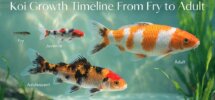
When buying koi, you face predictable costs—juveniles start around $3, with quality fish reaching thousands—and lower immediate risk, though disease and misrepresentation remain concerns. Breeding requires significant upfront investment in equipment and broodstock, plus patience over years, but grants genetic control and potentially higher financial and emotional rewards. You’ll need to carefully manage water quality, health, and environment for success. Understanding these differences equips you to optimize both investment and outcomes.
Key Facts Summarized
- Buying koi offers immediate access to mature, high-quality fish but involves higher upfront costs and risks of disease from unverified sources.
- Breeding koi requires significant initial investment in equipment, broodstock, and ongoing maintenance, with a 2–4 year wait for display-ready fish.
- Breeding allows genetic control and personal involvement, potentially yielding higher resale value but demands expertise and consistent environmental management.
- Both methods carry health risks; reputable breeders and proper quarantine reduce disease chances, but financial losses are possible if quality or health declines.
- Buying suits those seeking quick pond integration and reliability, while breeding appeals to enthusiasts pursuing emotional rewards and long-term koi development.
How Much Does Buying Koi Usually Cost?
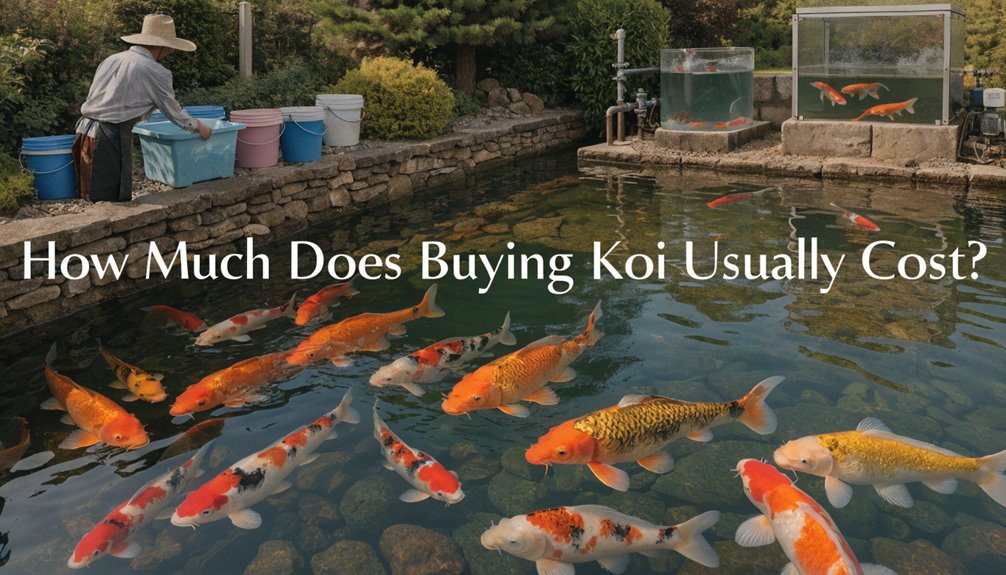
When you buy koi, the price can vary dramatically based on factors like size, bloodline, coloration, and overall quality.
Juvenile koi typically start at around $3, while wholesale purchases are priced from $15 per fish, ideal for bulk buyers or resellers.
Imported Japanese koi, prized for their heritage and rarity, generally cost between $100 and $1,500 depending on lineage and pattern precision.
High-grade, fixed-price koi, especially show-quality or champion specimens, command premiums ranging from $500 up to an exceptional $50,000.
This broad price spectrum reflects the detailed evaluation of each fish’s physical attributes and genetic background. Additionally, understanding proper pond setup is crucial for maintaining koi health and enhancing their value.
Understanding these variables helps you make informed purchasing decisions, balancing your budget against the desired quality and rarity of the koi you want to acquire.
What Are the Upfront Expenses of Breeding Koi?

Establishing a koi breeding operation demands a significant upfront investment in infrastructure and stock. You’ll need to allocate funds for essential components that ensure a controlled, healthy environment.
Key expenses include:
- Construction and setup of ponds, filtration, and water quality systems, varying widely by size and complexity.
- Acquisition of high-quality brood koi, which can cost from $100 to $1,500 per fish, especially for champion bloodlines.
- Quarantine facilities and health screening equipment to prevent disease outbreaks in breeding populations.
- Specialized breeding supplies such as spawning mats, egg protectors, and fry tanks for early-stage rearing.
These costs, combined with labor, feed, and maintenance, form the critical financial foundation you must secure before successful koi breeding can begin. Additionally, understanding pattern quality is essential for selecting desirable brood koi that can enhance your breeding program.
What Risks Come With Buying vs. Breeding Koi?
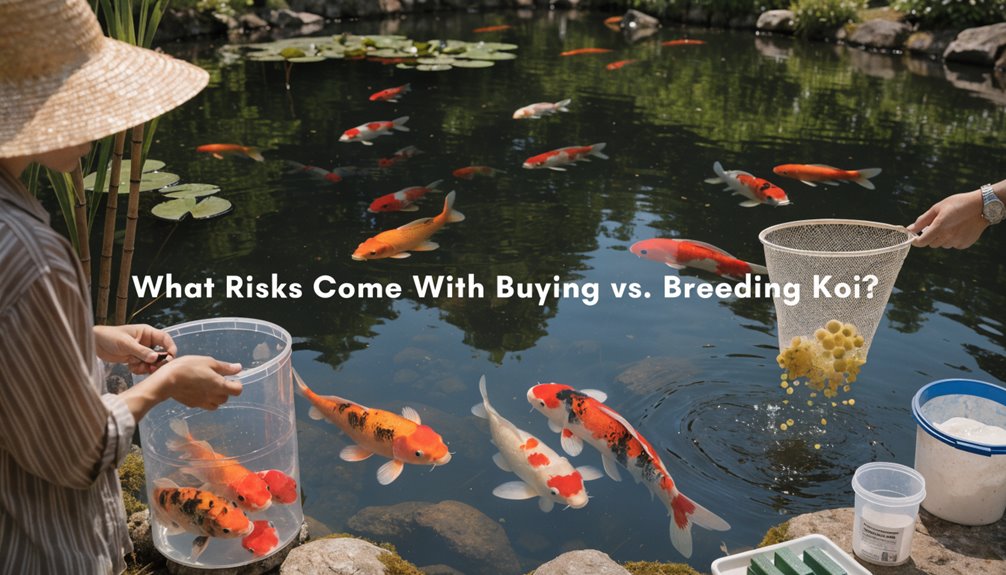
Although buying koi offers convenience, it exposes you to risks such as disease transmission, particularly when sourcing from unverified or international suppliers. Imported koi endure stressful shipping conditions, increasing susceptibility to pathogens.
Purchasing from reputable breeders reduces these risks but doesn’t eliminate the chance of subpar or misrepresented fish.
Conversely, breeding your own koi grants you genetic and health control, limiting hereditary issues. However, this requires substantial expertise; without it, you risk poor-quality offspring and financial loss.
Both approaches carry inherent financial risks if health problems arise post-purchase or post-breeding or if koi fail to meet quality standards. Additionally, koi population control methods are crucial to managing the health and wellbeing of your pond ecosystem.
Ultimately, your risk management depends on supplier credibility, breeding knowledge, and rigorous health monitoring throughout the koi’s lifecycle.
How Does Koi Quality Affect Purchase Price?
Because koi quality directly impacts their market value, understanding the specific traits that define superior specimens is crucial for buyers. The purchase price reflects a koi’s lineage, coloration, pattern clarity, and body conformation.
High-quality koi display vibrant, uniform colors and sharply defined patterns, which elevate their value significantly.
Key factors influencing price include:
- Crisp, well-balanced patterns and intense, even coloration
- Superior body shape with proportionate size and symmetry
- Proven lineage, often linked to champion-grade koi
- Larger, mature koi with fully developed traits command higher prices
Conversely, koi with inconsistent coloration, poor patterning, or weak conformation are priced lower.
Show-grade koi can exceed $100,000 due to rarity and superior traits, underscoring how quality directly correlates to cost.
What Equipment Do You Need to Breed Koi?
Understanding koi quality and lineage is only part of the equation when deciding between buying and breeding koi. To breed successfully, you need specialized equipment that ensures optimal conditions.
Start with spawning mats and aerators to encourage spawning, paired with water temperature controllers to maintain precise thermal ranges. High-quality filtration systems and water testing kits are essential for stable water quality during breeding and fry rearing.
You’ll require tanks or ponds with adjustable flow and depth to support different developmental stages. Incubators or hatchery boxes protect eggs and fry from predators and environmental stress.
Additionally, nets, egg collectors, and fry feeders are crucial for managing and feeding the young koi. This equipment collectively creates a controlled environment necessary for successful koi breeding and early-stage survival. Incorporating high-quality koi food during the fry rearing phase can significantly improve growth rates and overall vitality.
How Do Time and Patience Differ Between Buying and Breeding?
When you buy mature koi, you gain immediate access to fully developed fish with established size and coloration, allowing for instant enjoyment and display.
In contrast, breeding koi demands a significant time investment and patience through multiple developmental stages. You’ll spend years nurturing fry through growth phases before achieving desired traits.
Key temporal differences include:
- Immediate gratification with purchased koi versus a 2-4 year maturation timeline for bred koi.
- Continuous care and observation needed for juvenile koi development.
- Seasonal spawning and rearing cycles extend breeding duration.
- Long-term commitment to selection processes for optimal genetics.
Additionally, investing in quality breeding stock significantly influences the success of your breeding endeavor.
Ultimately, buying koi offers quick acquisition and display, while breeding requires enduring patience and consistent effort to realize your koi’s full potential.
How Successful Is Koi Breeding?
Although koi breeding presents several challenges, you can achieve high success rates by maintaining optimal water quality, employing precise breeding techniques, and selecting healthy, genetically compatible parent fish.
Fertilization and fry survival rates hinge on controlled environmental parameters and breeder expertise. Replicating Japanese standards—such as temperature regulation, controlled pond environments, and disease prevention—significantly enhances outcomes.
For award-winning koi, careful pairing of bloodlines and rigorous fry selection are essential, increasing the probability of producing resilient offspring.
Your consistent success depends on meticulous attention to detail and experience in managing spawning conditions. While variability exists, quality management practices substantially improve fertilization rates and fry viability, making koi breeding a viable, rewarding pursuit when technical protocols are rigorously followed.
How Does Health Management Differ When Buying vs. Breeding?
Achieving success in koi breeding depends heavily on managing health risks from the earliest stages, a responsibility that differs significantly compared to buying koi. When you purchase koi, you rely on pre-screened stock with health certifications, focusing on quarantine and water quality to prevent disease introduction.
Breeding requires a more proactive, continuous approach addressing genetic health and early developmental care.
Key differences include:
- Breeding demands strict biosecurity and pathogen control among eggs and fry.
- You must maintain optimal water parameters tailored to breeding stages.
- Genetic health monitoring is critical to prevent inheritable diseases.
- Buying koi prioritizes quarantine and vet inspections to ensure disease-free status before integration.
This contrast highlights the increased complexity and vigilance breeding entails versus the controlled risk of buying.
What Ongoing Costs Come After Buying or Breeding Koi?
Since maintaining koi requires more than the initial purchase or breeding investment, you’ll face ongoing costs essential for sustaining their health and environment. These include pond upkeep, filtration system maintenance, water quality testing, and regular health interventions. Feeding expenses vary with fish size and diet quality, typically ranging from $10 to $50 monthly per fish. Equipment such as pumps and filters require periodic replacement or repair, often annually. You’ll also need to invest in disease management, including quarantine protocols, medications, diagnostics, and veterinary care. Seasonal tasks like winterizing and aeration upgrades further add to costs, ensuring koi thrive year-round.
| Expense Category | Typical Costs/Details |
|---|---|
| Feeding | $10–$50 per month per fish |
| Equipment Maintenance | Annual pump/filter repairs/upgrades |
| Health Management | Medications, diagnostics, vet care |
| Seasonal Prep | Winterizing, aeration improvements |
What Emotional Rewards Come From Raising Young vs. Buying Mature Koi?
When you raise young koi, you engage directly in their developmental journey, which fosters a stronger emotional connection than simply acquiring mature fish. This active involvement cultivates trust and familiarity, deepening your bond over time. Watching their physical transformation and personality emerge offers unique satisfaction and a sense of accomplishment.
Additionally, the process demands patience and dedication, enhancing emotional investment.
- Observe juvenile koi develop distinct colors and patterns firsthand
- Experience the gradual build-up of trust through regular interaction
- Gain fulfillment from nurturing evolving beauty and health
- Cultivate patience as you support growth milestones
These rewards contrast with buying mature koi, where emotional ties are often superficial, lacking the depth born from witnessing growth and transformation.
How Does Bonding Differ When Breeding Your Own Koi?
Building a bond with koi starts long before they reach maturity, and breeding your own koi intensifies this connection by involving you directly in every stage of their life cycle. You select parent fish based on traits you value, establishing an initial connection grounded in your expertise.
As you raise fry, you observe their growth, behavior, and health firsthand, deepening your understanding of each fish’s development. This continuous interaction fosters recognition and trust, as young koi learn to respond to your presence, unlike purchased adults with established routines.
The nurturing process demands consistent care and attention, reinforcing emotional investment. Ultimately, breeding koi offers a unique sense of achievement, as your involvement shapes their genetic and behavioral traits, creating a bond both technical and profoundly personal.
How Do Market Value and Resale Potential Compare for Bought vs. Bred Koi?
Although both bought and bred koi can hold significant market value, bred koi generally offer greater resale potential due to their verified lineage and superior quality traits. When you breed koi, you control genetics, enhancing traits that increase market appeal and valuation.
Consider these factors:
- Bred koi from reputable breeders command premium prices, sometimes reaching hundreds of thousands of dollars.
- Bought koi’s value depends heavily on size, age, and initial quality but can depreciate without known lineage.
- Resale of bred koi benefits from consistent bloodlines, increasing buyer confidence and price stability.
- Bought koi rarely reach high resale unless they’re rare or show-quality specimens.
Thus, breeding koi offers a more predictable and potentially profitable resale pathway compared to buying.
When Is Buying Koi the Better Choice?
Choosing to buy koi instead of breeding your own can offer distinct advantages, especially if you prioritize immediate quality and reduced uncertainty.
When you buy mature, show-quality koi from reputable breeders, you gain access to superior coloration, desirable patterns, and proven lineage. This minimizes risks associated with health issues and unpredictable traits.
This approach suits you if you want specific high-value varieties without the prolonged waiting period of raising juveniles. Additionally, buying koi often proves more cost-effective short term by eliminating hidden expenses tied to maintenance, feeding, and mortality during growth stages.
For beginners or those with constrained space and resources, purchasing established koi reduces risk and complexity, ensuring reliable fish quality and quicker pond integration.
In these scenarios, buying is clearly the more practical, lower-risk choice.
When Does Breeding Koi Offer the Best Long-Term Benefits?
If you plan to develop unique koi with precise aesthetic traits, breeding offers unmatched long-term advantages. By selectively pairing quality broodstock, you can produce superior offspring tailored to specific patterns and coloration, increasing their market value exponentially.
Success hinges on mastering koi genetics, effective pond management, and rigorous disease control, which reduces costs and enhances fish health. Breeding is particularly beneficial when you have access to excellent facilities and show-quality broodstock, ensuring consistent production of prize-winning koi.
Key factors illustrating long-term benefits include:
- Development of exclusive, high-value koi lines
- Enhanced genetic control for desired traits
- Reduced disease incidence and maintenance costs
- Potential for substantial financial returns surpassing buying mature koi over time
Frequently Asked Questions
Is Owning Koi Fish Expensive?
Yes, owning koi fish can be expensive. You’ll face costs for high-quality specimens, pond construction, maintenance, health care, and shipping. These expenses add up, so you must budget carefully and manage ongoing financial commitments.
Why Do You Not Feed Koi in Winter?
You might think feeding koi in winter helps them, but you shouldn’t. Their slowed metabolism can’t digest food properly, causing waste buildup and water issues. Let them rely on stored fat to stay healthy until warmer months.
Is Breeding Koi Fish Profitable?
Breeding koi can be profitable if you master selective breeding, invest in quality equipment, and maintain health. However, you’ll face high initial costs, disease risks, and market volatility, so success demands expertise and careful management.
How Much Is a 10 in Koi Worth?
A 10-inch koi typically costs you between $50 and $200, depending on quality, variety, and coloration. Show-grade specimens can exceed $500, especially from reputable breeders, with price influenced by bloodline, pattern, and overall health.
Conclusion
Imagine holding a vibrant koi, its colors shimmering under the water’s surface—whether bought or bred, each choice shapes your journey. Buying koi offers immediate beauty with predictable quality, while breeding demands upfront investment, patience, and risk but promises unique rewards and deeper bonds. Weighing costs, equipment needs, and market potential helps you decide. Ultimately, your decision reflects whether you prioritize instant impact or long-term growth in this intricate aquatic art.