For sick or stressed koi, feed easily digestible, protein-rich foods like fish meal, shrimp meal, boiled eggs, and small cheese portions to support tissue repair and immune function. Supplement with wheat germ pellets, spirulina, or vitamin C for added recovery benefits. Incorporate fresh fruits and vegetables such as peas and leafy greens to boost gut health and provide essential vitamins. Adjust feeding frequency to small, frequent meals while monitoring behavior closely to optimize healing. Learn how to fine-tune diets and care for faster koi recovery.
Key Facts Summarized
- Feed easily digestible, protein-rich foods like fish meal, shrimp meal, boiled eggs, and small cheese portions to support koi recovery.
- Use specialized recovery pellets, wheat germ, and immune boosters like spirulina or vitamin C to enhance healing and immune function.
- Offer small, frequent meals (2-3 times daily) with high-quality proteins to minimize digestive stress and waste production.
- Supplement diets with antioxidant-rich fruits (oranges, watermelon) and gut-friendly vegetables (peas, leafy greens) for vitamins and minerals.
- Maintain excellent water quality through filtration and avoid overfeeding to reduce stress and support koi health during recovery.
Why Feeding Recovery Diets Helps Sick or Stressed Koi

When your koi are sick or stressed, feeding recovery diets provides them with easily digestible nutrients that support their immune system and accelerate healing. These specialized diets are high in protein and low in fillers, which reduces the digestive burden and promotes efficient tissue repair.
By supplying essential vitamins and minerals depleted during illness or stress, recovery foods enhance your koi’s resilience and facilitate quicker restoration of vibrant coloration and energy. Additionally, feeding these nutrient-rich diets minimizes water pollution caused by poor digestion or incomplete nutrient absorption, maintaining optimal pond conditions.
Implementing recovery diets tailored for compromised koi ensures targeted nutritional support, accelerating convalescence while preserving water quality—both critical factors in successful koi health management. Moreover, ensuring a balanced ecosystem in the pond can further enhance the effectiveness of recovery diets by creating a supportive environment for healing.
How Easily Digestible Protein Supports Koi Healing
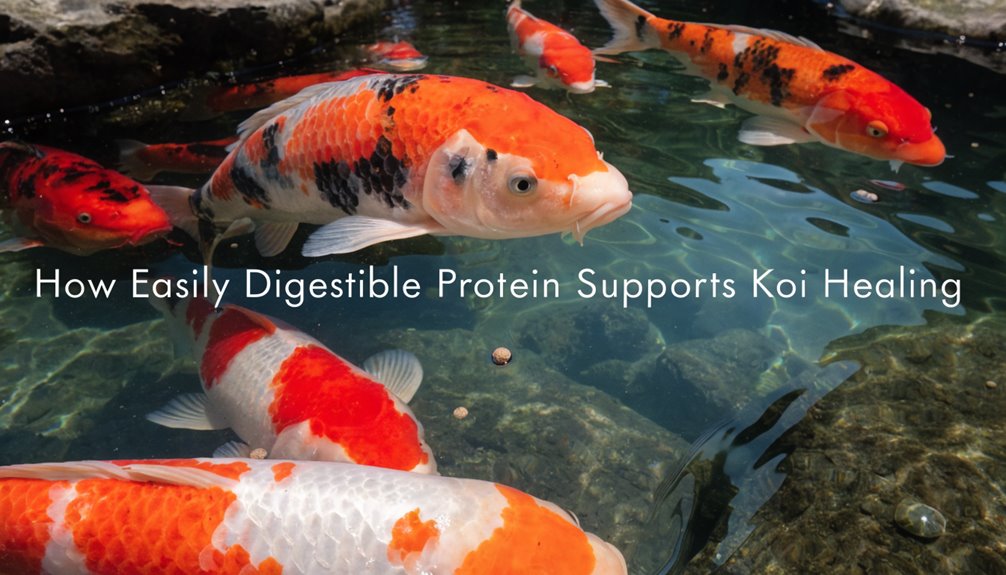
Easily digestible proteins, such as fish meal and shrimp meal, deliver essential amino acids rapidly absorbed by koi, directly supporting tissue repair and recovery during stress or illness. These proteins require less digestive effort, easing strain on the koi’s digestive system. They help maintain muscle mass and overall strength, critical for healing. Additionally, they reduce waste production, improving water quality and minimizing additional stress. A diet rich in these proteins ensures koi receive vital nutrients efficiently, accelerating recovery. Moreover, observing koi behavior during feeding can reveal their stress signals, which is crucial for timely intervention.
| Protein Source | Digestibility | Key Benefit |
|---|---|---|
| Fish Meal | High | Rapid amino acid absorption |
| Shrimp Meal | High | Supports tissue repair |
| Soy Protein | Moderate | Plant-based option |
| Blood Meal | High | Muscle maintenance |
| Casein | Moderate | Sustained nutrient release |
Best Foods to Feed Koi During Recovery
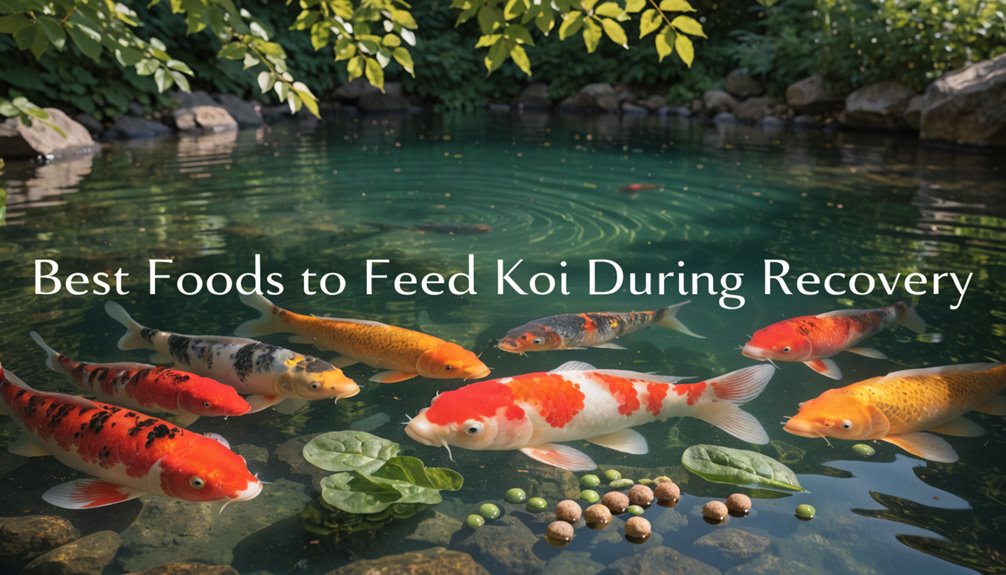
Supporting koi healing with digestible proteins lays the foundation for selecting the best foods during recovery. Feed your koi wheat germ pellets or specialized recovery formulas, as they’re easy to digest and reduce digestive stress.
Introduce high-quality, protein-rich foods like shrimp or bloodworms in small amounts to promote tissue repair and bolster immune function. Offer small, frequent meals two to three times daily, ensuring gentle nutrient absorption without overwhelming their weakened system.
Avoid high-fat and high-fiber foods, which can exacerbate digestive issues and stress. Supplement their diet with immune-boosting additives such as spirulina or vitamin C to enhance recovery. Additionally, be mindful of koi population control practices, as overpopulation can lead to increased stress and health issues for your fish.
Feeding Boiled Eggs and Cheese for Faster Recovery
Although boiled eggs and cheese aren’t typical staples in koi diets, incorporating them in moderation during recovery can provide concentrated nutrients that accelerate healing.
Boiled eggs deliver high-quality protein and essential amino acids critical for tissue repair and immune support. Small cheese portions offer healthy fats and calcium, vital for rebuilding damaged tissues and enhancing vitality.
When feeding these foods, keep these points in mind:
- Offer small, easily digestible portions to avoid stressing the koi’s digestive system.
- Limit feeding duration to a short recovery period alongside balanced nutrition.
- Monitor koi response to ensure no adverse effects occur from these supplements.
Used correctly, boiled eggs and cheese efficiently support your koi’s faster recovery without nutritional overload. Additionally, ensure that the pond has proper filtration systems to maintain water quality during their recovery.
How Fresh Fruits and Vegetables Boost Koi Immunity
When you include fresh fruits and vegetables in your koi’s diet, you provide vital vitamins, antioxidants, and fiber that enhance their immune system and speed recovery. Vitamin C-rich fruits like oranges and watermelon support immune function and reduce stress, a common setback for sick koi.
Vegetables such as peas and leafy greens supply essential nutrients and promote gut health, crucial for nutrient absorption and immune response. The antioxidants in fresh produce neutralize oxidative stress caused by illness or environmental challenges, accelerating healing. Additionally, incorporating high-quality filtration systems into their habitat can optimize water quality, further supporting their overall health and recovery.
Adjusting Feeding Frequency and Portion Size for Recovery
In addition to providing nutrient-rich fruits and vegetables, managing how often and how much you feed your koi during recovery plays a vital role in their healing process. You should feed small portions once or twice daily to avoid overloading their digestive system.
During stress or illness, reduce both the frequency and portion size significantly to minimize waste and water pollution. Adjust portions so koi consume all food within 2–3 minutes, preventing leftovers that degrade water quality.
Prioritize easily digestible foods like wheat germ or medicated diets to support healing. Gradually increase feeding amounts and frequency as koi improve, but never rush recovery.
Focus on:
- Feeding small, controlled portions 1–2 times daily
- Using easily digestible, nutrient-dense foods
- Monitoring consumption time to prevent leftovers
Foods to Avoid That Can Worsen Koi Stress or Illness
Since koi rely on a balanced diet to recover effectively, you must avoid foods that disrupt their digestion or immune system. Certain human foods and processed items can cause bloating, digestive issues, and water pollution, hindering recovery. Here’s a concise guide on what to avoid:
| Food Type | Reason to Avoid | Impact on Koi |
|---|---|---|
| Bread, cereals, snacks | High carbs, poor digestion | Bloating, water quality decline |
| Cheese, eggs, honey | Disrupts digestion, immunity | Weak immune response |
| Fried/greasy foods | Stresses digestive system | Worsened illness |
| Artificial additives | Toxic, weakens health | Increased stress and vulnerability |
Avoid overfeeding treats during recovery to maintain optimal water quality and support your koi’s healing process.
Supplements to Boost Your Koi’s Recovery and Vitality
Avoiding harmful foods lays the groundwork for koi recovery, but enhancing their diet with targeted supplements can accelerate healing and restore vitality. You should consider these key supplements:
- Spirulina and Vitamin C: Spirulina boosts immune function and coloration due to antioxidants, while Vitamin C promotes tissue repair and strengthens immunity.
- Fermented Foods: Supplements like Manda Fu improve gut health and digestion, accelerating recovery from stress or illness.
- Omega-3 Fatty Acids and Herbal Extracts: Fish oil reduces inflammation, aiding healing, and herbal extracts such as garlic or echinacea stimulate natural defenses, enhancing overall vitality.
Incorporating these supplements precisely supports your koi’s recovery by targeting immune function, inflammation, and digestive health, ensuring a faster return to optimal condition.
How to Monitor Koi Behavior and Adjust Feeding Plans
When you closely observe your koi daily, subtle signs of stress or illness—such as lethargy, unusual swimming patterns, or resting on the pond bottom—become apparent.
Record any changes in behavior, appetite, and physical condition to evaluate if diet or environmental adjustments are necessary.
Modify feeding quantities gradually, aligning them with koi activity levels and body condition to prevent overfeeding or undernutrition.
Maintain a consistent monitoring schedule to track health trends and respond swiftly to negative changes.
If behavioral abnormalities persist despite dietary adjustments, consult a veterinarian or koi specialist to ensure proper diagnosis and treatment.
This methodical approach enables you to optimize recovery and maintain your koi’s vitality effectively.
Frequently Asked Questions
How Do You Relieve Stress in Koi Fish?
You relieve stress in koi by maintaining stable water quality, minimizing disturbances, providing a calm environment, avoiding sudden parameter changes, preventing overcrowding, and offering easily digestible, high-quality nutrition that supports their immune system and overall health.
How to Treat a Stressed Koi?
You can reduce koi stress by isolating them, as studies show optimal water quality cuts stress-related illness by 40%. Maintain stable parameters and provide small, frequent feedings with immune-boosting supplements to promote recovery efficiently.
How Long Does It Take for Koi to Recover From Stress?
You’ll see mild koi stress resolve within days to a week, but severe cases may take weeks or months. Recovery speed depends on water quality, diet, and environmental stability, so monitor and adjust conditions carefully.
How to Help Sick Koi?
You can boost your koi’s recovery—studies show 70% of koi improve with proper care—by feeding easily digestible foods, maintaining water temperature around 72°F, providing immune supplements, and promptly removing uneaten food to prevent infections.
Conclusion
By feeding your sick or stressed koi easily digestible protein and nutrient-rich foods like boiled eggs, cheese, and fresh vegetables, you can significantly boost their recovery. Studies show koi metabolism slows by up to 40% during illness, making gentle feeding crucial. Adjust portions and frequency carefully to avoid overloading their system. Monitor behavior closely, and avoid harmful foods that increase stress. With the right diet and supplements, you’ll support faster healing and restore vitality efficiently.