To import koi from Japan, source high-quality fish from Niigata’s certified breeders and navigate strict breeder regulations. Work only with licensed importers who manage quarantine, legal permits, and oxygenated transport. Prepare quarantine tanks with precise water conditions and conduct thorough health checks over 3–4 weeks. Ensure all US customs and Fish and Wildlife documentation is in order. Understand total costs, including shipment, quarantine, and agent fees. Keep following to uncover the detailed steps for a successful koi import.
Key Facts Summarized
- Source high-quality koi from reputable Niigata breeders known for Certificate-quality varieties like Kohaku and Goshiki.
- Choose licensed importers registered with fish health authorities who manage quarantine and regulatory documentation.
- Prepare quarantine tanks with proper water parameters and conduct a 21–30 day quarantine upon koi arrival.
- Coordinate transportation with oxygenated, temperature-controlled shipping and secure US Fish and Wildlife permits.
- Calculate total costs including koi price, travel, shipping, quarantine, agent fees, and regulatory duties.
How To Source High-Quality Koi Directly From Niigata
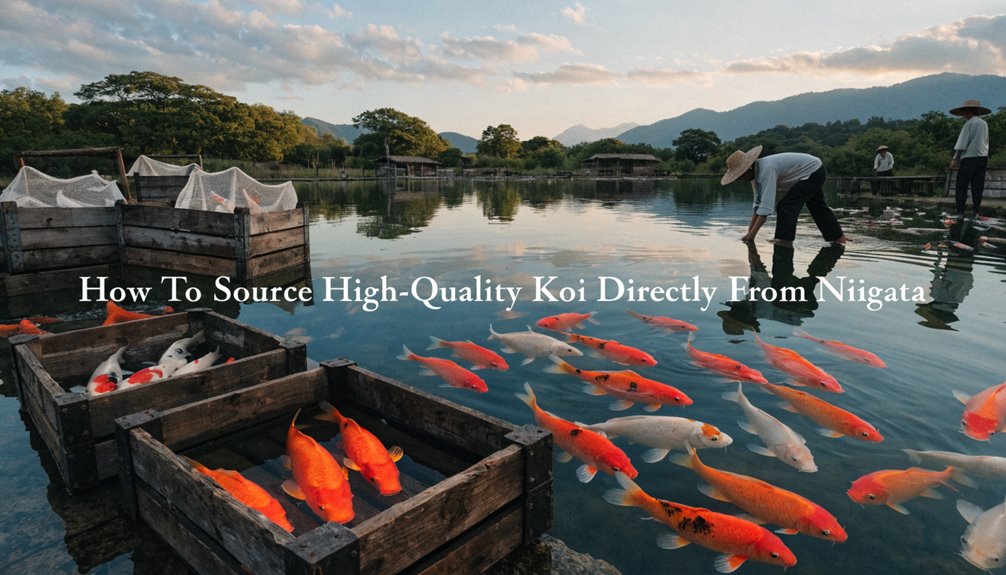
When sourcing high-quality koi directly from Niigata, you tap into the world’s premier breeding hub, home to over 200 dedicated breeders who maintain rigorous standards across diverse varieties.
Niigata’s mountain mud ponds create optimal growth conditions, especially during the fall harvest season (September-November), when tosai and larger koi are available. Regular maintenance of water quality is essential to ensure koi thrive in their new environment.
You can access legendary farms like Marudo, Hosokai, and Tanaka, renowned for Certificate-quality koi.
Breeders often specialize by variety—such as Goshiki or Kohaku—and share resources to ensure consistent quality.
Direct purchasing options include harvest trips, lucky draws, and online auctions, allowing you to inspect specimens personally, although individuals cannot buy directly without intermediaries.
This hands-on approach ensures you select genetically refined koi with superior coloration and conformation, essential for maintaining the highest standards in your collection or business.
Choose The Right Licensed Importer For Japanese Koi
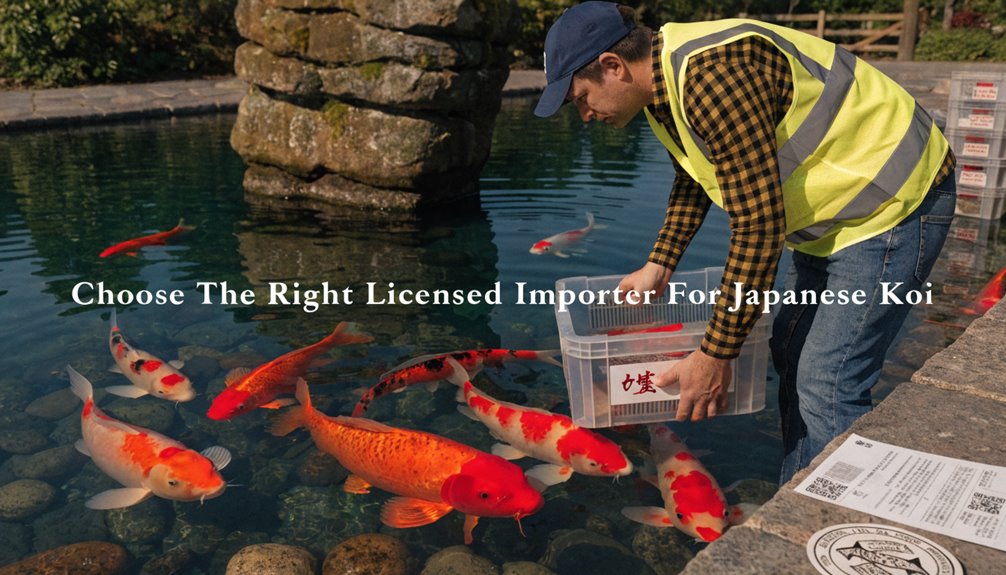
Although importing koi from Japan offers access to unparalleled quality, choosing the right licensed importer is critical to ensure compliance with government regulations and maintain fish health standards.
You must select importers registered with fish health authorities, such as FHI CEFAS in the UK or state inspectorates in the US.
Licensed importers like Fitz Fish Ponds, Koi Market, and Grand Koi maintain direct relationships with top Japanese breeders and operate strict quarantine protocols. They maintain a state-of-the-art quarantine facility to ensure the health and safety of the koi before they reach clients. Accurate pond volume calculations are essential for maintaining optimal water quality, which directly impacts koi health.
They handle regulatory documentation, oxygenated transport, and legal distribution, guaranteeing healthy, certified koi.
Confirm the importer’s legitimacy through industry forums and direct communication.
While prices reflect compliance and logistics, working with a reputable importer safeguards your investment and ensures your koi arrive legally and in prime condition.
Set Up Quarantine And Health Protocols For Imported Koi
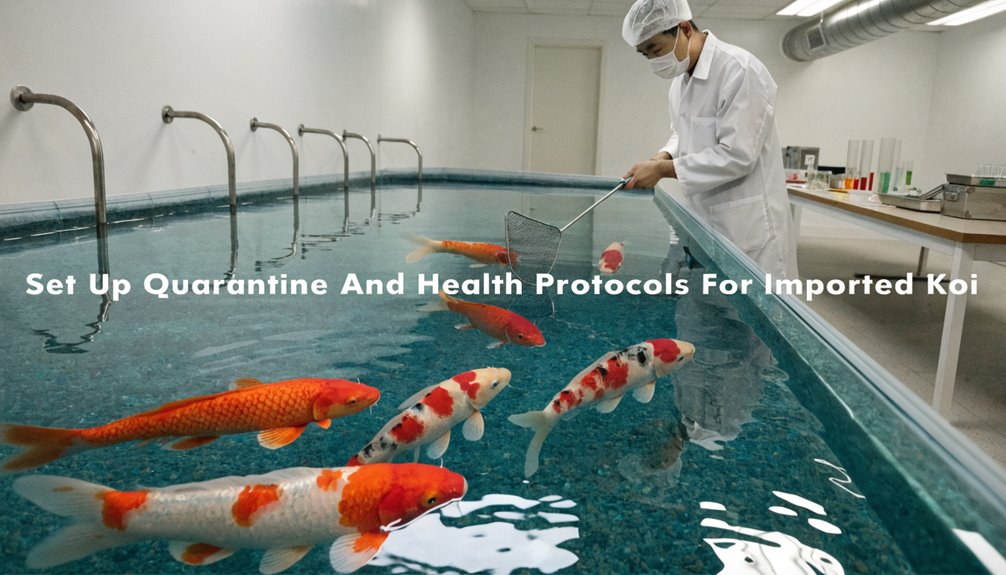
Before your imported koi arrive, you’ll need to prepare dedicated quarantine tanks meticulously to prevent disease transmission and stress. Clean and set up tanks several days in advance, designating separate tanks for each breeder to isolate risks. It is important to ensure these tanks have established biological filtration to maintain water quality and reduce stress on the fish. Regular monitoring of water quality parameters such as ammonia levels is essential during the quarantine process.
Adjust water salinity to 0.5–0.6% or a 3% salt solution and balance pH to 7.0. Maintain water temperature between 65–75°F, preferably near 72°F, with regular monitoring and 25–50% water changes.
Acclimate koi by floating transport bags for 30–60 minutes, keep lighting subdued, and avoid feeding for the first 48 hours.
Apply potassium permanganate disinfectant pre-arrival and administer fluke and formalin-malachite green treatments during quarantine.
Conduct microscopic parasite checks, use sentinel koi for disease detection, and follow a minimum 21–30 day quarantine before release.
Handle Transportation And Customs For Your Koi Import
Properly handling transportation and customs is crucial to ensure your imported koi arrive healthy and compliant with regulations. You must provide US Fish and Wildlife Service clearance at arrival, with all paperwork certifying SVC-free facilities and applicable permits for Hawaii shipments. Koi population growth can quickly become an issue, so it’s essential to notify suppliers 5-7 days before shipping to prepare koi and destination setup. During transit, maintain oxygen levels, stable temperature, and smooth handling. Using oxygen therapy at the airport improves survival chances. Upon arrival, open packages immediately for acclimation.
| Step | Requirement | Notes |
|---|---|---|
| Customs Clearance | USFWS agent inspection | Mandatory at airport |
| Documentation | SVC-free certification, permits | Hawaii: PQ-7 form, fees |
| Pre-shipment Notice | 5-7 business days | Feeding cessation required |
| Transportation | UPS, FedEx, or Air Cargo | Track shipment with provided number |
| Arrival Handling | Immediate transfer to prepared bags | Temperature 74-76°F, pH-buffered |
Calculate Total Costs When Importing Japanese Koi
When importing Japanese koi, you need to carefully calculate total costs to ensure your investment remains profitable. Start by adding the koi purchase price—ranging from $100 to over $50,000 depending on quality and rarity.
Include dealer travel expenses, approximately $9,600 annually, prorated per shipment. Factor in shipping fees, which vary by box size from $99 to $330, plus handling charges of $1,350–$1,500 per box at ports. It is important to remember that shipping safety considerations may affect the number of koi per box, especially during summer months. Additionally, ensuring proper winterizing your koi pond is crucial for maintaining their health during colder months.
Quarantine costs include at least one month’s care, medication, and health certification. Agent fees typically amount to 25% of the transaction value.
Don’t forget VAT, duty fees, insurance, and ongoing facility expenses. Itemizing these components precisely helps you forecast your total outlay and set accurate profit margins for importing Japanese koi.
Frequently Asked Questions
What Is the Best Time of Year to Import Koi From Japan?
You’ll find the best time to import koi from Japan is during October-November for peak quality and selection or January-April for spring shipments, aligning with optimal water temperatures and growth cycles to ensure healthy, vigorous fish upon arrival.
How Do I Care for Koi Immediately After Quarantine?
You should feed koi light portions of high-quality, easily digestible food and monitor water parameters daily. Maintain stable temperature, observe behavior for stress or illness, and gradually increase feeding while preventing cross-contamination during integration.
Are There Specific Koi Varieties Recommended for Beginners?
You should choose hardy, low-maintenance varieties like Kohaku, Showa, Sanke, Chagoi, or Butterfly koi. These breeds tolerate variable pond conditions well and display clear color patterns, simplifying health monitoring and care for beginners.
Can I Breed Imported Koi Successfully at Home?
You can absolutely breed imported koi at home, provided you maintain precise water conditions, select healthy, mature parents, and rigorously control temperature and aeration—their spawning success hinges on your exacting care, like a symphony conductor mastering every note.
What Are Common Signs of Stress in Imported Koi?
You’ll notice stress in koi through lethargy, reduced appetite, erratic swimming, faded colors, torn fins, gill reddening, gasping, or isolation. Post-shipping, flashing and darting occur but should subside within minutes under proper conditions.
Conclusion
Importing koi from Japan is like nurturing a delicate seed into a vibrant blossom. By sourcing from Niigata’s best breeders, choosing a licensed importer, and strictly following quarantine and customs protocols, you ensure your koi’s health and quality. Remember, every step—from transportation to cost calculation—is a crucial thread in this intricate tapestry. Handle each detail with care, and you’ll successfully introduce these living jewels into your pond, flourishing with life and beauty.