You’ll want a hospital tank between 150 to 1000 gallons depending on your koi count, with durable construction like heavy-duty vinyl and reinforced frames for safety. Efficient aeration, stable temperature control, and easy maintenance are critical for recovery. Look for tanks with built-in drains or portable features to simplify water changes. Proper tank size and water quality management prevent stress and promote healing. For full details on selecting and managing your quarantine setup, keep exploring the essential steps ahead.
Key Facts Summarized
- Choose hospital tanks of 150 to 300 gallons for up to five 10-inch koi, or 500 gallons+ for larger or multiple koi.
- Use durable materials like heavy-duty vinyl or reinforced plastic with industrial-strength aluminum frames for longevity and stability.
- Ensure tanks have built-in bulkhead drains and are portable for easy cleaning and water changes.
- Maintain stable temperature, aeration, and water quality with daily parameter checks during treatment.
- Provide ample space to reduce stress, support recovery, and allow effective medication dilution.
Why Quarantining Sick Koi Is Essential
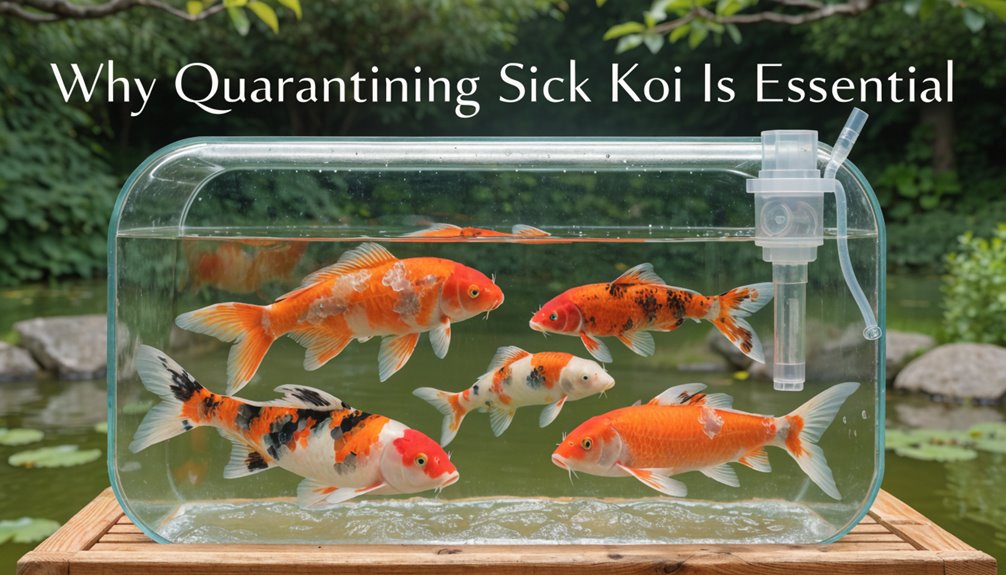
When you quarantine sick Koi, you actively prevent contagious diseases and parasites from spreading to healthy fish in your main pond. This isolation allows you to monitor the affected fish closely and apply targeted treatments, which significantly improve recovery outcomes.
By reducing exposure to other fish, you minimize the risk of secondary bacterial infections often triggered by weakened immune systems in sick Koi. Quarantine also enables early identification of specific health issues, crucial for preventing outbreaks of serious illnesses such as Koi Herpesvirus (KHV).
Using proper hospital tanks creates a controlled environment that reduces stress and supports healing, ensuring that your sick Koi receive optimal care without compromising the well-being of the entire pond population. Additionally, maintaining water quality management is vital in these tanks to promote healing and prevent further health complications.
How Long to Quarantine Koi and What to Watch For
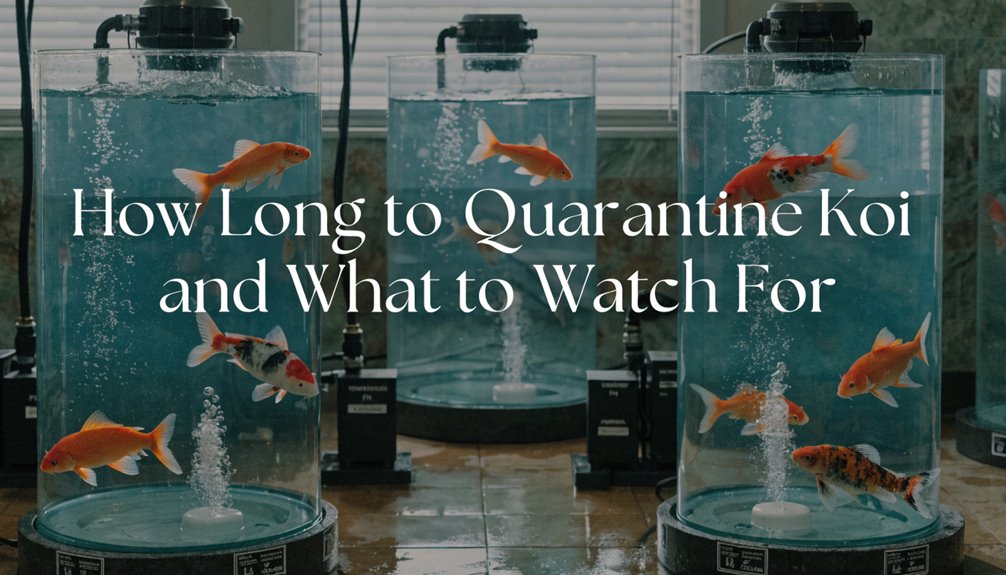
How long should you keep your Koi in quarantine to ensure their health and safety? Typically, a 14 to 21-day period allows for effective monitoring of illness or parasites.
During this time, closely observe your Koi for lethargy, abnormal swimming, swelling, or visible parasites.
Conduct regular health checks to identify early disease signs, enabling timely intervention.
If symptoms arise, maintain quarantine until at least 3 to 5 days after they fully resolve before reintroducing your Koi to the main pond.
Adjust the quarantine length based on the specific illness being treated or if no symptoms appear within the standard timeframe.
Staying vigilant during quarantine ensures you protect your entire pond population from potential outbreaks and supports successful recovery for your sick Koi. Additionally, maintaining good water quality is essential during this period to prevent further stress and complications.
Signs Your Koi Needs Quarantine or Hospital Care

Since early identification of health issues is critical, you should quarantine any Koi displaying signs of illness or distress to prevent disease transmission.
Watch for external parasites indicated by scratching or flashing, and internal symptoms such as lethargy or abnormal swelling.
Visible signs like red streaks, ulcers, or white spots often point to infections requiring hospital care.
A sudden loss of appetite or unusual swimming patterns signals the need for isolation and treatment.
Additionally, observe for rapid breathing, gasping at the surface, or abnormal gill movements, which indicate respiratory distress.
Immediate quarantine is essential if you detect unexplained dropsy, swelling, or skin lesions.
Promptly isolating affected Koi helps contain pathogens and facilitates targeted therapeutic intervention, protecting both the sick fish and your entire pond population. Moreover, maintaining water quality in the quarantine tank is crucial for the health of the sick Koi during treatment.
Choosing the Right Size for Your Koi Quarantine Tank
What size quarantine tank best supports your koi’s recovery? For up to five 10-inch koi, a 150 to 300-gallon tank provides adequate space for movement and effective health management.
If you’re housing larger or multiple koi, consider tanks of 500 gallons or more to minimize stress and prevent overcrowding.
Smaller tanks under 150 gallons may serve temporarily but risk limiting water volume, which can elevate stress and hinder waste dilution.
Selecting the right tank size depends on the koi’s number and size, ensuring ample space for comfortable recovery without crowding.
Adequate volume is crucial for maintaining water quality and properly diluting medications and waste, which directly supports your koi’s healing process during quarantine. Additionally, ensuring proper volume measurement is essential to prevent koi stress and disease during their recovery.
Key Features of Durable Koi Quarantine Tanks
Selecting the right tank size sets the foundation, but durability determines how well your quarantine setup holds up over time. Durable koi quarantine tanks are constructed from heavy-duty vinyl or reinforced plastic, materials chosen for their resistance to wear and environmental stress.
They incorporate industrial-strength supports like aircraft-quality aluminum frames or snap-button connections, ensuring structural stability even during frequent handling. Portable models often include heavy-duty storage bags and built-in bulkhead drains, facilitating easy transport and efficient water exchange.
Sizes typically range from 500 to 1000 gallons, with dimensions designed to comfortably house multiple koi without crowding. These tanks withstand harsh conditions and repeated use, providing a reliable, long-lasting environment essential for effective koi quarantine and recovery. Additionally, proper maintenance is crucial for maximizing tank longevity, ensuring that the quarantine environment remains safe and effective for your koi.
Preparing Your Quarantine Tank and Water for New Koi
Before introducing new koi to your quarantine tank, you need to prepare both the tank and water meticulously to minimize stress and prevent disease spread. Use a dedicated, portable hospital tank made of durable vinyl or heavy-duty plastic to avoid cross-contamination.
Fill it with dechlorinated, aged water and ensure parameters such as temperature, pH, and ammonia levels are stable. Maintain water temperature between 74° to 78°F to optimize koi recovery.
While filtration and aeration systems will be discussed later, you should install a diffused aerator to maintain adequate oxygen levels during treatment.
Regularly test water quality for ammonia, nitrites, pH, and nitrates to keep the environment optimal. Proper preparation sets the stage for effective quarantine and healing of your sick koi.
Setting Up Filtration and Aeration in the Quarantine Tank
How do you ensure a stable and healthy environment for your sick koi during quarantine? Start by using a high-quality filter populated with beneficial bacteria to keep ammonia and nitrite levels safe.
To avoid introducing pathogens, run the filter in your main pond first to “age” it before placing it in the quarantine tank.
Incorporate diffused aerators or air stones to provide ample oxygen, especially if biological filtration is limited.
Regularly test water parameters—pH, ammonia, and nitrites—to confirm the filtration system maintains optimal conditions.
Consistent monitoring allows you to adjust filtration or aeration promptly, preventing toxic buildup.
This precise setup supports koi health by stabilizing water chemistry, creating an environment conducive to recovery without risking further stress or contamination.
Maintaining Stable Water Temperature During Quarantine
Once your filtration and aeration systems are in place to maintain water quality, focus on keeping the water temperature steady between 74°F and 78°F. This range optimizes koi immune response and supports healing during quarantine.
Use reliable, thermostat-controlled heaters to prevent temperature fluctuations that could stress your fish or reduce medication efficacy. Monitor the temperature frequently with a calibrated thermometer to detect and correct deviations promptly.
Avoid sudden temperature changes, especially when administering treatments, as these can induce stress and complicate recovery. Maintaining precise thermal stability minimizes stress-induced immunosuppression and ensures the quarantine environment remains conducive to effective disease management.
Step-by-Step Acclimation to the Quarantine Tank
Although transferring koi to a quarantine tank may seem straightforward, following a precise acclimation procedure is critical to minimize stress and ensure a smooth transition.
Start by floating the sealed bag containing the koi in the quarantine tank for about 15 minutes to equalize water temperatures.
Next, gradually add small amounts of tank water into the bag over five minutes to acclimate the fish to the new water chemistry.
Carefully open the bag and allow the koi to swim into the tank naturally without forcing them out.
Observe the koi closely during this process for signs of stress, such as gasping or flashing.
Once the koi are swimming freely, remove the bag to complete acclimation, preparing the fish for subsequent treatment or observation.
Monitoring Koi Health During Quarantine
Since early detection of health issues can significantly improve treatment outcomes, you need to monitor your koi closely during quarantine. Observe them regularly for stress signs like flashing, gasping, or lethargy.
Watch for disease symptoms such as swelling, abnormal swimming, or unusual spots to identify infections promptly. Conduct frequent visual inspections to catch subtle illness signs before they escalate.
Equally important, measure water parameters daily—ammonia, nitrite, pH, and temperature—to maintain optimal recovery conditions.
Keep detailed health logs documenting symptoms, behavioral changes, and any treatments administered. This systematic monitoring allows you to detect and respond to issues quickly, ensuring your koi’s effective recovery and reducing the risk of disease spread within your collection.
Common Treatments and Medications for Quarantine Tanks
After closely monitoring your koi for signs of illness, you’ll need to apply targeted treatments to address specific health issues. Use medications like Koi Prazi for flukes, Ich-X for ich, and Medi-Koi for bacterial infections, strictly following dosage and treatment durations on labels.
Incorporate salt at 0.3% concentration to reduce stress and assist parasite control. Maintaining stable water temperature and oxygen levels is critical to medication effectiveness.
Remember, adhering to quarantine protocols prevents drug resistance and ensures full recovery.
Key points to keep in mind:
- Administer multiple doses spaced per product instructions
- Monitor water parameters to optimize treatment efficacy
- Avoid skipping treatments to prevent relapse and resistance
Managing Water Quality Without a Filter in Quarantine Tanks
When managing a quarantine tank without a filter, you must perform daily water changes of 25-50% using dechlorinated, conditioned water to keep toxin levels low and maintain chemical balance.
Since biological filtration is absent, increase aeration with air stones or diffusers to ensure adequate dissolved oxygen for your koi.
Regularly monitor water parameters—especially ammonia, nitrite, and pH—to detect any toxic buildup early.
Without filtration, toxins can accumulate rapidly, so consistent testing is critical.
Additionally, incorporate highly effective medicated treatments directly into the water to address disease efficiently.
This approach compensates for the lack of filtration and helps maintain a stable, healthy environment for your sick koi during quarantine.
Vigilant water quality management is essential for successful recovery without filtration systems.
Handling Sick Koi: Isolation and Recovery Tips
Although isolating sick koi might seem straightforward, doing it promptly and correctly is critical to preventing disease spread and promoting recovery.
Immediately transfer the affected koi to a dedicated hospital tank equipped with proper aeration, filtration, and stable temperature.
Gradually acclimate them to this environment to minimize stress and avoid physiological shock.
Daily monitoring is essential; observe symptoms closely and adjust treatments as needed.
Keep detailed records for each fish to track progress and inform future care decisions.
Remember these key points:
- Act swiftly to isolate and reduce cross-contamination risks.
- Maintain optimal tank conditions to support immune function.
- Handle koi gently during transfer to prevent additional stress or injury.
Following these steps ensures you give your sick koi the best chance to recover fully.
Cleaning and Maintaining Your Quarantine Tank Between Uses
To prevent the spread of disease and ensure a safe environment for your koi, you must thoroughly clean and disinfect the quarantine tank between uses. Begin by draining the tank completely.
Then scrub it with hot water and a mild disinfectant to remove residual pathogens. Rinse all equipment, including filters and aerators, carefully.
Replace or sanitize filter media to avoid cross-contamination. Allow the tank to dry fully, as moisture can foster bacteria or fungi.
Inspect the tank for cracks or damage, repairing any issues to maintain integrity and prevent leaks.
When setting up for the next quarantine, use fresh dechlorinated water and new filtration media.
Following these steps ensures your quarantine tank remains safe, effective, and ready for each new use.
When and How to Reintroduce Koi to the Main Pond
Before reintroducing koi to the main pond, ensure they’ve been symptom-free and fully recovered for at least 2-3 days after the last medication treatment. Conduct a detailed health check to confirm no lingering illness or stress is present.
Acclimate koi gradually by mixing pond water into their quarantine tank in stages, minimizing shock. Reintroduce during calm weather to reduce stress and disease risk.
Finally, clean and remove all quarantine equipment to prevent pathogen spread.
To ensure a successful transition and protect your pond ecosystem, remember:
- Observe koi behavior closely for unexpected signs
- Introduce water changes slowly to avoid sudden parameter shifts
- Choose a stress-free environment for reentry
Following these steps maintains koi health and safeguards your pond.
Frequently Asked Questions
How to Quarantine a Sick Koi Fish?
You quarantine a sick koi by placing it in a clean, treated hospital tank at 74–78°F. Float it in a bag for gradual acclimation, monitor symptoms, maintain water quality, and administer proper medications as needed.
How Long to Keep Sick Fish in Quarantine Tank?
You should keep sick fish in quarantine for at least 14 to 21 days, extending up to 4 weeks if symptoms persist. Ensure they show no illness signs for 3 to 5 days post-treatment before reintroduction.
Do You Need a Filter for a Quarantine Tank for Koi?
You do need a filter for a quarantine tank; it stabilizes water chemistry by removing toxins like ammonia and nitrite. Without filtration, frequent water changes are required, increasing stress and risk to your koi’s recovery.
How to Set up a Hospital Tank for Sick Fish?
You’ll set up a hospital tank by ensuring proper filtration, stable temperature (74°–78°F), adding a diffused aerator, treating water with de-chlorinator, and acclimating fish gently before medication, maintaining optimal water quality throughout treatment.
Conclusion
Picture your koi resting peacefully in a clean, well-sized hospital tank, free from stress and infection. By choosing the right quarantine setup and maintaining optimal water quality, you create a safe haven where healing begins. Remember, careful observation and timely reintroduction protect your entire pond’s health. With precise care and attention, you’ll ensure your koi recover swiftly, swimming strong and vibrant once more in their natural home.