You won’t believe the most expensive koi ever sold is the 39-inch S Legend Kohaku, which fetched $1.8 million in 2018, setting a world record. Its rarity stems from flawless red-and-white patterns, champion bloodlines, and show-quality pedigree. Only a handful reach this elite status out of thousands. This koi’s stunning size and vibrant coloration made it a prized collectible. If you want to understand what drives such incredible value and prestige, keep exploring the details behind these prized koi.
Key Facts Summarized
- The most expensive koi ever sold was a 39-inch female Kohaku with red-and-white patterns, fetching $1.8 million USD in 2018.
- This Kohaku was the Grand Champion at the 2017 All Japan Koi Show, highlighting its exceptional quality and pedigree.
- Purchased by Ms. Ying Ying Chung, this record-setting sale is expected to remain unbeaten until at least 2026.
- High prices reflect rarity, unique coloration, perfect pattern symmetry, and prestigious breeder lineage in elite koi specimens.
- The koi market’s top-tier sales occur at specialty auctions, driven by global collectors seeking rare, champion bloodline koi.
The Record-Breaking Sale of S Legend Kohaku Koi

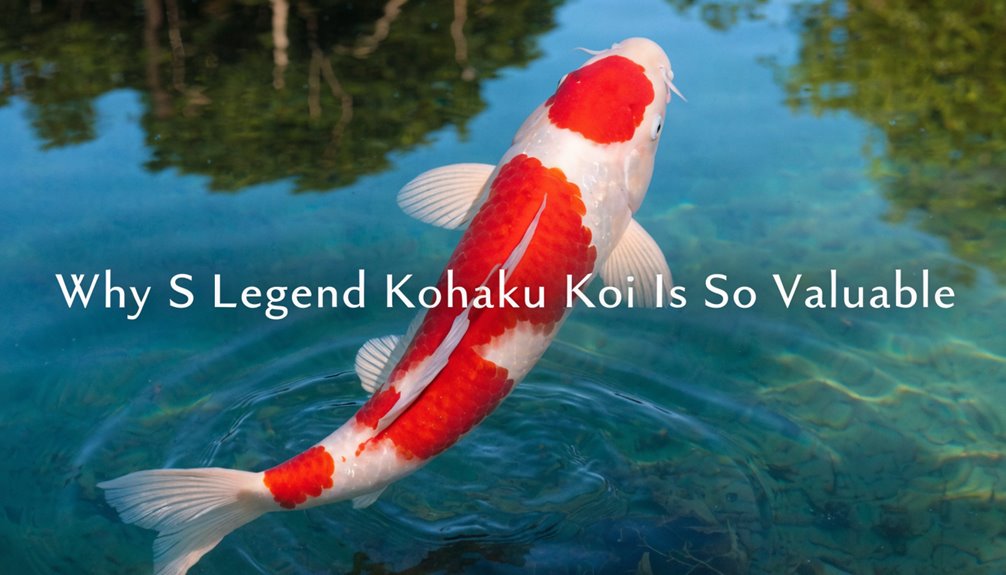
When you consider the world of premium koi fish, the sale of the S Legend Kohaku stands out as a landmark event. This 39-inch female Kohaku, measuring 101 cm, showcased a striking red-and-white pattern and was a Grand Champion at the 2017 All Japan Koi Show. Its high price was due to its potential to produce up to 1,000,000 eggs per breeding season, making it exceptionally valuable beyond its physical beauty. Additionally, the meticulous breeding techniques employed in koi cultivation significantly enhance the traits of these fish.
Born from the Neo Universe bloodline, S Legend captured global attention during an intense October 2018 auction at Kentaro Sakai’s Hiroshima fish farm. You’d be amazed to learn it sold for $1.8 million USD—equivalent to 203 million yen or about $2.5 million SGD—setting a new world record for a single koi fish.
Purchased by enthusiast Ms. Ying Ying Chung, this historic sale surpassed previous records and remains unmatched through 2026, marking a defining moment in premium koi valuation.
Why S Legend Kohaku Koi Is So Valuable
Because the S Legend Kohaku koi combines exceptional genetics, striking physical traits, and market scarcity, it commands unparalleled value in the koi world. You’ll appreciate its genetic potential: capable of laying up to 1,000,000 eggs per breeding season. Even a small percentage of superior offspring ensures multiple generations of premium koi.
Its 39-inch female body perfectly meets size standards, with ideal symmetry and proportions that judges prize. The vibrant red-and-white coloration features crisp, balanced patterns that stand out visually. The sale of S Legend for $1.8 million highlighted koi as the crown jewel of aquatic pets and a symbol of prestige.
Rarity further drives demand; koi matching S Legend’s quality remain scarce, sparking fierce competition among collectors. Additionally, its lineage traces back to renowned breeder Kentaro Sakai, whose expertise and reputation elevate its market worth.
Collectively, these factors make S Legend Kohaku koi highly valuable and sought after.
Distinctive Traits of Kohaku Koi That Boost Value

The remarkable value of the S Legend Kohaku koi stems not only from its impressive lineage but also from a set of distinctive traits that define Kohaku koi as a whole.
You’ll notice its well-proportioned body, where a width exceeding the head signals preferred female traits, supporting large, impactful hi patterns. The smooth, even scales shimmer like precious metals or tiny diamonds, highlighting genetic excellence. Additionally, pattern quality is crucial in determining the overall appeal of Kohaku koi.
The Shiroji’s snow-white purity contrasts sharply with vivid, crisp hi markings, creating striking visual impact. Pattern placement stays high on the back and head, avoiding the lateral line, maintaining classical balance and harmony.
These traits—body conformation, scale quality, color intensity, and precise pattern placement—combine to elevate Kohaku koi’s aesthetic appeal and market value significantly. Additionally, the Kohaku’s color symbolism contributes to its cultural significance and desirability among collectors.
Top Premium Koi Varieties and Their Patterns
Although countless koi varieties captivate enthusiasts worldwide, certain premium types stand out for their distinctive patterns and aesthetic appeal that directly influence their market value. You’ll find these varieties offer unique beauty and rarity:
- Kohaku: White body with vivid, uniform red markings; the foundational koi pattern and ideal for novices.
- Taisho Sanke: White base with bold red and black (sumi) markings, creating a sophisticated tri-color pattern.
- Shiro Utsuri: Striking black base overlaid with clean white markings, featuring a split head pattern.
- Ogon and Metallic Varieties: Single-colored metallic scales like Yamabuki Ogon (gold) and Platinum Ogon (silver) reflect light beautifully, enhancing luxury appeal. Many of these premium koi varieties are domestically bred and raised in the USA, ensuring superior quality.
Each variety’s pattern clarity, color saturation, and balance dictate its premium status, making these koi highly sought after by collectors and enthusiasts alike.
How Unique Koi Patterns Affect Market Prices
When you explore the koi market, you’ll notice that unique patterns dramatically influence a fish’s value. Symmetrical patterns with crisp, well-defined edges command significantly higher prices, reflecting superior quality. Collectors prize clean boundaries between colors and vibrant, uniform saturation.
Complex, intricate designs with multiple distinct color steps enhance beauty and market desirability. Rare color combinations, such as deep metallic gold paired with jet black, elevate pricing further. The rarity factor plays a crucial role—precise Hi placements and unique Tancho marks fetch exceptional premiums due to limited availability. Additionally, Beni quality influences the visual impact and desirability of various koi varieties.
Traditional pattern classification, like Kohaku’s red on white, also impacts valuation, with adherence to strict pattern standards guiding market segments. Furthermore, the reputation of the breeder significantly affects pricing, as koi from top-tier breeders tend to command a premium due to community trust and legacy reputation & rarity.
Overall, you’ll find that pattern clarity, complexity, and rarity decisively shape koi market prices.
How Champion Koi Bloodlines Boost Value
Unique patterns can certainly catch your eye and boost a koi’s price, but champion bloodlines take value to an entirely different level. These prized koi result from decades of selective breeding, ensuring superior traits like vibrant coloration, ideal body conformation, and a competitive edge in prestigious shows.
When you invest in a koi from a renowned bloodline, you’re paying for proven quality and pedigree recognition.
Here’s why champion bloodlines boost value:
- Decades of selective breeding by expert Japanese breeders
- Exceptional color intensity and pigmentation controlled through genetics
- Larger size and ideal body shape conforming to show standards
- Proven competition wins establishing market credibility and premium pricing
- High-quality food, rich in essential nutrients, is crucial for maintaining the vibrant colors of these champions.
Owning koi from champion lines means owning a piece of koi history and unmatched quality.
How Genetics and Pedigree Raise Koi Prices
Because genetics and pedigree form the foundation of koi valuation, understanding their role is essential if you want to grasp why some koi command extraordinary prices.
Master breeders in Japan, like those in Niigata, have spent generations selectively breeding koi to perfect body shape, skin quality, and vibrant color patterns. Only a tiny fraction—about 50 out of 50,000 yearly births—reach show-quality status due to this rigorous genetic selection. The Koi Herpes Virus poses a significant risk to the value of koi, as infections can lead to drastic population declines.
Proven bloodlines with documented parentage exponentially increase value, especially when backed by breeder certification and champion lineage. You’ll find that traits such as symmetrical patterns, intense colors, and rare scale mutations like Doitsu dramatically affect price.
This pedigree verification not only authenticates the koi’s origin but also protects your investment by ensuring genuine genetic potential and exclusivity in the market. Additionally, health certifications such as those from USDA APHIS Vets can significantly enhance a koi’s value by confirming its KHV-free status.
Why Show-Quality Koi Command Premium Prices
Although many koi are beautiful, only a select few qualify as show-quality, and these exceptional fish command premium prices due to their flawless appearance, rare patterns, and superior physical traits. When you consider investing in show-quality koi, you’re paying for more than just looks—you’re buying rarity, pedigree, and prestige. Their value is also deeply rooted in a rich historical background dating back centuries.
These koi meet strict competition standards, ensuring they stand out from ordinary specimens.
Key factors driving their premium value include:
- Rigorous evaluation criteria demanding perfect coloration, pattern alignment, and body shape
- Limited supply, with only about 50 offspring out of 50,000 annually reaching show status
- Recognition from prestigious events that raise demand and market value
- Reputable breeders with decades-long legacies producing healthy, KHV-free fish
This combination makes show-quality koi truly exceptional investments.
How Specialty Auctions Drive Record Koi Sales
Show-quality koi reach staggering price points not only due to their rarity and pedigree but also because of the dynamic market created by specialty auctions. These auctions, held in hubs like Japan, Taiwan, Hong Kong, and the UAE, draw elite collectors competing for prized specimens like S Legend, which sold for $1.8 million. The buyer of S Legend was a private collector in Taiwan, highlighting the international appeal of these auctions.
Reputable breeders such as Kodama Koi Farm enhance values with certified bloodlines, while scheduled multi-day events and live online bidding facilitate global participation.
Seasonal timing and focused categories, like Showa auctions, intensify demand. The cultural symbolism and uniqueness of koi—rare patterns, exceptional size, and genetic distinctiveness—fuel fierce bidding wars.
As a result, specialty auctions transform koi sales into high-stakes events, driving record-breaking prices and sustaining a vibrant international market.
Typical Price Ranges: Backyard vs. Show Koi
When you’re exploring koi options, you’ll find that backyard koi typically come at a much lower price point than show-quality varieties. Backyard koi are perfect for pond stocking or beginner hobbyists, priced mostly between $20 and $1,500 depending on size and coloration.
In contrast, show-quality koi demand much higher prices, often starting at $1,200 and soaring beyond $15,000 for trophy specimens. The breed and variety of koi, such as Kohaku, Taisho Sanke, and Showa, play a significant role in driving these higher prices.
Here’s a quick comparison:
- Backyard koi juveniles: $20–$100, ideal for casual ponds
- Medium backyard koi: $100–$500, better health and color
- Show-quality koi: $1,200–$15,000+, with rare patterns and perfect markings
- Trophy-level specimens: $3,500–$50,000+, prized for competitive exhibitions
Knowing these ranges helps you decide what koi fits your budget and goals.
What Collectors Look for in High-Value Koi
If you want to invest in high-value koi, understanding what collectors prioritize is essential. They seek rich, vibrant colors and symmetrical, intricate patterns that showcase harmony and complexity. Physical traits matter too—larger, well-proportioned koi with strong musculature, especially females, are highly prized. Genetic lineage from champion bloodlines adds substantial value, ensuring quality and breeding potential. Rarity plays a big role; unique color combinations and specialized breeds increase desirability. Moreover, only about 50 show-quality koi are born annually out of thousands, underscoring the difficulty of obtaining top specimens. Finally, market demand favors younger koi with striking contrasts and complex patterns.
| Factor | What Collectors Look For |
|---|---|
| Coloration | Deep, vibrant colors with balanced patterns |
| Body Conformation | Large, well-proportioned, muscular bodies |
| Genetic Lineage | Champion bloodlines and flawless skin |
| Rarity | Unique colors, rare breeds |
| Market Demand | Younger koi, complex, crisp patterns |
How to Identify a Truly Rare and Expensive Koi
Understanding what collectors value sets the foundation, but identifying a truly rare and expensive koi requires a keen eye for specific details. You’ll need to evaluate several key features that set premium koi apart from the rest. Focus on these aspects:
- Pattern Symmetry and Intricacy: Look for perfectly balanced, well-defined markings like Tancho or traditional Kohaku steps with multiple color layers.
- Color Quality and Vibrancy: Seek vivid, crisp colors with uniform saturation, harmonious combinations, and shiny, clear skin.
- Genetic Lineage: Rarity often stems from select bloodlines known for producing show-quality specimens.
- Body Conformation and Size: Prioritize koi exceeding two feet with healthy, streamlined shapes and wide midsections.
Mastering these details helps you distinguish exceptional koi with high market value and rarity.
The Future of Record-Breaking Koi Sales
How will koi sales continue to shatter records in the coming years? You’ll see rising demand fueled by a booming $3 billion market projected to nearly double by 2033.
Advances in breeding and genetics allow breeders to produce rare, visually striking koi that command premium prices. Digital platforms will expand your access, connecting you to global sellers without geographical limits. The Asia-Pacific region remains the largest market, driving much of this growth due to its cultural significance and widespread pond installations.
The luxury segment grows alongside increased disposable incomes and trends in ornamental pond installations. Meanwhile, international competition and scaled production ensure more high-quality koi reach emerging markets.
Sustainability and disease-free certification will become crucial, increasing koi value. With innovations and market growth projected at nearly 12% CAGR, you can expect record-breaking sales to become more frequent and spectacular, reshaping koi collecting worldwide.
Frequently Asked Questions
How Do Koi Owners Properly Care for High-Value Koi Fish?
You’ll quarantine new koi for weeks, maintain pristine water quality with proper filtration, control oxygen levels, and feed high-quality pellets. You’ll also monitor temperature, provide shade, and isolate sick fish immediately to protect your valuable koi’s health.
What Is the Average Lifespan of Premium Koi Varieties?
You can expect premium koi varieties to live between 40 and 70 years, sometimes even surpassing 100 years with optimal care, excellent genetics, and proper pond conditions that promote their health and longevity.
Are There Insurance Options for Expensive Koi Fish?
You might think koi insurance is costly, but yes, you can insure expensive koi through specialized policies covering shipping, mishandling, and more. These protect your investment, offering store credit claims with proper documentation within set timeframes.
How Are Koi Fish Transported Safely for Auctions?
You transport koi safely by fasting them 24 hours, double-bagging with oxygen, matching water temperature, adding salt and conditioner, securing bags in padded containers, and minimizing handling time to reduce stress during auctions.
What Are the Common Health Issues in Champion Koi?
You’ll often see champion koi suffer from parasitic infections like Ich and flukes, bacterial diseases such as fin rot, systemic issues like Koi Herpesvirus, and stress-related problems caused by poor water quality, requiring vigilant care and treatment.
Conclusion
When you dive into the world of koi, especially the legendary S Legend Kohaku, you’re stepping into a realm where beauty meets rarity in the most exquisite way. These fish aren’t just pets; they’re treasures that carry stories of heritage and artistry. As you explore their unique patterns and coveted traits, you’ll see why collectors are willing to invest beyond the ordinary. The future holds even more dazzling surprises for those enchanted by these living masterpieces.