To reduce aggression among your koi, provide ample pond space—ideally over 500 gallons per fish—to prevent territorial disputes. Keep water quality stable with regular testing and maintain oxygen above 6 mg/L to lower stress-driven irritability. Select calm, compatible varieties and offer multiple hiding spots to break up territories. Feed consistently and distribute food across the pond to minimize competition. Managing these factors creates a more harmonious environment, and exploring strategies for breeding seasons or temporary separation can further help maintain peace.
Key Facts Summarized
- Provide at least 500 gallons of pond space per koi to prevent overcrowding and territorial disputes.
- Maintain high water quality with stable pH, low ammonia, and adequate oxygen levels to reduce stress-driven aggression.
- Introduce multiple hiding spots like caves and plants to offer refuge and decrease territorial conflicts.
- Feed koi consistently at multiple locations to minimize competition and chasing during feeding times.
- Separate overly aggressive koi temporarily and reintroduce them gradually to preserve pond social harmony.
Key Causes of Aggression in Koi

While you might expect koi to coexist peacefully, several factors can trigger aggression in these fish. Competition for food is a primary cause, especially when feeding is limited or unevenly spread. This can lead koi to chase or nip one another.
Dominant individuals often assert control by targeting less assertive fish, establishing a social hierarchy.
Environmental stressors, such as poor water quality or sudden temperature shifts, can heighten irritability and aggressive responses.
Additionally, the presence of predators or perceived threats prompts koi to become more territorial, defending their space vigorously.
Understanding these triggers helps you create conditions that minimize stress and reduce conflict, ensuring a calmer, healthier pond environment for your koi. Moreover, addressing issues like koi population control can further reduce competition and aggression among your fish.
How Pond Overcrowding Increases Koi Aggression

Aggression in koi often escalates when their living space becomes too crowded. When your pond exceeds the recommended 500 gallons per koi, territorial disputes increase, causing frequent fighting and chasing.
Limited space restricts hiding spots and clear boundaries, making koi more defensive and hostile. This overcrowding disrupts their social harmony, as koi instinctively claim territories, and when space is tight, these claims overlap, sparking conflict.
You’ll notice stress levels rise as koi compete for space, which intensifies aggressive behaviors. Proper pond sizing and stocking are crucial to maintaining peace. Additionally, understanding Koi color patterns can help you choose compatible varieties that are less prone to aggression.
The Role of Water Quality in Aggressive Koi Behavior
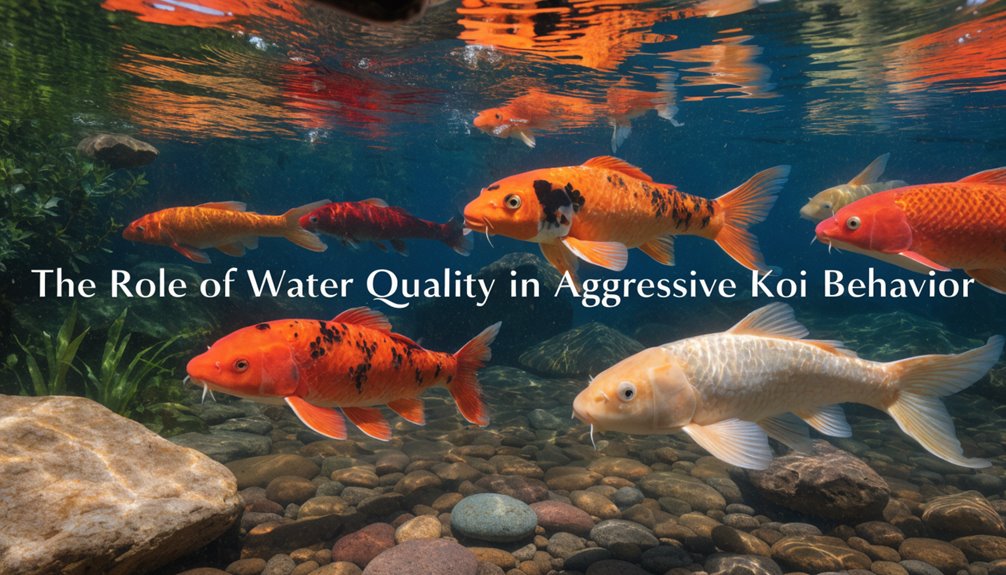
Because koi are highly sensitive to their environment, poor water quality can significantly increase their stress levels and provoke aggressive behavior. Elevated ammonia and nitrite levels disrupt their physiological balance, heightening irritability and territorial disputes.
Fluctuations in pH and low dissolved oxygen create discomfort that may trigger fighting. Sediment buildup, algae overgrowth, and debris degrade water quality further, indirectly fueling aggression.
To reduce stress-induced aggression, you need to consistently maintain optimal water parameters. Regular water testing allows you to detect imbalances early and correct them promptly, creating a stable, healthy environment. Maintaining adequate oxygen levels is crucial for minimizing stress and aggression in your koi.
Select Compatible Koi to Reduce Aggression
When you select koi with calm and compatible temperaments, you create a more peaceful pond environment that naturally reduces aggressive encounters. Choosing varieties like Chagoi, known for their submissive nature, helps maintain balance. Avoid mixing dominant or highly territorial breeds with smaller, passive koi to prevent bullying and stress. Selecting fish of similar size and temperament promotes harmony. Researching personality traits before introduction is crucial for compatibility and reducing dominance hierarchies that spark aggression. Additionally, understanding koi fish care is essential to ensure a healthy environment that supports peaceful interactions.
| Koi Variety | Temperament |
|---|---|
| Chagoi | Calm, submissive |
| Kohaku | Moderate |
| Showa | Territorial |
| Sanke | Balanced |
| Ogon | Passive to moderate |
This careful selection fosters a stable, less aggressive community in your pond.
How to Use Hiding Spots to Prevent Territorial Fights
Selecting compatible koi sets the foundation for a peaceful pond, but managing the environment also plays a key role in minimizing conflicts. You can reduce territorial fights by providing multiple hiding spots, such as caves, rocks, or dense aquatic plants. These refuges create safe zones where less dominant koi can retreat, promoting a sense of security and lowering aggression.
Place hiding areas strategically throughout the pond to ensure all koi have access, which prevents competition and stress-related behaviors. Incorporating dense vegetation and structural decorations encourages natural behaviors, further minimizing disputes over open space.
Remember to regularly clean and maintain these hiding spots to avoid debris and parasite buildup, keeping the environments healthy and inviting. This careful habitat management supports harmony and reduces aggressive interactions among your koi.
Use Consistent Feeding Routines to Minimize Conflict
Establishing consistent feeding routines plays a crucial role in minimizing aggression among koi by creating a predictable environment. When you feed your koi at the same time each day and provide a consistent amount of food, they learn to anticipate mealtime, which reduces stress and territorial disputes.
This predictability fosters social order, so chasing and fighting over food become less frequent. Inconsistent feeding can trigger hunger-driven aggression, but maintaining a regular schedule helps prevent that.
Additionally, koi begin to associate feeding with positive experiences, promoting calmer behavior during meals. By observing your koi’s responses and sticking to a routine, you create a stable environment that supports peaceful interactions, ultimately reducing conflict and fostering a healthier pond community. Moreover, ensuring biological and genetic diversity among your koi can further contribute to reducing aggression in the long term.
Set Up Multiple Feeding Spots to Reduce Food Fights
Consistent feeding routines help reduce koi aggression by setting clear expectations, but the way you distribute food during feeding also plays a significant role. Setting up multiple feeding spots ensures all koi access food simultaneously, which reduces competition and chasing behaviors.
By spreading food evenly across floating or submerged feeding rings at different locations, you prevent dominant koi from monopolizing one area. Introducing new feeding stations gradually helps shy koi feed without confrontation, fostering a calmer environment.
Rotating or repositioning these spots regularly further discourages territorial aggression, as koi won’t fixate on specific feeding zones. This strategic approach to feeding not only promotes equitable access but also supports the social dynamics of your koi, helping them coexist peacefully during mealtime.
Spotting Stress and Aggression Signs in Your Koi
When koi display rapid or erratic swimming, chasing, or nipping, it often signals rising stress or aggression within the pond. You should also watch for hiding behavior or reluctance to feed, as these indicate discomfort or feeling threatened. Physical injuries like torn fins or missing scales reveal recent conflicts. Paying close attention to these signs helps you intervene early and maintain pond harmony.
| Sign | What It Indicates |
|---|---|
| Rapid/Erratic Swimming | Rising stress or agitation |
| Chasing/Nipping | Aggressive encounters |
| Hiding/Retreating | Feeling threatened or overwhelmed |
| Torn Fins/Bleeding | Physical injury from fighting |
Train and Socialize Koi to Improve Pond Harmony
Noticing signs of stress and aggression in your koi is the first step toward creating a peaceful pond environment. To improve harmony, regularly engage with your koi through gentle feeding and observation, which builds trust and reduces hostility.
Introducing toys or enrichment items stimulates their curiosity and encourages playful, social behavior. You can also train your koi with positive reinforcement during feeding to promote calmness and discourage chasing or fighting.
Maintaining a consistent routine and avoiding sudden changes in environment or feeding schedules helps your koi feel secure, lowering aggression risks.
Finally, socializing koi in a well-maintained pond with multiple fish fosters balanced interactions and minimizes territorial disputes, contributing to a more harmonious aquatic community.
Handle Aggression During Breeding Seasons
Although koi generally display peaceful behavior, their aggression spikes sharply during breeding seasons, especially among males competing for females. You can manage this by providing ample space and hiding spots, which helps reduce territorial disputes.
Introducing breeding mats or spawning brushes diverts aggression, minimizing physical conflicts. Feeding high-protein foods before and during breeding also dampens aggressive tendencies by satisfying their nutritional needs.
If aggression escalates, separate the most hostile koi into different zones or temporary tanks to prevent injuries. Closely monitor your koi during spawning to catch early signs of aggression, enabling timely interventions to lower stress.
Environmental Enrichment Ideas to Keep Your Koi Calm
Managing aggression during breeding seasons is vital, but maintaining a calm environment year-round can also significantly reduce stress and conflict among your koi. Enriching their habitat encourages natural behaviors, reducing boredom and territorial disputes.
| Enrichment Type | Description | Benefit |
|---|---|---|
| Floating Plants | Water lilies, duckweed | Provide shaded hiding spots |
| Underwater Shelters | Caves, stacked rocks, PVC pipes | Offer safe retreats |
| Pond Features | Waterfalls, gentle streams | Promote exploration |
| Varied Textures | Different substrate depths | Encourage natural foraging |
| Enrichment Objects | Floating toys, feeding puzzles | Stimulate curiosity and play |
When and How to Separate Aggressive Koi Temporarily
If an individual koi repeatedly chases or nips at others, causing stress or injury, you should consider temporarily separating it to protect the group’s well-being. Use a partition within the pond or a separate tank to isolate the aggressive koi for several days.
This prevents further harassment and allows you to assess its behavior closely. During separation, maintain proper feeding and water quality to minimize stress.
Observe the isolated koi for signs of stress or illness, as prolonged isolation without enrichment can harm its health. When aggression subsides, reintroduce the koi gradually, monitoring interactions carefully.
This method helps you manage aggression humanely while preserving the social balance in your pond. Remember, timely intervention and attentive care are key to reducing koi aggression effectively.
Monitor and Adjust Pond Conditions for Long-Term Peace
Because water quality directly influences koi behavior, you should regularly test parameters like pH, ammonia, nitrites, and nitrates to keep conditions optimal. Stable oxygen levels and temperature reduce stress, lowering aggression risk. Providing at least 500 gallons per koi prevents overcrowding, while hiding spots like plants or caves offer refuge, reducing territorial disputes. Consistent maintenance, including filter cleaning and water changes, sustains a healthy environment where koi feel secure and less prone to fighting.
| Parameter | Ideal Range | Purpose |
|---|---|---|
| pH | 7.0 – 8.5 | Prevents stress and illness |
| Oxygen Level | >6 mg/L | Supports respiration |
| Space per Koi | Minimum 500 gallons | Reduces territorial aggression |
Frequently Asked Questions
Why Are My Koi Acting Aggressive?
Your koi act aggressively because they compete for limited resources, establish territory, or respond to stress. Changes in their environment or social hierarchy often trigger this behavior, so observing these factors can help you understand their actions.
Why Add Baking Soda to Koi Pond?
Think of baking soda as the pond’s peacekeeper, stabilizing pH like a steady heartbeat. You’ll prevent sudden shifts that stress your koi, helping them stay calm and harmonious in their watery world, promoting healthier interactions.
How to Make Koi Less Stressful?
You can make your koi less stressful by maintaining stable water quality, providing hiding spots, avoiding sudden changes, ensuring proper stocking density, and regularly observing their behavior to quickly address any signs of distress or discomfort.
How to Make a Fish Stop Being Aggressive?
You can reduce a fish’s aggression by providing ample space, consistent feeding, and environmental enrichment. Observe behaviors closely, isolate overly aggressive individuals, and maintain optimal water quality to minimize stress-driven hostility and promote balanced social interaction.
Conclusion
You might be surprised to learn that overcrowding can increase koi aggression by up to 70%, making it crucial to manage pond population carefully. By understanding these triggers and providing ample space, clean water, and hiding spots, you can create a peaceful environment for your koi. Remember, observing their behavior closely and intervening when needed shows empathy and promotes harmony. With these strategies, you’ll help your koi thrive calmly and healthily.