Your koi are likely dying suddenly due to oxygen deprivation, poor water quality, or environmental stressors like overcrowding and rapid temperature changes. Elevated ammonia and pH fluctuations weaken their immunity, while parasites or bacterial infections can cause acute mortality. To fix this, maintain stable water parameters, ensure proper aeration, control stocking density, and quarantine new fish. Understanding these causes and applying targeted pond management improves koi survival and overall health—explore how to optimize your pond ecosystem effectively.
Key Facts Summarized
- Sudden koi death often results from oxygen deprivation due to hot weather, overcrowding, or inadequate aeration causing gasping and lethargy.
- Elevated ammonia levels and pH fluctuations create toxic water conditions, impairing koi immunity and leading to rapid mortality.
- Parasites and bacterial infections cause acute stress and death if not promptly treated with appropriate medications and quarantine measures.
- Rapid changes in water temperature or chemistry shock koi, stressing their immune system and increasing vulnerability to disease.
- Maintaining proper stocking density, regular water testing, partial water changes, and good filtration prevents environmental stress and sudden koi deaths.
Why Are My Koi Dying Suddenly? Common Causes and Quick Fixes
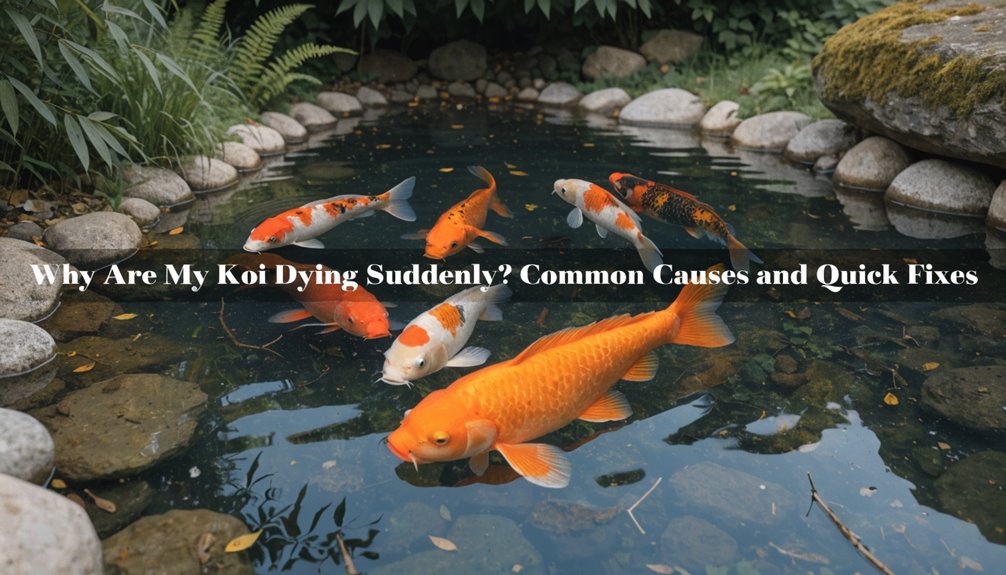
If your koi are dying suddenly, several critical factors could be at play that demand immediate attention. Oxygen deprivation is a primary cause, especially during hot weather or after pond disturbances that reduce dissolved oxygen levels.
Parasites and bacterial infections also trigger acute distress; watch for gasping at the surface or erratic swimming as warning signs. Environmental stressors like overcrowding, seasonal shifts, or predator presence increase vulnerability and mortality risk. To counteract this, promptly increase aeration, test water parameters for toxins, and isolate affected fish for treatment. Addressing these causes swiftly can prevent rapid population loss.
While water quality issues often contribute, focus first on oxygen levels, parasite control, and environmental stress mitigation to stabilize your koi and reduce sudden deaths efficiently. Additionally, implementing predator prevention strategies can help safeguard your koi from unexpected threats that may exacerbate their stress.
How Poor Water Quality Leads to Koi Mortality
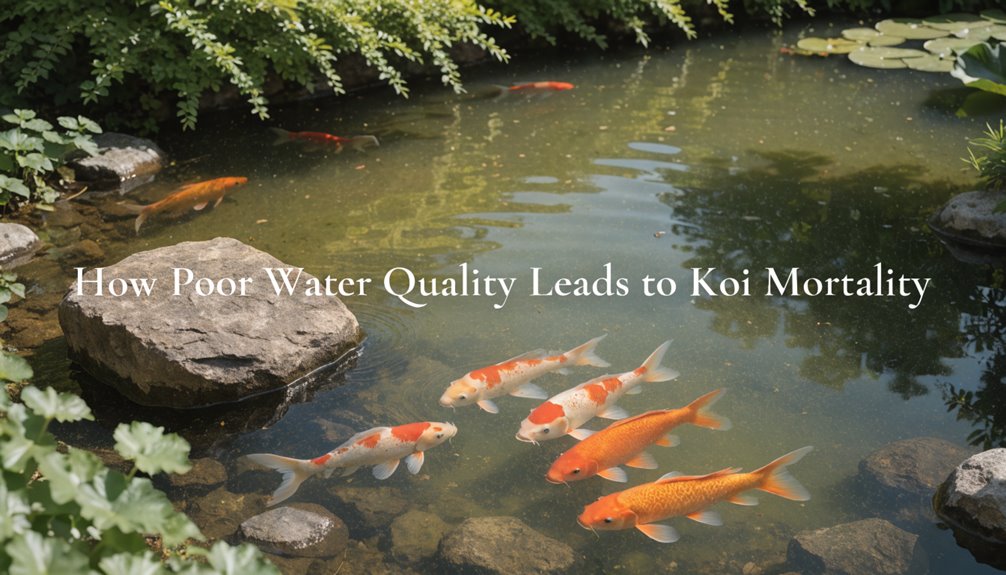
Sudden koi deaths often point to immediate factors like oxygen deprivation or infections, but underlying water quality issues frequently set the stage for these acute problems. Elevated ammonia levels as low as 0.25 ppm impair your koi’s immune system, making them vulnerable to disease.
Rapid or extreme pH fluctuations between 8 and 9 induce stress, further compromising their health. Inadequate filtration allows waste accumulation, creating toxic environments that can quickly become lethal. Regular monitoring of ammonia levels is crucial to prevent toxicity and safeguard your koi.
To prevent mortality linked to poor water quality, you must regularly test ammonia and pH levels, and maintain effective filtration systems. Consistent water parameter monitoring helps you identify and correct harmful conditions before they escalate, safeguarding your koi’s health and longevity.
The Role of Oxygen Levels in Keeping Koi Alive
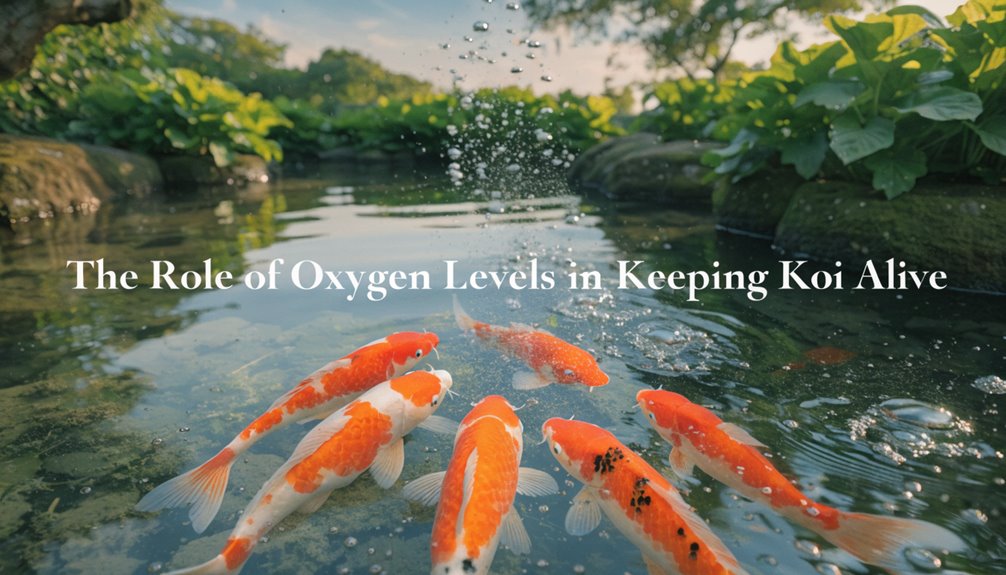
Because koi rely on dissolved oxygen levels of at least 6-8 ppm to sustain healthy metabolism and immune function, maintaining adequate oxygen in your pond is critical. Warm weather lowers oxygen concentration, increasing suffocation risk. Overcrowding and organic waste accelerate depletion, stressing koi gills and causing sudden deaths. You must monitor oxygen and install aeration devices like fountains or aerators to prevent stratification and maintain optimal levels. Additionally, understanding the oxygen levels in ponds is vital for ensuring a healthy environment for your koi.
| Cause | Effect on Oxygen Levels |
|---|---|
| Warm temperatures | Decreases oxygen solubility |
| Overcrowding & waste | Increases oxygen consumption |
| Aeration (fountains/aerators) | Enhances oxygenation and circulation |
Watch for koi gasping at the surface, erratic swimming, or lethargy—signs of low oxygen needing immediate intervention.
Seasonal Stress: What It Means for Your Koi’s Health
When seasonal temperatures shift, your koi experience significant physiological stress that challenges their immune defenses and metabolic processes. Sudden water temperature fluctuations in spring and fall disrupt their ability to regulate bodily functions, increasing vulnerability to illness.
In winter, ice cover reduces oxygen availability, risking suffocation without adequate aeration and water circulation. Conversely, summer heat often elevates water temperature beyond the optimal 75-85°F range, causing oxygen depletion and heightened disease susceptibility.
Additionally, seasonal changes frequently alter pond chemistry, including pH and carbonate hardness (KH), further weakening koi health. To mitigate these stresses, closely monitor temperature, oxygen levels, and water chemistry during seasonal transitions. Ensuring proper aeration, filtration, and gradual acclimation can prevent sudden environmental shocks that compromise your koi’s survival.
Preventative treatments during early spring are also crucial to help protect your koi from diseases as they emerge from winter hibernation.
Why Overcrowding Increases Koi Mortality Risk
Although koi can tolerate varying pond conditions, overcrowding significantly increases their mortality risk by disrupting essential environmental balances. When you crowd your pond, oxygen levels drop, causing hypoxia that threatens koi survival.
High fish density triggers chronic stress, weakening their immune systems and raising disease susceptibility. Excessive waste accumulation leads to ammonia buildup and toxic water conditions.
Limited space also heightens competition for food and territory, resulting in malnutrition and physical injuries. Moreover, overcrowding impairs filtration efficiency and water circulation, worsening water quality and health problems.
To maintain koi health, you must carefully control stocking density, ensuring adequate space, proper filtration, and optimal oxygenation. Preventing overcrowding is critical to reducing mortality risk and promoting a stable pond ecosystem conducive to koi longevity. Additionally, removing unwanted offspring can help manage the fish population effectively.
Nutrition Mistakes That Harm Koi Health
Maintaining proper pond conditions alone won’t guarantee koi health if their nutrition is mishandled. Feeding expired or low-quality food impairs immune function, making koi prone to disease. Overfeeding elevates ammonia, stressing your fish and degrading water quality. Additionally, a nutrient-poor diet weakens their defenses, and feeding during low temperatures causes digestive stress, reducing vitality.
| Nutrition Mistake | Impact on Koi Health | Preventive Measure |
|---|---|---|
| Expired/poor food | Immune suppression | Use fresh, high-quality food |
| Overfeeding | Ammonia increase, stress | Feed controlled portions |
| Inappropriate timing | Digestive issues, low vitality | Feed during optimal temperatures |
Correct nutrition is vital. Use fresh, balanced food and feed appropriately to support koi health and longevity.
Managing Your Pond’s Water to Protect Your Koi
Because water quality directly affects koi health, you must carefully manage your pond’s parameters. Maintaining stable conditions minimizes stress and prevents sudden deaths. Focus on these three critical actions:
- Monitor key water parameters regularly—ammonia, nitrites, nitrates, KH (100-200 ppm), and oxygen—to ensure optimal pond stability.
- Perform partial water changes of about 25% routinely to remove toxins and replenish essential minerals. Always treat new water with a dechlorinating conditioner like Microbe-Lift or Aqua Xtreme to neutralize chlorine.
- Maintain proper water circulation using bottom drains (TPRs) or aerators to distribute oxygen evenly and prevent stagnation.
Preventing Parasite Infestations in Your Koi Pond
If you want to keep your koi healthy, preventing parasite infestations is essential. Regularly inspect your fish and pond for symptoms like erratic swimming, scratching, or visible spots.
Quarantine new fish for 2-4 weeks before introducing them to avoid parasite transmission.
Maintain optimal water quality through effective filtration, aeration, and frequent parameter testing to reduce stress and boost koi immunity.
Use targeted treatments such as Microbe-Lift/Parazoryne or praziquantel to eliminate internal and external parasites promptly.
Establish a preventative routine, especially during seasonal changes, to minimize infestation risks.
These combined practices form a robust defense, ensuring a healthier environment and reducing sudden mortalities caused by parasitic infections in your koi pond.
Safe Herbal and Medicinal Treatments for Parasites
When treating parasitic infections in your koi pond, choosing safe herbal and medicinal options is crucial to protect your fish while effectively combating parasites. You want treatments that minimize stress and target parasites precisely.
Consider these proven options:
- Microbe-Lift/Parazoryne: Formulated specifically to expel and prevent parasitic infestations, it’s a safe herbal choice for routine parasite control.
- Microbe-Lift/Sabbactisun: This herbal treatment combats bacterial and fungal infections, supporting overall koi health during parasite management.
- Praziquantel: A potent medication effective against internal worms and cestodes, essential for treating established internal parasite burdens.
Always follow manufacturer instructions closely to ensure koi safety and treatment efficacy. Using these options strategically helps maintain a parasite-free environment while minimizing chemical exposure.
Understanding Old Pond Syndrome: A Hidden Cause of Koi Loss
Although your pond may appear stable, Old Pond Syndrome (OPS) can silently undermine the health of your koi, especially older fish. OPS arises in ponds where no new koi have been introduced for years, causing an aging ecosystem imbalance. This imbalance weakens older koi’s immune systems, making them vulnerable to disease despite showing no visible illness.
Typically, older koi die gradually while newly introduced fish remain healthy. OPS is driven by environmental stressors such as oxygen depletion and deteriorating water quality that accumulate over time.
To detect OPS, monitor for sudden large-scale mortality primarily affecting older fish without clear symptoms. Understanding OPS is crucial because it highlights the need for proactive pond management focused on ecosystem balance and immune support in aging koi populations.
How to Restore Balance in Your Pond Ecosystem
Addressing Old Pond Syndrome requires restoring your pond’s ecological stability to support koi health effectively. You must carefully balance water chemistry, oxygen levels, and organic matter to prevent toxic buildup and stress.
Focus on these three key actions:
- Monitor and adjust water parameters: Keep KH between 100-200 ppm and routinely test ammonia, nitrates, and pH to maintain a stable environment.
- Enhance aeration and circulation: Use fountains or diffusers to increase dissolved oxygen and prevent stratification.
- Control aquatic vegetation and perform partial water changes: Limit excessive weed growth to reduce organic decay and replace about 25% of pond water regularly to dilute harmful substances.
Consistently applying these measures will help reestablish a balanced ecosystem, crucial for your koi’s survival and vigor.
Quarantine Practices for Healthy New Koi Introductions
Since introducing new koi directly into your main pond can expose your established fish to parasites, bacteria, and viruses, implementing a quarantine period of at least 2 to 4 weeks is essential.
Use a separate quarantine tank to prevent cross-contamination and monitor health closely.
Gradually acclimate new koi by mixing small amounts of pond water into the quarantine tank over several days to reduce stress and strengthen immunity.
Conduct thorough health checks and apply preventative treatments, such as dips or herbal remedies, to detect hidden infections early.
During quarantine, test and adjust water parameters to optimize conditions.
This controlled environment ensures new koi are healthy and reduces the risk of introducing pathogens, ultimately safeguarding your pond’s ecosystem and maintaining fish vitality.
Tips for Ongoing Pond Maintenance and Water Monitoring
After successfully quarantining new koi, maintaining stable water quality and monitoring your pond regularly will help preserve fish health and prevent disease outbreaks. You should focus on precise, routine care to keep the environment optimal.
- Test water parameters weekly using reliable kits to measure ammonia, nitrites, nitrates, pH, and KH, ensuring all values remain within safe ranges.
- Perform partial water changes of roughly 25% weekly to dilute toxins and maintain chemical balance.
- Use aeration devices such as fountains or diffusers to sustain adequate oxygen levels, especially during warm or stagnant conditions.
Additionally, observe fish behavior daily for stress signs and keep detailed logs of water tests and maintenance.
This systematic approach lets you identify trends early and mitigate potential problems before they escalate.
When to Call a Professional: Signs Your Koi Need Expert Help
Although routine maintenance can resolve many common issues, you should call a professional when multiple koi die rapidly without an obvious cause or when persistent poor water quality remains despite thorough testing.
Rapid, unexplained mortality often signals systemic problems like Oodinium Parasite Syndrome (OPS), requiring specialized diagnosis.
Persistent behavioral abnormalities—such as gasping at the surface or erratic swimming—that don’t improve with basic treatments also indicate the need for expert evaluation.
If your water tests consistently show poor parameters despite corrective efforts, or if you suspect disease outbreaks, consulting a pond specialist or aquatic veterinarian becomes essential.
Early professional intervention can identify underlying pathogens or environmental imbalances, preventing further losses and ensuring precise treatment tailored to your koi’s specific health needs.
Don’t delay expert help when initial measures fail.
Frequently Asked Questions
Why Do Koi Fish Die All of a Sudden?
Your koi die suddenly due to rapid water quality changes, oxygen depletion, disease, or toxins. You should monitor water parameters, ensure proper aeration, quarantine new fish, and maintain filtration to prevent these lethal stressors from impacting your pond.
Why Add Baking Soda to Koi Pond?
You add baking soda to your koi pond to raise alkalinity and stabilize pH, preventing harmful fluctuations. This reduces stress on your fish, especially during seasonal changes, and supports a balanced, healthy aquatic environment.
What to Do if Koi Fish Is Dying?
When your koi’s life hangs by a thread, isolate it immediately to stop disease spread. Test water parameters, boost oxygen, and consider treatments. Don’t hesitate to consult a vet for precise diagnosis and effective intervention.
How to Revive a Dying Fish Naturally?
You can revive a dying fish naturally by isolating it in oxygen-rich water, gradually improving water parameters, offering easily digestible food, applying herbal remedies like Microbe-Lift, and minimizing stress with gentle handling and a calm environment.
Conclusion
You might think sudden koi deaths are just bad luck, but they usually signal fixable issues like poor water quality or low oxygen. By monitoring your pond’s environment closely, avoiding overcrowding, and quarantining new fish, you can prevent many problems before they start. Regular maintenance keeps your koi healthy and thriving. Remember, quick action and consistent care make all the difference—don’t wait until it’s too late to protect your pond ecosystem.