You can mix koi from different breeders if you manage genetic diversity, health risks, and social dynamics carefully. Start with strict quarantine and gradual acclimation to prevent disease and stress. Maintain optimal water quality and monitor behavior to reduce aggression and ensure compatibility. Incorporate environmental features for hiding and territorial balance. Understanding breed traits and consulting experts helps promote a resilient, harmonious pond. Exploring these strategies will deepen your ability to sustain a healthy, diverse koi population.
Key Facts Summarized
- Mixing koi from different breeders enhances genetic diversity, promoting healthier, more resilient pond populations with varied desirable traits.
- Quarantine new koi for 2-4 weeks to prevent disease introduction and monitor health before mixing them with existing fish.
- Gradually acclimate koi to pond conditions using drip or float methods to reduce stress during integration.
- Provide ample space, hiding spots, and plants to minimize aggression and support social harmony in mixed koi populations.
- Engage with koi communities and experts to understand breed compatibility, behavior, and best management practices for mixed koi ponds.
Why Mix Koi From Different Breeders?
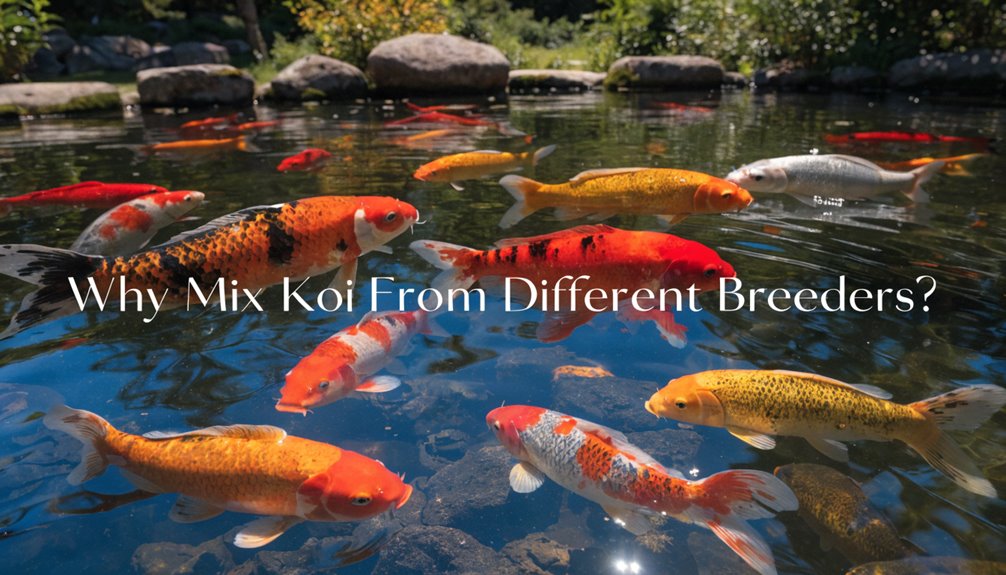
Although koi from different breeders may vary slightly in size, temperament, or pattern, mixing them is generally safe because they belong to the same species with compatible genetics. You’ll find that introducing koi from various sources enhances genetic diversity, which contributes to a healthier, more resilient pond population. Breeders often select for specific traits, so combining their stock broadens the range of desirable characteristics. Before you mix, quarantine new koi to prevent disease transmission, safeguarding your existing fish. While slight behavioral or physical differences exist, they rarely cause compatibility issues when you maintain proper water quality and monitor fish interactions. Additionally, introducing new koi can help mitigate the risks associated with koi population control, ensuring a balanced ecosystem in your pond.
Key Genetic and Behavioral Differences Between Koi Breeds
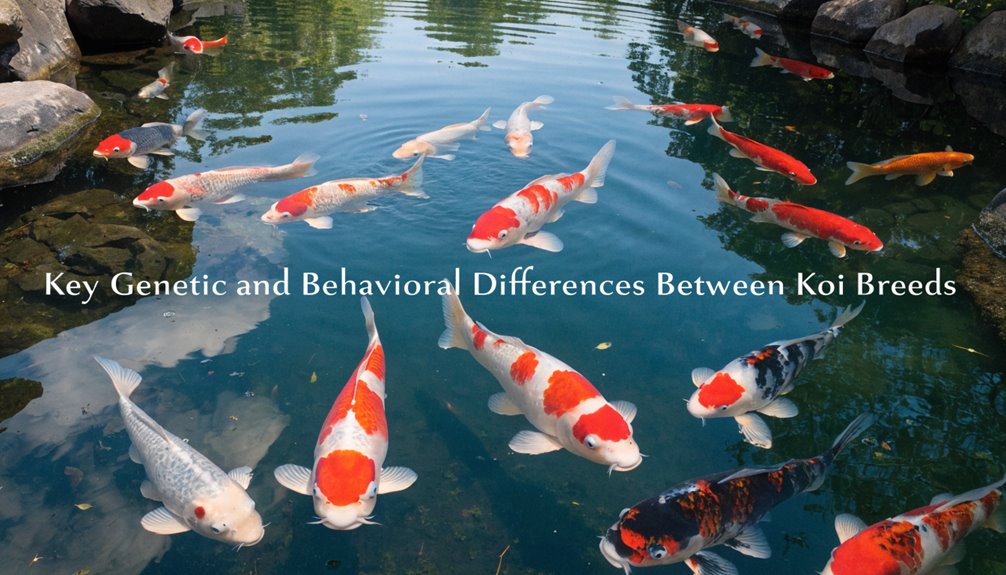
When you consider mixing koi from different breeders, understanding their key genetic and behavioral differences is essential for maintaining a harmonious pond environment. Genetic lineages influence growth rates, coloration, scale patterns, and reproductive compatibility, while behavioral traits affect social dynamics. Recognizing these differences helps you anticipate interactions and breeding outcomes. Additionally, ensuring a balanced ecosystem with proper feeding schedules can greatly enhance koi health and social behavior.
| Genetic Trait | Behavioral Trait |
|---|---|
| Growth rate (fast/slow) | Aggression levels |
| Scale pattern (Doitsu, standard) | Shyness or boldness |
| Coloration variability | Social hierarchy tendencies |
| Reproductive barriers or hybrid vigor | Pairing compatibility |
How Koi Genetics Affect Compatibility in Mixed Populations
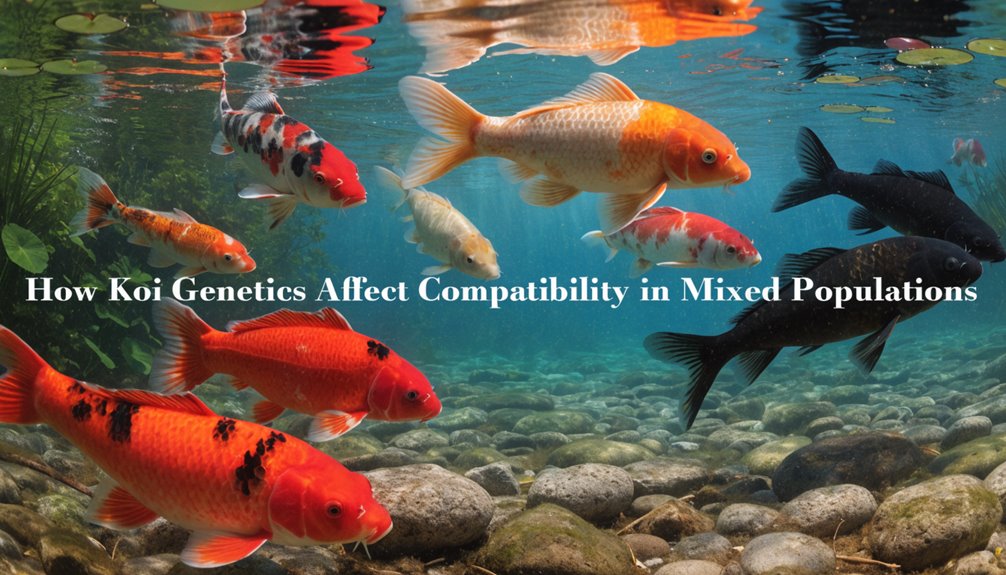
Since koi from different breeders share the same chromosome count, they can interbreed successfully; however, you should be aware that their hybrid offspring may exhibit unpredictable coloration, patterns, and occasionally reduced fertility.
Genetic differences between breeder lineages influence traits such as size, coloration intensity, and pattern clarity, which directly affect population harmony when mixed.
Unique genetic markers from specific breeders can also impact growth rates and resilience.
By understanding the genetic backgrounds of the koi you’re mixing, you can better predict compatibility and the likelihood of desirable traits emerging.
This insight helps you manage expectations for appearance and behavior in mixed populations while maintaining genetic diversity critical for long-term vitality and adaptation.
Accurate genetic knowledge is essential for effective koi population management. Additionally, understanding the importance of spawning conditions can enhance the success of breeding efforts across different lineages.
Health Risks When Mixing Koi From Different Breeders
Combining koi from different breeders introduces health risks that you must carefully manage to protect your pond’s ecosystem. Genetic differences among koi can create incompatible immune responses, increasing disease susceptibility. Additionally, variations in water quality preferences and health protocols from each breeder may cause stress or illness when koi are combined. You also risk introducing distinct parasites or bacterial infections carried by koi from different sources, which can lead to cross-contamination. Size and temperament disparities may provoke aggression, resulting in injuries that compromise health. Without proper quarantine measures, these factors elevate the likelihood of disease outbreaks and chronic health problems. To maintain a stable and healthy pond environment, you need to understand these risks and implement strict health monitoring and management protocols when mixing koi from various breeders. Moreover, poor water quality can significantly heighten the stress levels in new koi, exacerbating health issues.
Quarantine Best Practices for New Koi Additions
Although adding new koi can enhance your pond’s beauty, you must quarantine them for at least 2 to 4 weeks to prevent introducing diseases or parasites. Set up a separate, sterile tank with filtration and water parameters matching your main pond.
During quarantine, monitor your koi closely for symptoms like spots, fin rot, or abnormal swimming.
Follow these best practices:
- Inspect new koi daily for any signs of illness and treat immediately with appropriate medications or dips if needed.
- Maintain consistent water quality and temperature to reduce stress and promote healing.
- Only introduce koi to your main pond after they’ve fully acclimated and show no signs of disease.
This protocol minimizes health risks and protects your established koi population effectively.
How to Assess Temperament and Behavior in Different Koi
When introducing koi from different sources, you need to carefully assess their temperament and behavior to ensure a harmonious pond environment. Begin by observing signs of aggression such as chasing, nipping, or bullying, particularly during feeding.
Monitor interactions over several days to identify social hierarchies or stress indicators. Note activity level differences; territorial koi often display dominant behaviors.
Pay close attention to how koi react to new introductions—calm acceptance usually signals compatibility. Remember, individual koi have unique personalities, so gradual introduction and continuous observation are essential. Additionally, understanding koi behavior and care can help you make informed decisions during this process.
This approach helps you identify potential conflicts early, allowing you to manage integration effectively and maintain a stable, well-balanced pond ecosystem.
Matching Koi Sizes to Prevent Aggression
Besides temperament, the size of your koi plays a significant role in maintaining pond harmony. When koi sizes vary widely, larger fish tend to dominate and intimidate smaller ones, leading to aggressive chasing and bullying.
To minimize this, you should:
- Select koi with comparable growth stages to encourage peaceful social interactions.
- Regularly monitor size uniformity and adjust the population as needed to reduce stress and injury risks.
- Ensure feeding periods accommodate all sizes to prevent competition-related aggression.
Why Pond Size and Environment Matter When Mixing Koi
Since koi from different breeders can exhibit varied behaviors and health conditions, providing an adequately sized pond with a minimum of 1,000 gallons is essential to reduce territorial aggression and stress.
You must ensure the pond has efficient filtration and aeration systems to maintain optimal water quality, as mixed koi populations can increase biological load.
Consistent water parameters—including temperature, pH, and ammonia—are critical to prevent disease and stress.
Sufficient space allows koi to establish territories without constant conflict.
Additionally, regular monitoring of water quality and fish behavior helps you detect early signs of stress or health issues, enabling timely intervention.
Prioritizing pond size and environmental stability ensures a balanced ecosystem, promoting the welfare of koi from different breeders living together harmoniously.
Using Plants and Structures to Support Mixed Koi Communities
Although mixing koi from different breeders can challenge social harmony, you can significantly reduce aggression by incorporating strategic plants and structures in your pond. These elements help establish territories and provide refuge, which are essential for minimizing conflicts.
To optimize your mixed koi community, focus on:
- Using water lilies and floating vegetation to create hiding spots that diffuse aggression.
- Adding rocks, logs, and spawning mats to define clear territorial boundaries.
- Incorporating dense aquatic plants as natural spawning sites, promoting healthy breeding behavior.
Furthermore, arrange vertical and horizontal structures to distribute territory evenly and maintain social stability.
Regular cleaning and maintenance of these plants and structures prevent overcrowding and ensure a balanced environment.
This approach fosters coexistence and supports the well-being of koi from diverse breeders in your pond.
How to Acclimate Koi Properly When Mixing Breeds
When introducing koi from different breeders, you need to acclimate them slowly to prevent stress and health issues. Start by quarantining new koi in a separate tank or pond section for at least one week.
Use the drip or float method to gradually mix pond water with the water in the transport bag, minimizing shock from differences in temperature, pH, and other water chemistry parameters.
Monitor water conditions closely, ensuring temperature, pH, and ammonia remain stable.
Provide ample space and hiding spots during integration to reduce stress.
Gradually introduce the koi to the main pond, observing for signs of illness or distress throughout the process.
This careful, stepwise acclimation promotes health and successful integration when mixing koi from different breeders.
Managing Social Dynamics to Reduce Chasing Among Koi
After properly acclimating koi from different breeders, the next challenge lies in managing their social dynamics to minimize chasing behaviors. You can reduce aggression by carefully adjusting the pond environment and population structure.
- Increase the number of female koi to distribute male attention, lowering persistent chasing during breeding season.
- Provide ample space and incorporate hiding spots such as plants or structures to alleviate social stress and allow subordinate koi to escape dominance pressures.
- Continuously monitor interactions and separate overly aggressive individuals to maintain a balanced social hierarchy.
Implementing these steps supports natural social behaviors and reduces dominance conflicts, ensuring a peaceful collective environment for your mixed-breed koi population.
Monitoring Water Quality When Mixing Koi From Different Sources
Ensuring consistent water quality becomes critical as you introduce koi from different breeders, since variations in their previous environments can affect their tolerance to water parameters. You must maintain optimal pH (7.0-8.5), ammonia, nitrite, and nitrate levels to prevent stress and disease.
Regularly test water and perform partial changes to stabilize conditions, minimizing fluctuations harmful to mixed populations. Gradual acclimation helps koi adjust to temperature and chemistry differences, reducing shock risk.
Ensure adequate filtration and aeration to manage increased bioloads and maintain oxygen levels. Monitor koi closely for stress indicators like erratic swimming or discoloration, enabling timely intervention.
This vigilance preserves water quality and koi health, essential when mixing fish from diverse sources with varying sensitivities and health histories.
Feeding Strategies for Mixed Koi Breeds
Because mixed koi breeds vary in size and growth rates, you need to implement feeding strategies that provide a balanced and diverse diet tailored to their nutritional requirements. Start by selecting high-quality koi pellets formulated for all age groups to support uniform growth.
Then, supplement their diet with live or frozen foods like bloodworms or brine shrimp to boost coloration and immune function.
Finally, during breeding season, prioritize easily digestible, high-protein feeds to enhance reproductive health and fry development.
- Use balanced pellets to meet baseline nutritional needs across breeds.
- Add live/frozen foods for immune and color enhancement.
- Adjust feed types seasonally, focusing on reproduction phases.
Observe feeding behavior closely to prevent overfeeding and minimize competition among different koi breeds.
Signs of Stress or Illness When Mixing Koi and How to Respond
Feeding mixed koi breeds properly supports their health, but monitoring their behavior closely is equally important to catch early signs of stress or illness. Watch for rapid gill movement, erratic swimming, hiding, or lethargy—these indicate stress.
Illness signs include white spots, lesions, or ragged fins, often stemming from stress-related infections or parasites.
Overcrowding or territorial disputes can cause chasing and nipping, leading to injuries and elevated stress. When you spot aggressive or sick fish, remove them promptly to prevent escalation.
Maintain optimal water quality and provide ample hiding spots to reduce stress. Monitoring appetite is crucial; loss of appetite often signals underlying health issues.
Taking these precise actions helps you maintain a balanced, healthy mixed koi environment, minimizing stress and disease risk effectively.
When Mixing Koi From Different Breeders Is Not Recommended
Although mixing koi from different breeders might seem like a way to diversify your collection, it often introduces genetic inconsistencies that can compromise the fish’s overall health and vitality. You should avoid mixing koi when:
- Breeding standards differ significantly—mismatched sizes and temperaments can cause stress and aggression.
- There’s no strict quarantine or health protocol—disease transmission risks rise, threatening the entire pond.
- You require predictable lineage and traits—offspring may display unpredictable colors and shapes, complicating breeding goals.
These factors increase health risks and stress, undermining your koi’s wellbeing.
When precision in lineage and health matters, it’s best to keep koi from different breeders separate or implement rigorous health checks before introduction.
Benefits of a Diverse Koi Population in Your Pond
When you introduce koi from multiple breeders into your pond, you actively increase genetic diversity, which strengthens the fish population’s resilience to disease and environmental stressors. This genetic robustness reduces the likelihood of disease outbreaks and enhances adaptability to environmental changes, promoting overall health and longevity.
Additionally, a diverse koi population introduces a broader range of patterns, colors, and sizes, enriching your pond’s visual appeal. Hybrid offspring resulting from mixed breeder koi may exhibit unique traits, further contributing to the pond’s aesthetic and genetic complexity.
How to Maintain Long-Term Harmony in a Multi-Breeder Pond
To maintain long-term harmony in a pond housing koi from different breeders, you must carefully manage environmental and social factors that influence fish behavior. Start by gradually introducing koi and observing interactions to identify potential conflicts.
Maintain consistent water quality—stable pH, ammonia, nitrate, temperature, and oxygen—to reduce stress and aggression. Provide ample space and hiding spots like aquatic plants or caves, allowing koi to establish territories and avoid disputes.
Regularly monitor behavior and health, intervening promptly if signs of bullying or stress arise.
Key steps include:
- Gradual introduction and compatibility observation
- Consistent water quality and stable environmental parameters
- Adequate space with territorial shelters and ongoing behavioral monitoring
Following these protocols ensures a peaceful, balanced multi-breeder koi pond environment.
Resources and Communities for Mixing Koi Breeds Advice
Maintaining harmony in a multi-breeder koi pond often requires more than just managing water quality and space—you’ll benefit from tapping into specialized knowledge sources.
Joining online forums and Facebook groups dedicated to koi and water gardening connects you with experienced hobbyists who share insights on breed compatibility, hybrid vigor, and genetic concerns. These communities provide practical advice, photos, and troubleshooting tips that help you anticipate challenges when mixing koi from different breeders.
Additionally, consulting local koi clubs or experts offers region-specific guidance tailored to your pond’s conditions. By actively engaging with these resources, you gain a clearer understanding of breed-specific traits and can make informed decisions to foster a balanced, healthy pond environment with diverse koi populations.
Frequently Asked Questions
What Color Koi Is Most Valuable?
The most valuable koi you’ll find have bright, vivid colors like deep red, metallic gold, or rare platinum. Kohaku with symmetrical red patches and high-contrast Showa or Sanke patterns also command premium prices due to their clarity and rarity.
Why Add Baking Soda to Koi Pond?
You add baking soda to your koi pond to stabilize pH by increasing alkalinity, preventing sudden drops. This creates a stable, healthy environment for koi, but you should dose gradually and monitor water parameters carefully.
Why Do You Not Feed Koi in Winter?
You might think feeding koi in winter helps them, but it actually harms them. Their digestion slows dramatically below 50°F, so feeding causes uneaten food buildup, water quality decline, and weakens their immune system, increasing infection risk.
What Koi to Breed Together?
You should breed koi with compatible sizes, health, and complementary color patterns to enhance desired traits. Prioritize mature, genetically diverse fish with strong lineage and stable temperaments for successful spawning and vibrant, high-quality offspring.
Conclusion
Mixing koi from different breeders can enrich your pond like a carefully composed symphony, blending unique genetic traits and vibrant behaviors. However, you must quarantine new additions and monitor health closely to avoid disease spread. Understanding genetic compatibility helps prevent aggression and stress. When managed properly, a diverse koi population thrives, offering both beauty and resilience. Stay informed and connected with koi communities to ensure harmony and longevity in your multi-breeder pond.