To quarantine new koi before adding them to your pond, set up a 75–100 gallon tank with stable water at 70–72°F, proper filtration, and aeration. Isolate the fish for 14–21 days, monitor water quality (pH 7.0–8.0, ammonia, nitrite, nitrate), and perform partial water changes regularly. Administer treatments like praziquantel if needed, observe koi daily for illness, and reduce feeding to minimize waste. Proper quarantine safeguards your pond’s health and ensures a smooth transition. Learn how to optimize each step effectively.
Key Facts Summarized
- Set up a 75-100 gallon quarantine tank with stable temperature (70°F–72°F), filtration, aeration, and a secure cover.
- Isolate new koi for 14–21 days, monitoring health daily for signs of disease or stress.
- Regularly test and maintain water quality: pH 7.0–8.0, low ammonia, nitrite, and nitrate levels.
- Administer parasite treatments like praziquantel and formalin according to schedule during quarantine.
- Gradually acclimate koi to pond water before transfer, handling them gently to preserve their slime coat.
Why Quarantine Your New Koi?
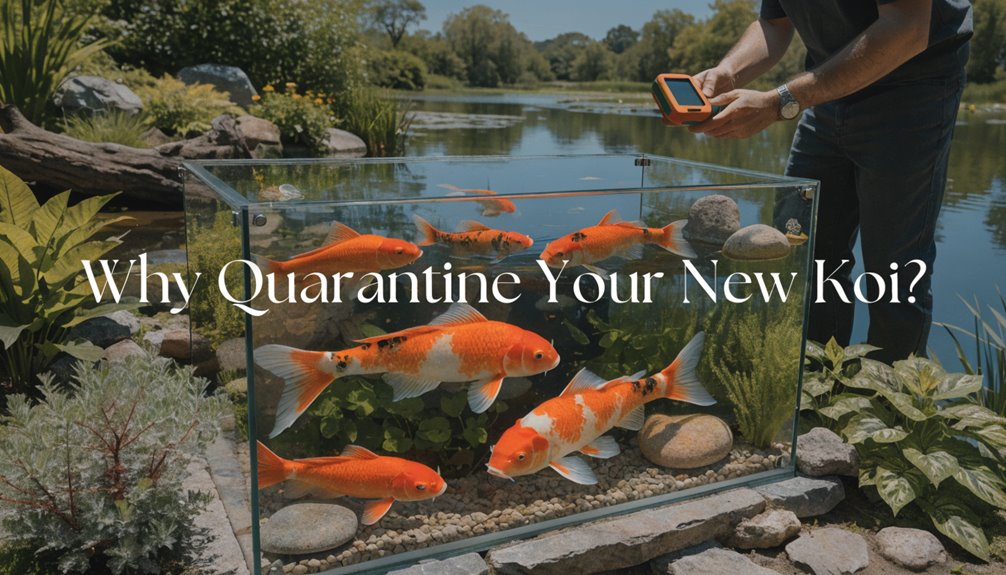
Although introducing new koi to your pond can be exciting, you should always quarantine them first to prevent introducing parasites, bacteria, fungi, or viruses into your established environment.
Quarantine allows you to assess the health of new koi and detect illnesses before they enter the main pond. This practice reduces the risk of spreading contagious diseases, such as koi herpesvirus (KHV), which can devastate your entire population.
By isolating new fish, you create a controlled setting to monitor for stress and early disease symptoms, enabling timely treatment. Proper quarantine protocols minimize costly fish losses and maintain the overall health and balance of your pond ecosystem. Additionally, understanding koi care requirements ensures that your new additions thrive in their new environment.
Skipping quarantine increases the risk of disease outbreaks that are difficult and expensive to manage.
Setting Up Your Koi Quarantine Tank and Water Quality
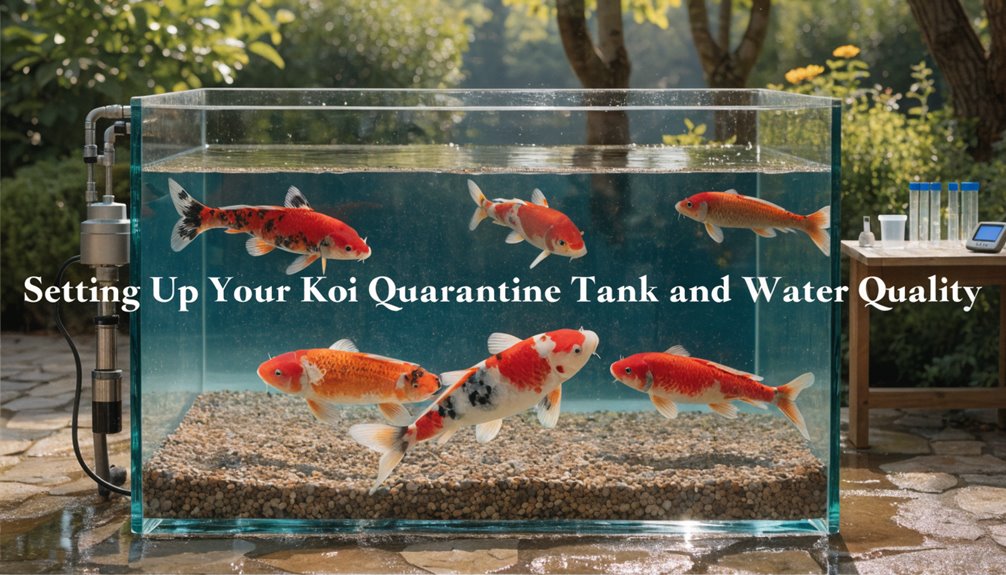
After deciding to quarantine your new koi, the next step is to properly set up a dedicated quarantine tank that supports their health and allows for effective monitoring. Choose a tank of 75-100 gallons, equipped with a filter, aerator, and heater to maintain stable conditions. Maintain the water temperature between 70°F and 72°F to optimize immune function. Cover the tank with a net or lid to prevent escapes and reduce stress.
Follow these key steps for setup:
- Select a tank with appropriate capacity and filtration.
- Use a reliable heater to keep temperature within 70°F-72°F.
- Cover the tank securely to prevent koi from jumping out.
- Conduct partial water changes of 20-25% every 2-3 days to maintain water quality.
Additionally, ensure that the tank design incorporates a balanced ecosystem, which can help in monitoring the koi’s health during the quarantine period.
Monitoring Water Quality and Temperature in Koi Quarantine
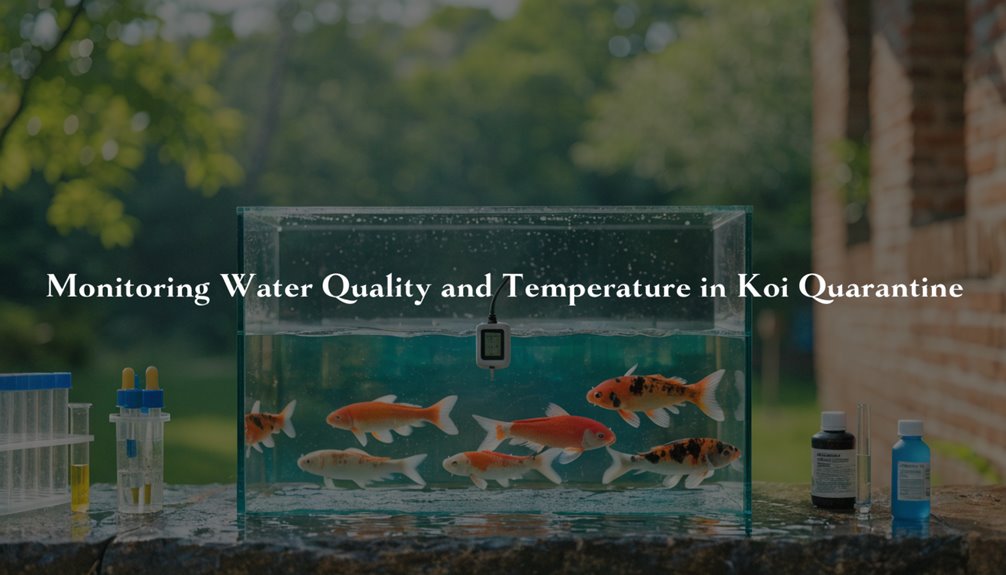
Because koi are highly sensitive to water conditions, you need to monitor water quality and temperature closely during quarantine. Regularly test pH (ideally 7.0–8.0), ammonia, nitrite, and nitrate levels using a reliable water test kit to detect any fluctuations early.
Maintain water temperature between 70°F and 72°F to support immune function and reduce stress.
Perform partial water changes of 10–20% every 2–3 days, especially if parameters drift outside ideal ranges, to keep conditions stable.
After each water change or treatment, test water parameters daily to ensure consistency.
Record all readings and temperature adjustments meticulously to track trends and maintain safe conditions throughout quarantine. This precise monitoring helps create an optimal environment, minimizing risks during this critical acclimation period. Additionally, ensure adequate oxygen levels to reduce stress on your koi during this vulnerable time.
Quarantine Procedures and Disease Treatments for Koi
When you quarantine new koi, you should isolate them in a separate tank for at least 14 to 21 days to monitor for signs of illness and prevent disease transmission. During this period, maintain water temperature between 70-72°F and salinity at 0.04% to promote koi health and reveal viral infections like KHV.
Additionally, understanding the cultural significance of koi can enhance your appreciation for these beautiful fish as you ensure their health during quarantine.
Follow a strict medication schedule using praziquantel and formalin at 1 gram per 100 gallons. Regularly inspect koi for lethargy, swelling, or abnormal behavior before introducing them to your main pond.
Key quarantine procedures and treatments include:
- Administer praziquantel and formalin on a scheduled regimen.
- Keep water temperature and salinity stable.
- Perform partial water changes every 2-3 days.
- Conduct thorough visual health inspections daily.
Feeding, Handling, and Stress Reduction During Quarantine
Maintaining proper feeding and handling protocols during quarantine plays a key role in minimizing stress and supporting koi health. You should reduce feeding to 10–20% of their normal intake to limit waste accumulation and metabolic stress.
Always handle koi gently with wet hands and use soft nets to protect their slime coat, which is crucial for preventing infections. Avoid unnecessary handling or disturbances, as stress suppresses their immune system.
Keep water parameters stable by maintaining optimal temperature and dissolved oxygen levels; fluctuations can hinder recovery. Additionally, ensuring a healthy habitat is vital for the overall well-being of your koi during this critical period.
Regularly observe your koi for signs of stress or illness, such as lethargy or abnormal swimming, and address issues promptly.
These measures collectively create a supportive environment that enhances your koi’s resilience during quarantine, ensuring they remain healthy before introduction to your pond.
Safely Introducing Quarantined Koi to Your Pond
How do you ensure a smooth transition for your koi from quarantine to their permanent pond? First, confirm your koi are fully healed with no disease signs. Then, use these steps for safe introduction:
- Float the sealed bag in the pond for 20-30 minutes to equalize water temperatures.
- Gradually acclimate koi by mixing small amounts of pond water into the bag over time.
- Transfer koi with a net, avoiding quarantine water to prevent pathogen transfer.
- Monitor your koi daily post-release for stress or illness, maintaining stable pond conditions such as temperature and water quality.
Following these precise steps minimizes stress and infection risk, ensuring your koi adjust healthily to their new environment.
Frequently Asked Questions
How Long to Quarantine New Koi Fish?
You should quarantine new koi fish for 14 to 21 days. This timeframe allows you to detect common and latent diseases by conducting daily health checks before safely introducing them to your pond environment.
How Long Does It Take Koi to Get Used to a New Pond?
Like knights adjusting to new castles, koi take about 1 to 2 weeks to acclimate, showing stress initially. Expect full behavioral normalization within 2 to 3 weeks, provided you maintain stable water conditions and minimal disturbance.
How to Avoid New Pond Syndrome?
You can avoid New Pond Syndrome by quarantining new koi for 14-21 days, maintaining optimal water quality, avoiding mixing shipping and pond water, and monitoring fish closely to detect and treat diseases before introduction.
Do I Have to Wait 24 Hours Before Adding Fish?
Yes, you should wait 24 hours. This waiting window lets you watch for wounds, weaknesses, or weird behaviors, ensuring you safely stabilize the koi’s health and acclimate them, preventing parasites and protecting your pond’s pristine ecosystem.
Conclusion
Quarantining your koi carefully curbs contamination, creating confidence in their clean, healthy condition. By setting suitable systems, steadily studying water stats, and strictly following safety steps, you safeguard your serene sanctuary. Feeding thoughtfully and minimizing stress maintain their mental and physical might. Finally, firmly following these focused, foolproof procedures fosters flourishing fish, ensuring your pond remains pristine and protected. Prioritize proper quarantine practices to promote peace and prevent problems effectively.